

‘Kumu Hina’: A Story of Triumph for All of Hawaii
To support those we love, we must bear witness to their struggles and triumphs, and understand their perspectives.
Editor’s note: The documentary film “Kumu Hina” focuses on three people. One of them is Kumu Hina, who is a candidate to become an at-large trustee on the board of the Office of Hawaiian Affairs.
My husband was Hina’s high school classmate and close friend. I have known Hina, considered her a dear friend and loved her like family for years.
The movie is actually the story of three people: Hina, a strong mahu Hawaiian; her husband Hema; and Hoonani, one of Hina’s young students at Halau Lokahi, a charter school in downtown Honolulu. Each undergo their own transition, and we are all witnesses to how their lives are transformed.
The film, “Kumu Hina,” produced and directed by Dean Hamer and Joe Wilson, captures these three critical stories as they unfold.
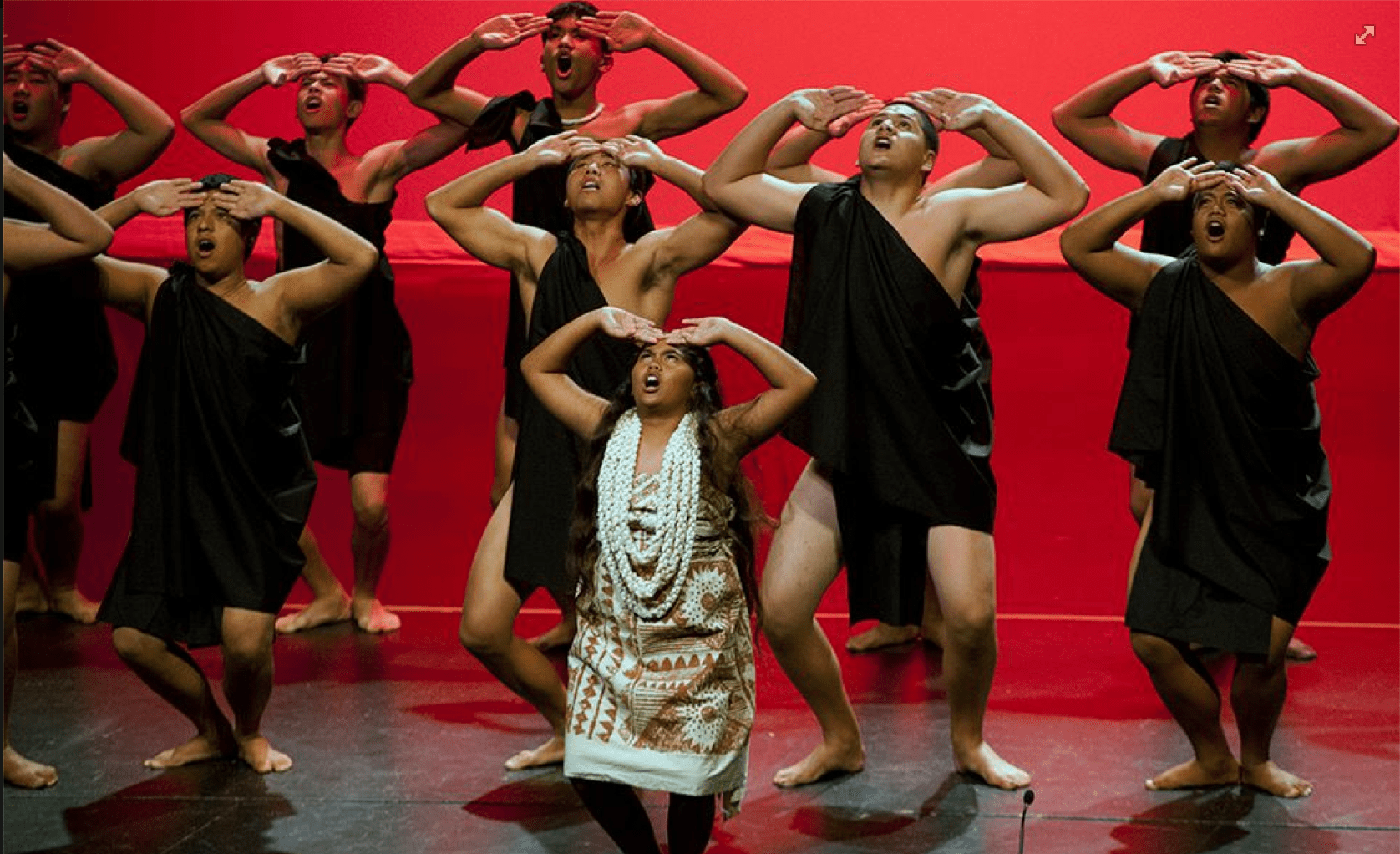
A scene from the documentary “Kumu Hina.”
Despite this multifaceted perspective, the core storyline belongs to Hina, a cultural champion in the Hawaiian community who has emerged from her struggles with her identity to become a powerful community leader. Her personal life journey involved far more than a transition from male to female — it is truly a story of becoming a powerful, confident Hawaiian mahu.
The film follows her as she travels to bring her Tongan husband home to Hawaii from Fiji, where he has been staying as he awaited a visa to enter Hina’s home country.
Despite the obvious love between the two, nothing about their relationship is easy. Perhaps it’s fair to say no relationship is easy, but the film illustrates that the challenges between Hina and Hema have little to do with her being mahu, and are more rooted in the cultural differences between them.
The second story is that of Hema, who often seems overwhelmed by everything happening around him. It’s not difficult to imagine a sweet, genuine romance that takes place before the events of this film, but it’s clear that filming caught some of their more challenging moments.
Hema is at times outright cruel and viciously disrespectful; it’s difficult to watch. It’s even more difficult to watch for those of us who know and love Hina.
The final and most poignant story belongs to Hoonani, a young “tomboy” who confidently asserts her right to be part of the boys’ halau (hula group), largely through Kumu Hina’s nurturing.
This was my favorite storyline. It reflected a sort of closure for Hina, who was once a young student herself who was picked on and harassed for her feminine ways in high school, yet she grew to become a strong, inspiring teacher who is fully capable of helping her own students.
One can see that Hoonani’s life has been significantly improved because of the obstacles that mahu like Hina have overcome, even if Hoonani doesn’t fully comprehend the gravity of these triumphs yet.
There is one stairwell conversation between Kumu Hina and Hoonani that is sure to make you cry, and it’s my favorite scene of the movie. If that doesn’t get you, the scene of Hinaʻs students singing “Hawaii Ponoī” after being reminded that their forefathers could not, will have tears streaming down your face.
I wish the film had been longer, and elaborated more on different aspects of the characters’ lives. Furthermore, I wish it captured more of Hina’s stature in the Hawaiian community. She is a master of practice and language. She is a community leader and champion. She is stunning and glorious. These aspects of her persona should have taken center stage more often.
Hina transformed the role of mahu in Hawaii.
By asserting herself and using the powerful framework of Hawaiian culture, she continues to enforce the strength and importance of people whose identities cannot be defined by Westernized, cookie-cutter standards.
Ultimately, this film tells a story of love, transition and acceptance. In order to support those whom we love, we must be willing to bear witness to their struggles and triumphs, and understand their perspectives. Yet, beyond that, in order to be members of a community we must love and respect the beauty and power of every individual.
We are all parts of a greater whole. I encourage everybody to watch this film, as it is a window into compassion and acceptance. It proves that those of us who may think we know the challenges faced by the mahu community still know very little. And we all have the power to change that.
As part of the 25th annual Honolulu Rainbow Film Festival, “Kumu Hina”will be screened on June 15 at 6:30 pm in the Doris Duke Theater at the Honolulu Museum of Art. For more information, click here.
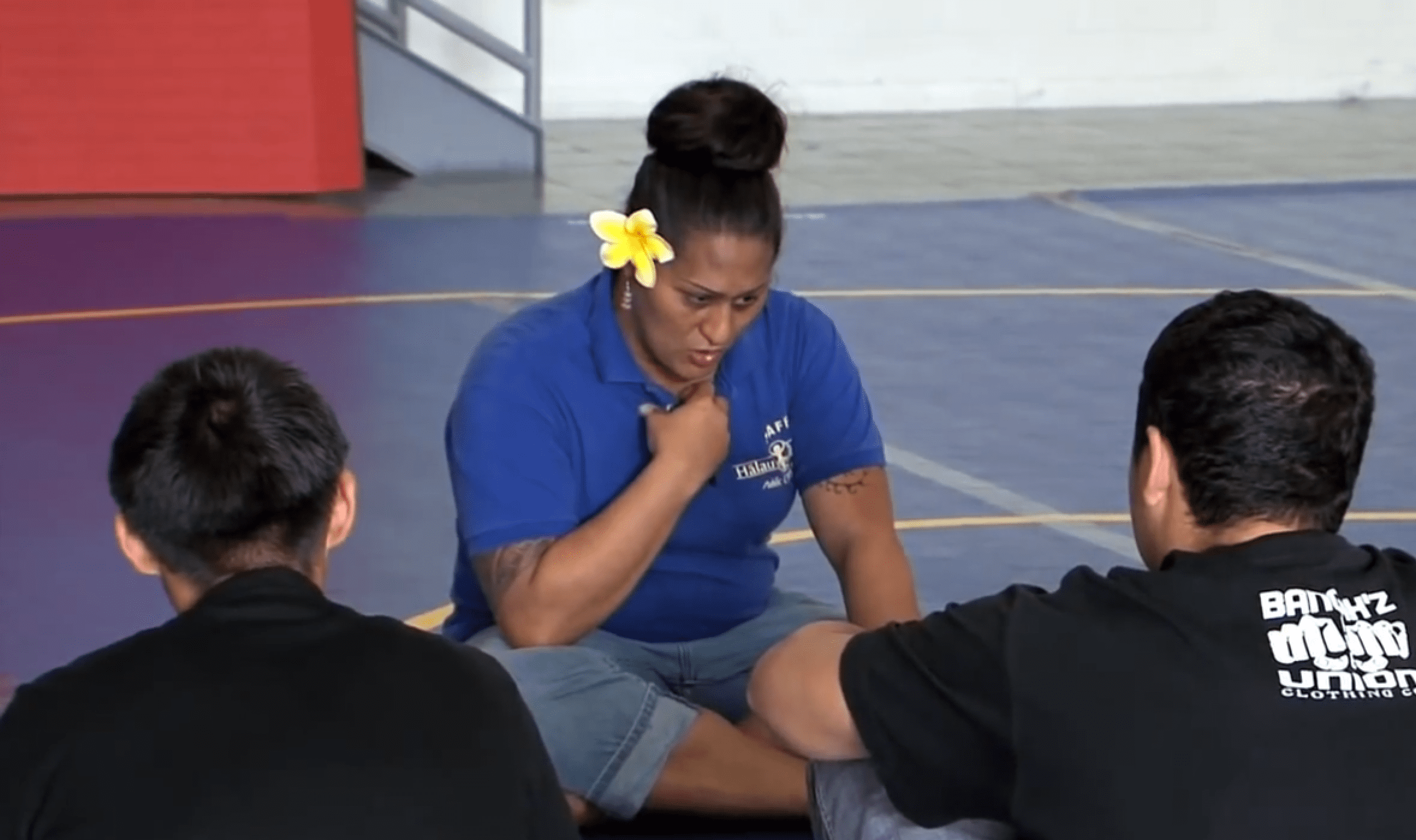
Kumu Hina, with flower in hair, in a scene from the film.
 GET IN-DEPTH
REPORTING ON HAWAII’S BIGGEST ISSUES
GET IN-DEPTH
REPORTING ON HAWAII’S BIGGEST ISSUES
Every campaign season we get tons of emails and commentary from people supporting or opposing particular candidates. Campaign Corner is a forum for healthy — and civil — discussion of candidates and their issues. Endorsements and criticisms are part of a voter’s decision-making process. Here are the ground rules: The column must be written by an identifiable person and accompanied by a current head shot and brief bio. The commentary must be original and not published elsewhere. No campaign email blasts. No letter-writing campaigns. Send columns and questions to news@civilbeat.org. The opinions and information expressed in Campaign Corner are solely those of the authors and not Civil Beat.
