

Hawaii Monitor: Push for Death Penalty Merited Pushback
Hawaii did away with the death penalty in 1957, so why was there little reaction when federal prosecutors recently sought the ultimate punishment?
Hawaii’s Legislature proudly abolished the death penalty in 1957, two years before becoming a state.
There had been 75 death sentences imposed by Hawaii courts since 1897 and, like executions elsewhere, the sentences appear to have reflected institutionalized discrimination and racism.
According to an analysis of these executions published in the Hawaii Journal of History, 64 percent of those put to death were either Hawaiian or Filipino. A total of 24 Hawaiians were killed and another 24 Filipinos were. Only a single Caucasian was executed.
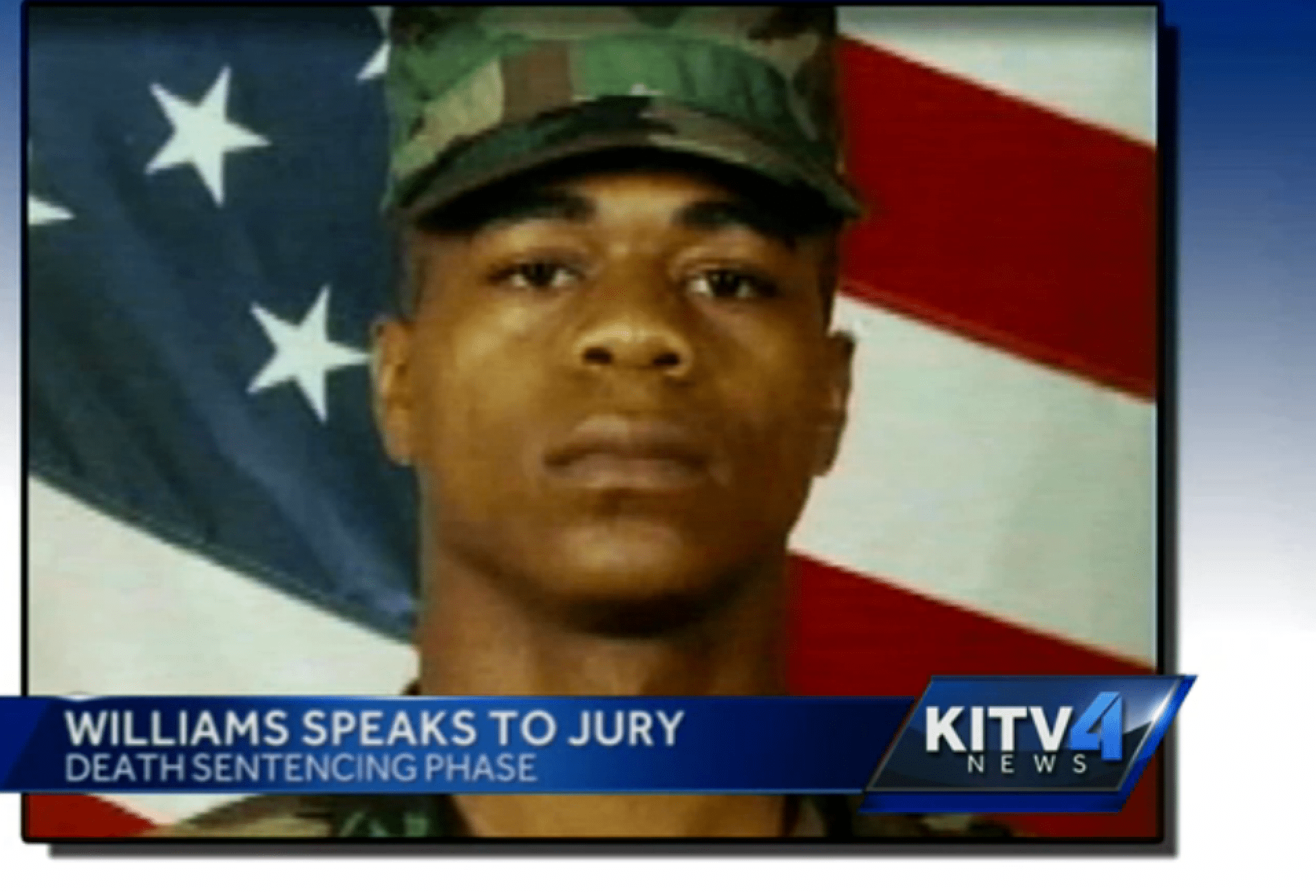
Naeem Williams, who was found guilty of killing his daughter, could have gotten the death penalty.
Screen capture of KITV
This disparity was a major factor that drove the Legislature to change the law. The bill doing away with the death penalty was signed by Gov. Samuel Wilder King, himself part-Hawaiian, on June 5, 1957.
Today, we are among 18 states, along with the District of Columbia, to have done away with this archaic, cruel, and costly process of primitive retribution, as have all European nations with the exception of Europe’s last remaining dictatorship, Belarus.
Even Russia has indefinitely suspended the use of capital punishment, effectively joining the growing ranks of countries backing abolition of the death penalty.
According to the European Union, “abolition of the death penalty is essential for the enhancement of human dignity and for the progressive development of human rights.
I couldn’t agree more.
But last week, we came very close to setting in motion the first execution in the islands in nearly six decades. It was avoided only after jurors deliberating the fate of Naeem Williams, the former soldier convicted in the gruesome death of his 5-year-old daughter, could not reach a consensus about the appropriate punishment.
Now that the case is over, I have several questions.
First of all, why did federal prosecutors push the death penalty in an execution-free state? There is, it seems, a lot of discretion, and a lot of politics, in the decision to prosecute any particular crime as a capital case.
The process, as I understand it, goes something like this. Whenever a case arises that could be prosecuted as a capital crime, local prosecutors are required to notify the Department of Justice in Washington. The case is then assessed by a DOJ review committee in light of the department’s Death Penalty Protocol, which considers a number of factors, including the strength of the evidence, the role of the defendant in the crime, and the likelihood that a jury would agree to impose a death sentence.
Does the protocol give any weight to whether or not the state allows the death penalty? It certainly doesn’t appear so. But it certainly allows considerable prosecutorial discretion.
Naeem was indicted in February 2006 and prosecutors announced in September of that year that they would ask for the death penalty if he were convicted. They stuck with that decision even though defense attorneys repeatedly sought a plea deal in which Naeem would agree to accept a sentence of life imprisonment without parole. That willingness to plead guilty is explicitly recognized in federal guidelines as one of the primary factors to be considered in deciding whether to seek the death penalty. So there appears to have been discretion possible both at the point of the initial decision by the Department of Justice, and later when plea offers were made.
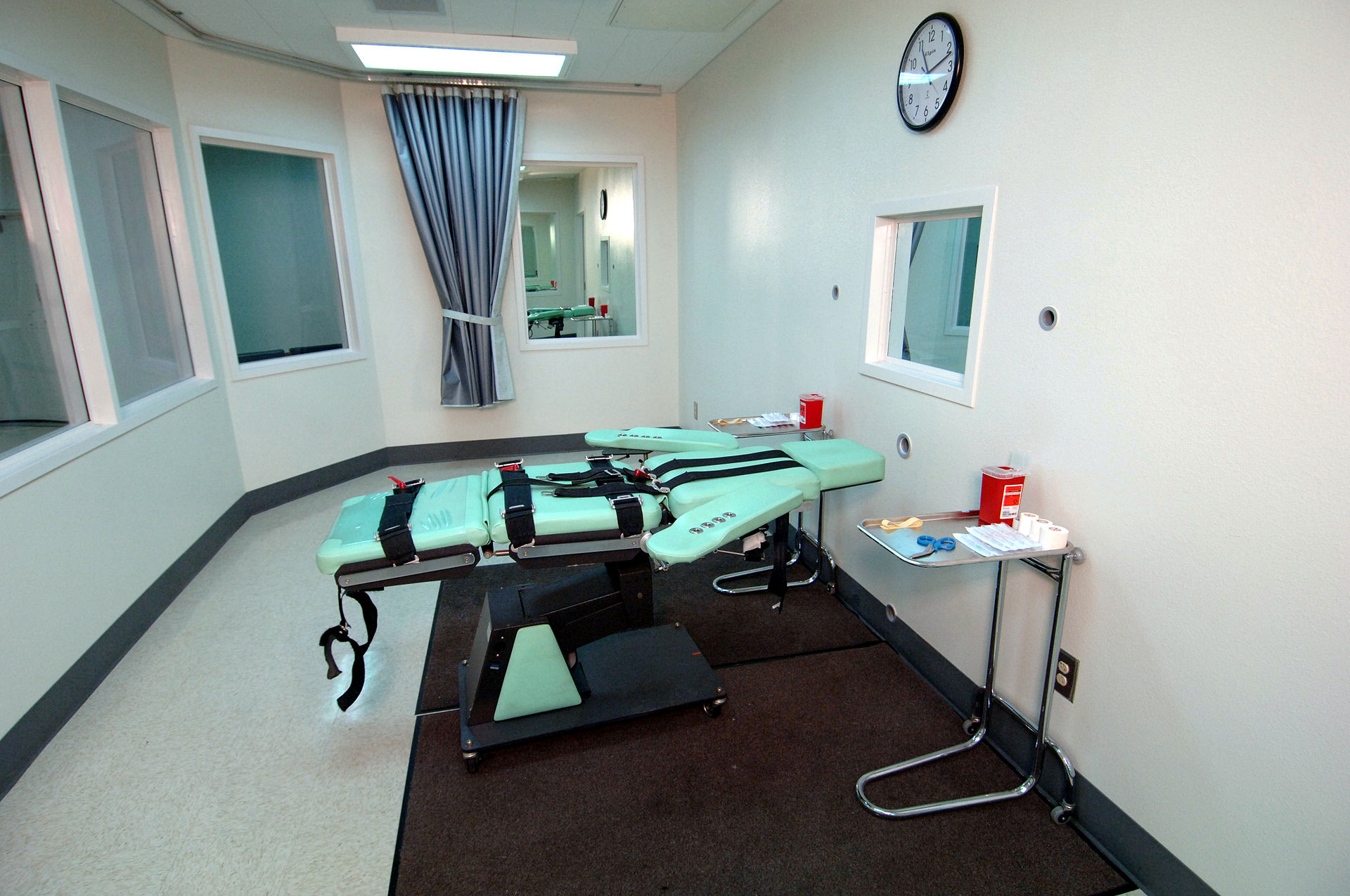
The room in San Quentin prison in California where convicts are injected with poisons that kill them.
California Department of Corrections and Rehabilitation
Why was there such an insistence on going to trial and seeking a death sentence? We’re now finding out that the decision has cost the public millions of dollars to pay for the necessary legal defense required in a capital case. We deserve to know how, why, and by whom those decisions were made.
That leads to my second question. Why were Hawaii’s political and religious leaders largely silent when it became clear federal prosecutors were going for the death sentence?
In Puerto Rico, the federal government has also sought the death penalty in at least six cases, although it is barred by that U.S. territory’s constitution. But in the case of Puerto Rico, the federal moves have drawn repeated protests by officials and the public, accusing the federal government of wrongly trying to “impose” capital punishment on them.
David Johnson, a University of Hawaii professor and author of “The Next Frontier: National Development, Political Change, and the Death Penalty in Asia,” said he isn’t surprised by the apathy of the public in Hawaii.
“A heinous crime like this evokes emotional reactions in people,” Johnson said. “Once you start to think and feel emotionally about such a reprehensible crime, the death penalty seems attractive.”
But Johnson said public opinion isn’t typically the driving force behind the abolition of the death penalty.
“Repeatedly, the death penalty has been abolished despite public opinion, not because of it,” Johnson said. “The important moving part is not public opinion, it’s the question of what leaders are going to do.”
And, unfortunately, there doesn’t appear to have been much, if any, pushback from either Hawaii’s elected officials or its religious leaders. It’s really been a rather embarrassing and appalling silence, in my view.
And then there are the broad questions of what could or should have been done to avoid this child’s death?
I recall a conversation several years ago with a friend teaching at an Australian university. We were discussing a similar murder case involving a parent killing a child. He was appalled that the American system of justice would simply prosecute these incidents as crimes instead of immediately recognizing them as symptoms of a gross failure of our social support systems.
Essentially, his view was that a murder of this kind should have immediately led to a forensic investigation of the failure of the whole system of child and family support.
Parents are often driven to child homicide because they don’t know how to cope with children’s misbehavior, lack parenting skills and feel unable to draw on available resources, my friend argued.
He also decried the lack of public support in the U.S. for women and families, as well as the lack of publicly provided child care, respite services for mothers, adequate social welfare, housing, job training, and on and on. It’s no wonder parents and families are stretched to the breaking point, he said, dealing with parenthood in the absence of adequate social supports.
It is likely that we’ll hear more about the systemic failures now that the criminal case is largely over, which should allow a civil lawsuit filed by the birth mother of the 5-year-old victim in 2008 to proceed. It has been on hold since 2010 in order to avoid conflicts with the criminal trial.
The lawsuit alleges “the manifold failures of government employees to exercise reasonable care in connection with reporting, investigating and evaluating suspicions that Talia was being abused, and in protecting Talia from abuse, unquestionably increased the risk she would be harmed.”
And that societal failure is, in the big picture, more important to understand and deal with than the criminal liability of the individuals involved in the case. But in our system, there is far more attention, and many more resources, devoted to the latter than the former.

