

PVT Land Co.: No Good Deed Goes Unpunished
The waste management company responds to a Civil Beat story earlier this week about a Honolulu City Council measure it’s involved in.
It’s not often a company gets publicly slammed for making a donation that amounts to a $20 million dollar benefit, but the August 26 article on PVT Land Company managed to do so. In the article, Civil Beat readers were led to erroneous conclusions about PVT and the benefits it would supposedly receive from Bill 47. Let’s start with the headline, which states PVT would save millions of dollars if Council Bill 47 passes.
The underlying assumption is that the material that PVT offered to the City is waste which PVT needs to unload and that Bill 47 will enable PVT to skirt the dumping fee. However, the material in question is not waste or garbage but feedstock made from the recycling of construction materials.
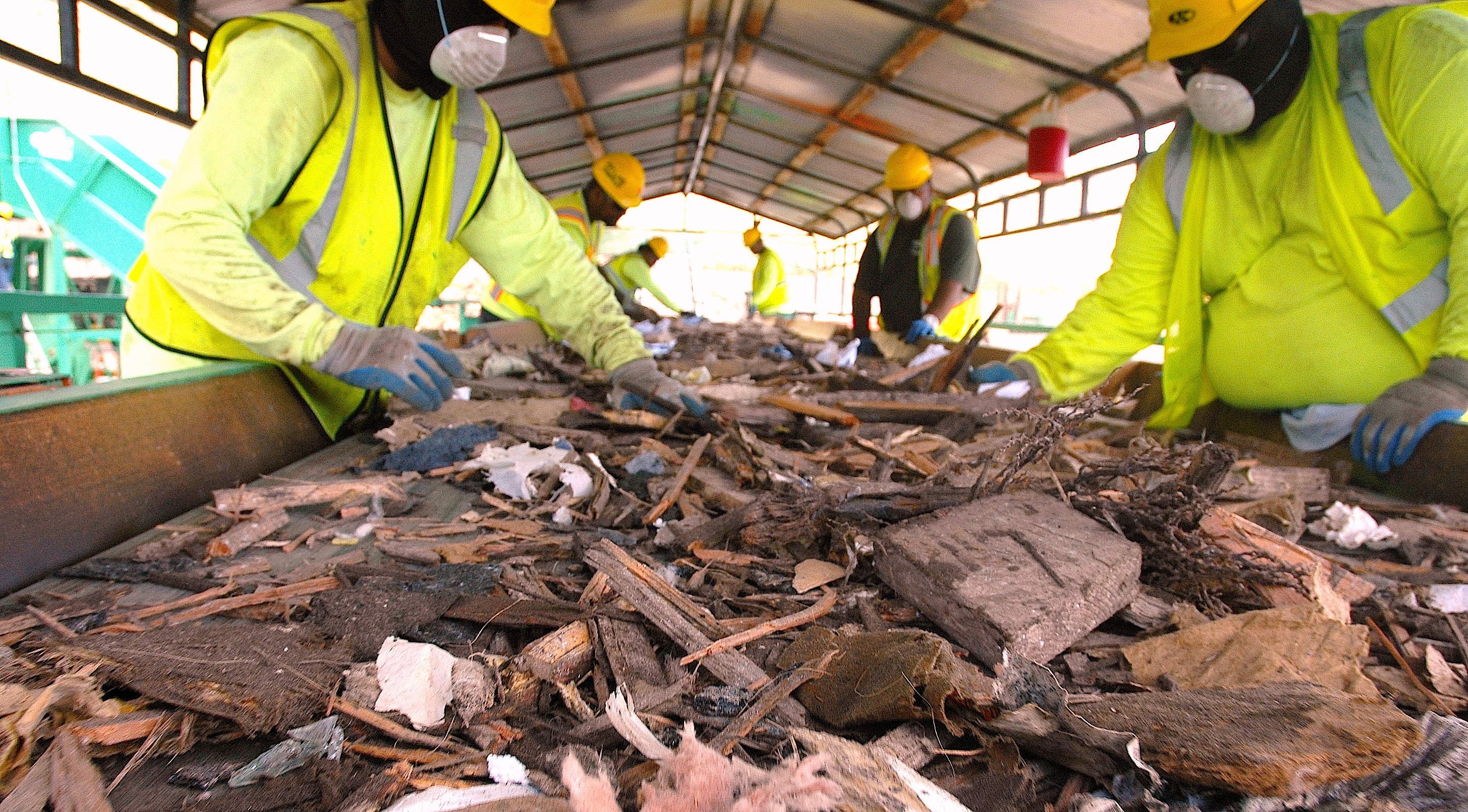
The Sort Line at PVT’s recycling facility. PVT accepts only construction and demolition debris, like wood, metal, concrete and masonry, and 80 percent of the material is recycled.
Courtesy: PVT Land Co.
This feedstock has a high BTU content—much higher than the trash now going into the H-Power facility. Because it is valuable, PVT has never considered dumping it and never will. In fact, by using it to produce additional energy to sell to Hawaiian Electric, the City will realize millions of dollars in revenue that it would otherwise miss out on.
Because there is no waste from PVT to be taken to H-Power, or Waimanalo Gulch, or any other City facility to dump, the City will never forego revenue from PVT dumping fees. If the City does not want the feedstock produced by our recycling operation, we are quite confident we will have the opportunity to sell it in the near future to privately owned biomass generators or utility-scale biomass facilities, or both.
We are perfectly happy to store it until that time. Sending the feedstock to H-Power until we can sell it would save PVT nothing but the space required to store it.
In addition, the article mistakenly characterizes the nature of the feedstock, which is made from wood salvaged from construction and demolition projects. We have been advised by third-party environmental experts that the wood in the feedstock we are providing can be safely burned at H-Power and poses no threat to public health or air quality.
As biomass, it is more environmentally friendly than other materials already being used at the H-Power facility. Our position is simply that if we are going to provide something of value at no charge, from which the City will benefit financially, we should not have to pay to deliver it.
With regard to Bill 47 giving PVT some kind of special treatment, once again, there appears to be a disconnect between statements in the article and the facts about the feedstock and PVT’s recycling operation. To receive preferential treatment, PVT would have to be competing with other companies to use H-Power to dispose of waste.
The reality is PVT is not disposing of waste and no other company on Oahu is producing biomass feedstock and offering it, pro bono, to the City to burn in H-Power.
Moreover, Bill 47 is not an attempt to make an end run around the Department of Environmental Services. PVT never asked the department for an exemption and has never been denied such a request. It was our understanding that the existing ordinance would need to be amended to allow a very limited exception for PVT, so we could donate feedstock to the City, without being charged a fee. That was the genesis of Bill 47.
We are proud of our recycling operation and our evolution from a landfill to a facility where 80 percent of the material brought in is recycled. We saw this donation as a way to let people know about this and are disappointed that the donation of feedstock we offered to the City has been so badly misconstrued. We also want to do our part as members of the community and thought that giving away a valuable commodity to benefit the City and our fellow residents would be a good way to demonstrate our goodwill.
 GET IN-DEPTH
REPORTING ON HAWAII’S BIGGEST ISSUES
GET IN-DEPTH
REPORTING ON HAWAII’S BIGGEST ISSUES
Community Voices aims to encourage broad discussion on many topics of community interest. It’s kind of a cross between Letters to the Editor and op-eds. This is your space to talk about important issues or interesting people who are making a difference in our world. Column lengths should be no more than 800 words and we need a current photo of the author and a bio. We welcome video commentary and other multimedia formats. Send to news@civilbeat.org. The opinions and information expressed in Community Voices are solely those of the authors and not Civil Beat.
