

Visiting ‘Elders’ and the Pillars of Peace in Hawaii
A trio of prominent visitors, including Archbishop Desmond Tutu, will discuss ethical leadership in a fast-changing world.
“The world is round” was a statement that rocked our planet when it was first voiced by Copernicus back in the 16th century.
For so long, the status quo was predicated on a world-is-flat concept, such that anything different didn’t seem possible. Until eventually, it did.
Now, our present day world is suddenly “flat” again with the globalization of communications, commerce, education and culture. In addition, we find ourselves faced with transnational issues like terrorism, social justice, human rights, food security and energy use.
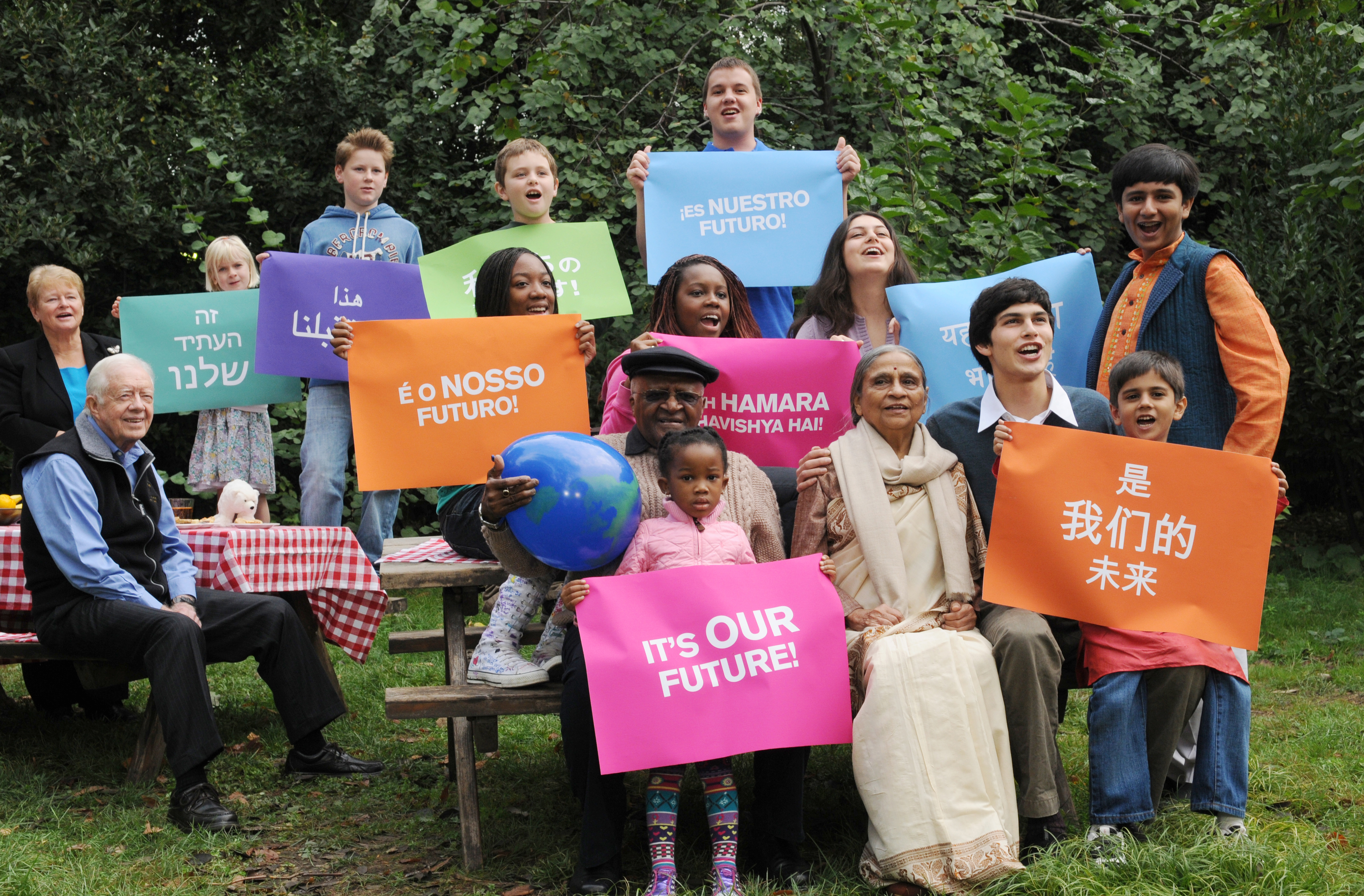
Four of the seven “Elders” — Gro Brundtland, former President Jimmy Carter, Archbishop Desmond Tutu and Ela Bhatt — with their grandchildren in 2009.
Kate Brooks/The Elders
Individual nations are no longer equipped to tackle these issues — nor can it successfully hope to do so without the support of others. Our world depends upon non-governmental organizations, international institutions and other groups to span the issues of our age.
One such group, The Elders, is visiting Hawaii this weekend. They are an organization of expert leaders who can influence, advocate, raise ideas, develop solutions and increase awareness of the world’s most pressing issues. Embodying differing beliefs, national and cultural backgrounds, The Elders illuminate important and difficult issues and enable others to help facilitate solutions and change.
The people of Hawaii will have a unique opportunity to engage three members of The Elders: former Prime Minister of Norway and former Director-General of the World Health Organization Gro Harlem Brundtland; renowned lawyer and human rights movement leader Hina Jilani; and a Nobel Peace Laureate and veteran anti-apartheid activist, the Archbishop Desmond Tutu.
Pillars of Peace Hawaii will host their visit including a leadership talk entitled, “Ethical Leadership in a Rapidly Changing World” on Aug. 29, and a public talk under the banner of “A Just and Inclusive Global Community” on Aug. 31.
Created in 2007 from the vision of activist Nelson Mandela, entrepreneur Richard Branson, musician Peter Gabriel and a handful of others, The Elders is a group of renowned global leaders, independent of any national government or other vested interest, who share a commitment to peace and universal human rights.
Pulling together their wealth of influence and experience, they spearhead change and work towards finding a solution to society’s greatest challenges, including climate change, equality for girls and women, conflicts between nations and religious groups, violence and socio-economic justice.
Beyond politics and borders, we can adopt a global approach to problems and work together with shared interests to promote universal human values that help us all thrive.
We’re pleased Hawaii is the host for this trio and the important topics of discussion they will raise: ethical leadership; a student exchange focusing on wisdom of elders and youngers; climate change and leadership; and a just and inclusive global community.
Our unique Hawaiian history, culture and spirit of aloha can play a significant role in the realization of The Elders’ vision.
But beyond what Hawaii can teach and share with The Elders about aloha and kokua, our island state has the opportunity to influence the world.
For more information on The Elders’ visit to Hawaii, visit www.pillarsofpeacehawaii.org.

