Read My Lips: Raising Taxes Is Old News
History shows us that small, temporary tax hikes have done a lot of good in Hawaii.
One message coming in from the Governor’s race is no one should dare propose a tax increase.
His opponents attack David Ige for once having proposed a 1 percent increase in Hawaii’s General Excise Tax (GET).
Prior to this, David Ige’s campaign attacked Neil Abercrombie, for once having proposed that pension income be taxed.
Ironically Mufi, Duke, maybe even David actually raised the GET. This enabled Honolulu rail to be funded.
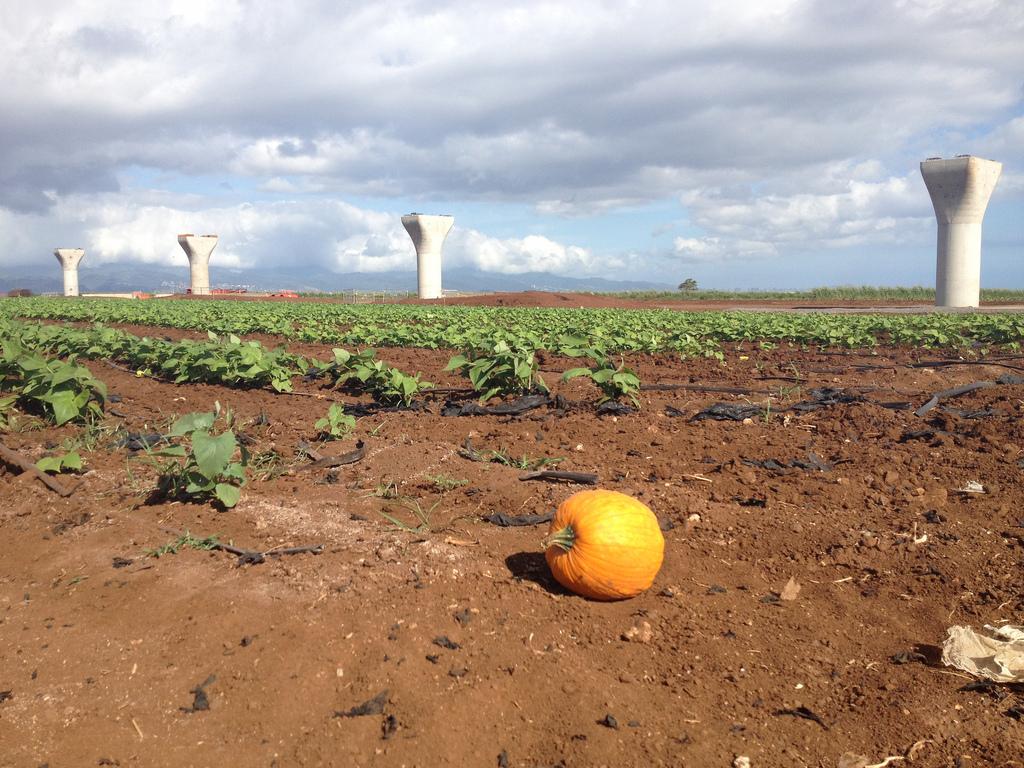
An increase in the general excise tax is funding the Honolulu rail project.
Nick Grube/Civil Beat
Hypocritical, deceitful, campaigning that assumes the electorate has the memory of an Opihi is a bit new for Hawaii. (I can’t really remember for sure).
Yet we can learn from history because there are many recent examples of taxes in Hawaii being raised and lowered, and their effect.
In 2007 Oahu began collecting that 12.5 percent increase in the GET. The result, despite dire warnings, nothing happened to prices, employment, consumption, or any economic variable. (Plenty else happened to these for other reasons).
Governor Cayetano’s economic reform in 1998 lowered upper end income taxes. The economy remained sluggish.
In 2008 the unemployment tax was lowered because the unemployment insurance fund had too much money. In 2010 it was raised because the fund had too little money. No effect on unemployment in either case.
The Great Recession revealed that our main problem economically was not the recession but the budget crises that resulted from it.
Peak to trough the national economy fell 4.6 percent while ours fell at under 2 percent. Tax revenues during this same period dropped 8.5 percent.
Thus “balancing the budget” here was the central question for our economy. (Infusions from the national stimulus, actually offset this entire decline temporarily).
There were essentially three ways to do this: raise taxes; cut expenditures; or raise taxes and cut expenditures.
What happened was income tax rates, tourism taxes, conveyance taxes on the sale of real estate, and cigarette taxes were all raised. Overriding former Gov. Linda Lingle’s veto on most of these, the Legislature increased taxes by $550 million over two years.
The state also cut expenditures by about $800 million, less than half being cuts to public employee salaries. (One very cruel example was the elimination of a health care insurance program for toddlers).
These tax increases are interesting because they were small, and/or temporary, and targeted. Meaning you can actually see what the effects were at a micro level.
And there were predictions. Byron Ganges of the University of Hawaii Economic Research Organization thought these sorts of tax increases would do little harm. I thought in aggregate they would do harm but less than expenditure cuts.
The Lingle Administration backed by the Tax Foundation thought it should be all cuts because raising taxes would do much greater harm to the economy.
They predicted entrepreneurs would leave the state because of the income tax increase. The impact would be a further decline the economy.
Lingle predicted a rise in tourism taxes would lead to a decline of 6,400 jobs by 2012. In real estate there would be a severe decline because the conveyance tax increased its price.
The portion of GDP covered by the tourism tax (accommodations) had a big leap in 2010, and exceeded its previous peak in 2011. In 2012, rather than a decline there were 3,400 more jobs.
Real estate recovered almost immediately, returning to its 2008 GDP levels in 2010.
Nor was there a mass migration of entrepreneurs out of Hawaii.
It’s also easy to see how the cuts affected the economy.
You can use the state input output tables to “predict” the effect of these and see what happens. With multiplier effects, the expenditure decline would lead to a little over a 1 percent decline in the economy. If you included the tax increases it would be 2 percent.
As the stimulus faded there was a small decline in economic growth of 1 percent in 2011 with the consequent effect on tax revenues. And this was why Ige proposed the GET increase and Abercrombie the income tax on pensions.
One can easily see why some small and/or temporary tax cuts have little effect; people tend not to notice them very much. Or because they are temporary they don’t affect people’s plans very much. On the other hand progressive, state income taxes don’t have much effect because they are fully deductible from federal taxes.
Hawaii’s Tax Review Commission 2010-2012 Final Report actually recommended increases in the GET, pension taxation and reduced income taxes on lower income brackets. A careful reading of it and its Appendices will reward people with a “how it works” understanding. (It will also alarm people, unnecessarily in my opinion, about future pension and health care obligations).
The lesson here is that small, temporary targeted tax increases did (and could have done more) to alleviate a lot of suffering. A temporary one-half percent increase in the GET would have eliminated most of the remaining expenditure cuts.
The other lesson from the Gubernatorial Campaign is we are all doomed … to repeat the same the mistakes again, and again, and again.
 GET IN-DEPTH
REPORTING ON HAWAII’S BIGGEST ISSUES
GET IN-DEPTH
REPORTING ON HAWAII’S BIGGEST ISSUES
Community Voices aims to encourage broad discussion on many topics of community interest. It’s kind of a cross between Letters to the Editor and op-eds. This is your space to talk about important issues or interesting people who are making a difference in our world. Column lengths should be no more than 800 words and we need a current photo of the author and a bio. We welcome video commentary and other multimedia formats. Send to news@civilbeat.org. The opinions and information expressed in Community Voices are solely those of the authors and not Civil Beat.