Save the Dairy: We Need Producer Cooperatives
In Hawaii we have high prices, for milk and a lot of things, while producers are driven out of the market.
One of the last two dairies in Hawaii, Cloverleaf Dairy,will probably close at the end of the year.
It is following the same pattern as the previous 38 dairies. Meadow Gold pressured Cloverleaf Dairy to ask for a “waiver” in their minimum price. (Big Island Dairy, the only other dairy in Hawaii got a waiver in August).
The minimum prices producers receive here has been $2.98 a gallon, it has now been reduced to $2.30 a gallon.
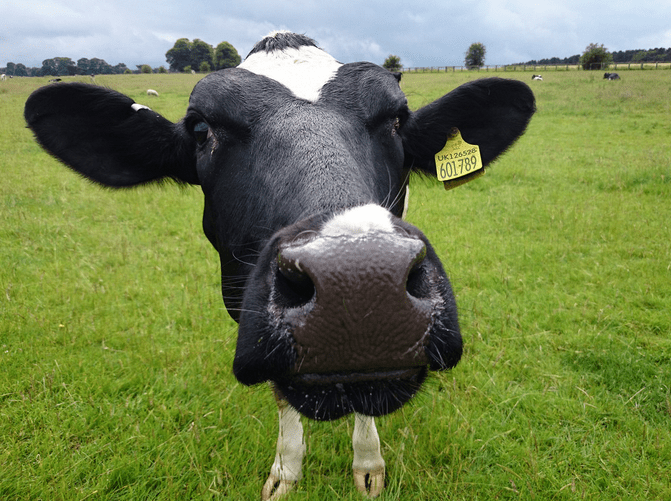
A dairy cow.
Flickr: Steven Zolneczko
In California the minimum price for whole milk is $1.61 per gallon, which retails at an average price of $3.21 a gallon. Matson’s rate for shipping milk from California is $1.47 per gallon. So the cost of buying milk from dairies in California and shipping it here is $3.08 per gallon. (That’s $3.08 versus $2.98).
When was the last time you saw a gallon of milk even close to these prices in Honolulu? Costco in Kapolei sells a gallon for $4.99.
The point is that prices here are only loosely tethered to costs of production.
And that means something is wrong. Maybe it’s capitalism?
Nope. Competitive markets over time produce retail prices close to the costs of production.
When demand produces prices well above the cost of production, new producers enter the market and the increased supply drives down prices toward the cost of production.
In Hawaii we have high prices, for milk and a lot of things, while producers are driven out of the market. Back in the 1980s Hawaii was self sufficient in milk.
Meadow Gold’s press statement said: “We’re pleased one of the state’s milk producers received a waiver today so that our plants in Hilo and Honolulu can continue to buy nearly 100 percent of the raw milk produced by Hawaii’s dairy farms.”
Meadow Gold, is quite proud that it’s the only purchaser, and supplier, of local milk. Meadow Gold in turn is owned by Dean Foods of Texas.
Meadow Gold is a monopolistic purchaser of local milk. In “econo-babble” they are called as a “monopsonist.”
As with monopolists the outcome from a market that is controlled by a monopsonist is that producers make less money, while consumers pay lots more for the product.
Meadow Gold’s press release is revealing also in its disdain for the intelligence of both our local media and residents.
They state, “Meadow Gold of Hawaii has paid more than $4 million in higher raw milk prices from Hawaii’s dairy farms compared to mainland raw milk prices.”
Duh. You do business in Hawaii. Where you pay 250 percent more for electricity and farmland is valued at 300 percent more than California. Or maybe the press release was written in Texas?
Meadow Gold (or Dean Foods) goes on, “Recently, our mainland milk processing competitors have won competitive bids against us” by buying milk in California and shipping it here.
Like no one here in Hawaii goes shopping? Different BRANDS of milk are sold in local stores, not one. And one brand is Meadow Gold’s “Hawaii Fresh” milk, sold at Whole Foods for $7 a gallon, which Meadow Gold purchased for $2.98 a gallon.
And local residents have a demonstrable preference for local, fresh milk. One they are willing to pay a premium for. Maybe not 250 percent above a producers price.
Why not 100 percent? Then local milk would “only” be $5.96 per gallon.
This is a very difficult problem. Minimum prices set at a state level were a means of combatting local monopolies. Meadow Gold has just completely destroyed that system.
We could set up subsidies for dairies. That would be worth it if it saves this dairy. An agricultural tax credit, somewhat like the one we’ve had for high tech.
Yet what if Meadow Gold simply sees that as an opportunity to extract more from its suppliers? Then the only one being subsidized is a Texas corporation.
One way out would be a producer-owned cooperative made up of dairies who sell their milk to the coop for processing. These exist in several states already and can be facilitated by state government.
That way we might get more dairies and lower prices. That the best capitalist solution for Hawaii.
 GET IN-DEPTH
REPORTING ON HAWAII’S BIGGEST ISSUES
GET IN-DEPTH
REPORTING ON HAWAII’S BIGGEST ISSUES
Community Voices aims to encourage broad discussion on many topics of community interest. It’s kind of a cross between Letters to the Editor and op-eds. This is your space to talk about important issues or interesting people who are making a difference in our world. Column lengths should be no more than 800 words and we need a current photo of the author and a bio. We welcome video commentary and other multimedia formats. Send to news@civilbeat.org. The opinions and information expressed in Community Voices are solely those of the authors and not Civil Beat.