

Monday Memo: Boylan’s New Gig, Gun Safety and Hope for Our Seals
Honolulu’s new housing coordinator is inexplicably on the job, the threat of gun violence is low in Hawaii and a new habitat plan offers hope for the monk seal.
Peter Boylan, new housing coordinator for the Honolulu City Council PF Bentley/Civil Beat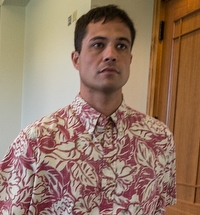
PETER BOYLAN, HOUSING COORDINATOR. Peter Boylan began work last week as easily the most talked about new bureaucrat in Honolulu city/county government. The new housing coordinator – hired by the City Council to a position that previously didn’t exist – is hardly unknown, given his prior service as a staff aide to both Big Island Mayor Billy Kenoi and the late U.S. Sen. Daniel Inouye, not to mention managing Colleen Hanabusa’s unsuccessful Senate campaign last year.
That is the work for which Boylan is principally known, not housing or homelessness – areas in which he has no apparent experience. But as we learned last week, he’ll be paid $84,000 annually on a “professional services contract” to be the City Council’s lead staffer on those two matters, which we’ll just optimistically refer to as growth opportunities.
It’s been argued in some quarters that an experienced staffer with deep knowledge of Hawaii government might do fine in such a position. Perhaps. But Council Chair Ernie Martin did Boylan no favors in refusing to release his résumé or answer questions about the hire or articulate what the Council expects Boylan to achieve, despite being given multiple opportunities to do so by Civil Beat.
Rather than making an enthusiastic case for his new charge, Martin looked dodgy in strenuously avoiding the issue – like a politician with something to hide.
Martin is increasingly discussed as a mayoral candidate for 2016, the prime challenger at this point to incumbent Kirk Caldwell. If he joins that race, the Boylan appointment is likely a decision voters won’t allow him to continue to dodge.
Boylan mounted a tepid effort at self defense with a written statement long on generalities and turned down a chance to speak on the record.
As we noted in last week’s Monday Memo, Martin is increasingly discussed as a mayoral candidate for 2016, the prime challenger at this point to incumbent Kirk Caldwell. If he joins that race, the Boylan appointment is likely a decision voters won’t allow him to continue to dodge.
GUN VIOLENCE. Facts are wondrous things. Their immutable nature provides a reliable foundation for human knowledge, and with knowledge comes the ability to make sound, well-reasoned decisions about our lives.
A study published last week in the American Journal of Public Health gave Civil Beat and its readers a few juicy facts to ponder. The upshot: Among the states studied, those with the strictest gun laws in 2010 had the nation’s lowest gun-related injury rates. University of Washington researchers conducting the study found that Hawaii, with gun laws that are among the country’s toughest, had the lowest rate – 3.3 non-fatal gun injuries per 100,000 people.

Handguns like this Smith & Wesson 500 Magnum 2 are regulated tightly in Hawaii, which has notably few gun-related injuries.
Flickr: Stephen Z
Humans were most likely to be injured by a gun in rootin’ tootin’ loaded-and-shootin’ South Carolina and North Carolina, which had rates of roughly 37 and 32 per 100,000, respectively — 10 times higher than Hawaii.
Democratic Sen. Will Espero lauded Hawaii’s gun laws as the reason for the state’s low numbers, while Republican Sen. Sam Slom pointed to gun education from the National Rifle Association. Their different views largely mirrored those of commenters on the Civil Beat site, where angry gun enthusiasts decried firearm regulation and the integrity of the study, while gun opponents drew solid lines between strict regulation and fewer injuries.
While some dimensions of the peer-reviewed study, conducted by public health faculty at one of the nation’s top research universities and published in a prestigious scientific journal, are open to interpretation, the essential facts are not. So, let’s review.
• Fact: Hawaii has strict gun laws.
• Fact: Hawaii had the lowest gun injury rate among the 18 states studied.
• Fact: We must be doing something right.
Argue about the fine points if you will, but the truth is those who live here rightfully feel relatively safe from criminal activity where firearms are involved and from the potential of firearms accidents, given guns’ paucity in Hawaii. Other factors no doubt play a role in our gun-related success – the isolation of our state and the difficulty of bringing a firearm into Hawaii, for starters — but our gun laws create an environment where effective gun control is possible.
No matter where you stand in the gun control debate, you can have that debate in the relative safety of the Aloha State, where your chances of taking a bullet are pretty low. Which leads us to perhaps the most pleasant fact: Lucky we live Hawaii.
A Hawaiian monk seal with her mother at Waipake Beach on Kauai. DLNR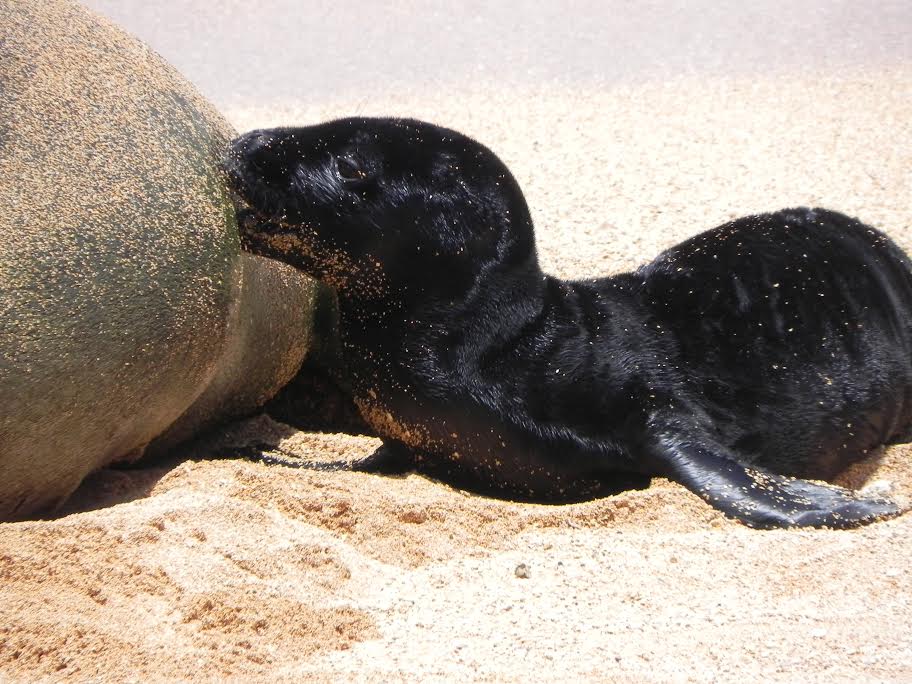
The National Marine Fisheries Service recognized that grim reality in finally approving a “critical habitat plan” last week for one of two species remaining globally of the monk seal (a third, the Caribbean monk seal, went extinct in 2008). With Mediterranean monk seal numbers down to about 600, our seal may soon be the last surviving.
The new plan expands areas recognized as critical habitat for the Hawaiian species by nearly 7,000 miles, extending it to Oahu, Maui, Kauai, Niihau and Big Island. The plan requires extra attention and oversight be given to any activities that impact the coastlines of those areas, including dredging, construction, pollution and military activities. Perhaps just as importantly, the plan may be helpful in moving more of the animals away from the northwestern Hawaiian islands, where predation of seal pups by sharks is the primary threat to the seals’ existence.
Under a new management plan for the monk seal, feds aim to increase the numbers of the animals actually living in Hawaiian waters from the current paltry total of about 200 to 500. Only about 1,100 of the animals exist in the wild, and though the rate of decline has slowed to about 3 percent a year, thanks to conservation efforts, further declines could diminish the genetic diversity needed to sustain a species.
As we said in June in advocating for NMFS action, endangered animal species whose habitats are declared critical are twice as likely to be in recovery as those without habitat recognition. The “dog that runs in rough water” — ‘ilio holo i ka uaua, as the seal is called in Hawaiian – deserves every chance we can provide. Let us hope that the sum impact of the new habitat and management plan is a brighter future for this beautiful, iconic marine mammal.

