Monday Memo: Regulating Medi-Pot, Martin’s Potential Run, Iran Deal Politics
Why is the Health Department moving so slowly on marijuana dispensary rules? Martin for mayor in 2016? And how will the Iran deal shake out for Schatz, Hirono?
MEDI-POT? NO RUSH. Dec 30 — that’s the Department of Health’s self-imposed deadline for publishing administrative rules concerning how Hawaii’s medi-pot industry will be regulated, as Civil Beat’s Anita Hofschneider reported last week. That means 4½ more months of regulatory silence for this complicated new economic sector, which is expected to be open for business in 11 months.
Why the foot-dragging? Efforts have been underway for 15 years to legalize medical marijuana dispensaries and grow operations, and everyone knew coming into 2015 that the issue would loom large in the legislative session. It’s difficult to understand why months after legislation was passed, the Health Department only now seems to be kicking into gear.
Transitioning marijuana from an illegal substance to a medical commodity has not been without controversy. A last-minute release of regulations – dispensary applications are due less than two weeks after the Dec. 30 deadline – may create suspicions of rigged processes, depending on who get the licenses and what the new rules call for.

One of the displays at the Marijuana Expo, held last month at the Hawaii Convention Center. Medical marijuana businesses are rightly complaining about the timeline for releasing new rules regulating the fledgling industry.
Cory Lum/Civil Beat
Further complicating the timeline, lawmakers are rightly calling for public comment to be heard on the rules. Why that wasn’t provided for already is a mystery. Everyone knew this rollout would be a regulatory sprint to the finish line, but this looks more like a casual stroll while potential business owners struggle to make big, costly decisions about how their dispensaries would work.
State Health Secretary Virginia Pressler and her department need to move more quickly to complete the rule-making process, if the public’s trust in the state’s oversight of this new industry is to be maintained.
Honolulu City Council Chair Ernie Martin is widely thought to be preparing for a run for mayor. Cory Lum/Civil Beat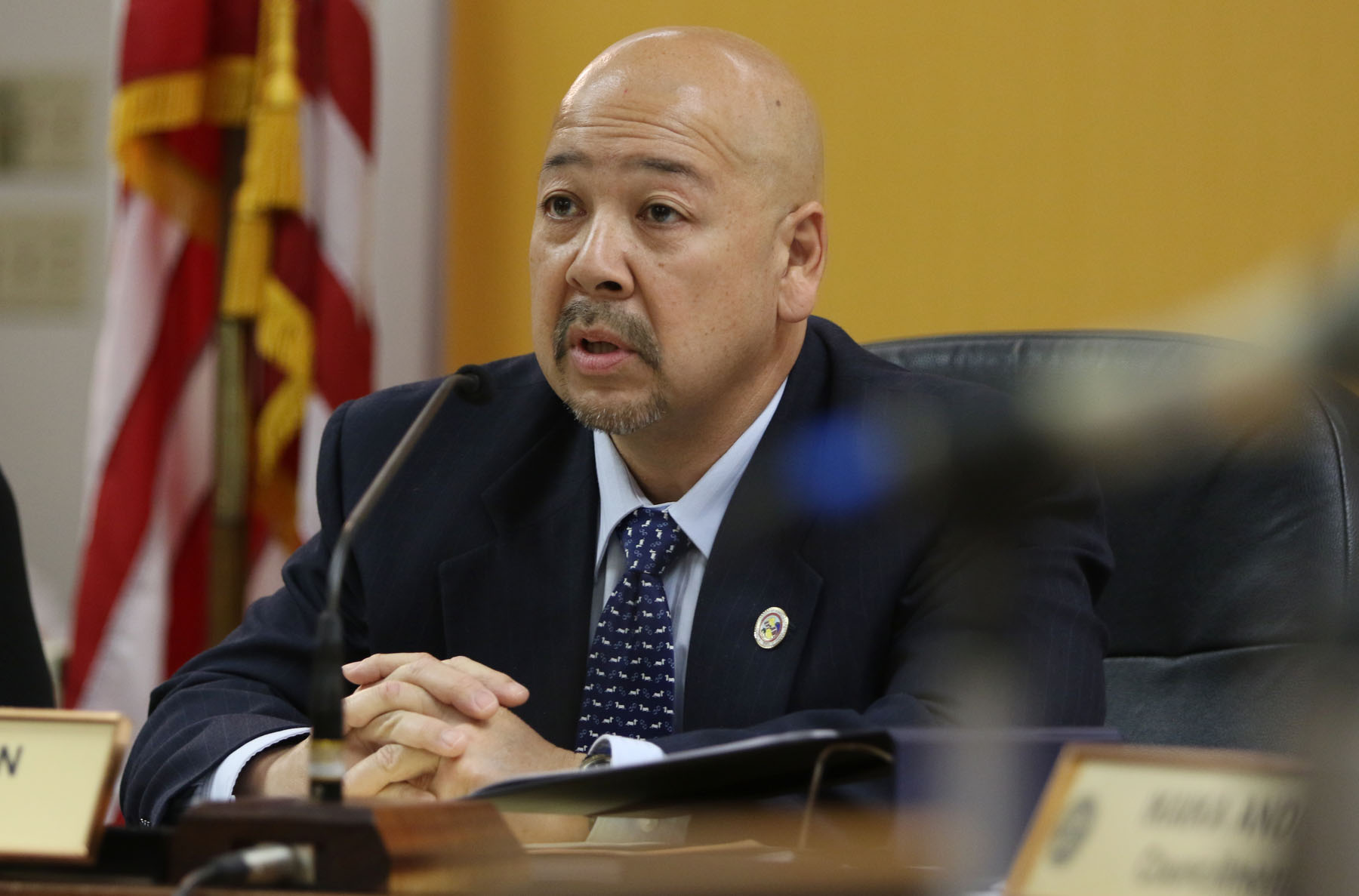
“But you didn’t answer the question,” said Lee, doubling back after a windy Martin evasion. “Are you planning to run for mayor? Next year?”
“I’ll run for mayor – whether it’s next year or succeeding years,” said Martin. “I mean, ultimately there’s a lot on the plate for the City Council to deal with. To be focused on any political office at this point in time would be a disservice to those who elected me.”
Coyness aside, Martin’s been acting more and more lately like someone who intends to run. When Caldwell turned away his proposal to convert the vacant Hilo Hattie property on Nimitz Highway into a huge homeless shelter, Martin essentially went over the mayor’s head, pushing the proposal to Gov. David Ige, whose Leadership Team on Homelessness is now considering it. Both Caldwell and Martin are team members.
More recently, he took the novel step of hiring his own housing coordinator – political operative Peter Boylan, who previously served as an aide to Big Island Mayor Billy Kenoi, the late Sen. Daniel Inouye and former U.S. Rep. Colleen Hanabusa, as well as spokesman for her unsuccessful U.S. Senate race last year. And beyond housing and homelessness, there are Martin’s comments on the pending rail tax discussion, which he promises will be no day at the beach for Caldwell, rail’s biggest proponent.
As Civil Beat’s Chad Blair reported recently, Caldwell had a commanding cash advantage at the end of June — $1.5 million to Martin’s $428,000. But that may not be as important as one might think in a state where Ige didn’t surpass the $500,000 mark last year until two weeks before a primary in which he beat the incumbent governor by 30 points.
Civil Beat doesn’t endorse in political races, but we do encourage competition. Other potential candidates whose names keep coming up include Hanabusa, who gave up her House seat when she ran for Senate last year, and former Mayor Mufi Hannemann, though lackluster performances in the three races he’s run since stepping down as mayor in 2010 to run for governor have lowered his stock. We’re likely to hear more possibilities as summer turns into fall.
Daunting issues in Honolulu’s near future – would you want to take on homelessness and the Honolulu rail project? — plus Caldwell’s big early money advantage may tamp down interest.
Honolulu, however, deserves a real competition over who will be its CEO. So whether it’s Caldwell vs. Martin or a field of contenders, we’re rooting for a spirited race.
U.S. Sens. Brian Schatz and Mazie Hirono are critical votes on the Iran nuclear deal. U.S. Sen. Mazie Hirono
U.S. Sen. Brian Schatz announced his support early, and emerged last week as a leading voice on the deal, as the number of announced Senate supporters grew to 20 – 14 short of the necessary 34.
Sen. Mazie Hirono will disclose her position Monday, her staff told Civil Beat last week.
Supporting this hard-fought diplomatic deal to sharply limit Iran’s nuclear options for the next decade (at minimum) is the right call, but we’re eager to see how the politics shake out for both senators.
Schatz is bucking the leadership of close colleague Sen. Charles Schumer of New York, the lone Senate Democrat who has announced opposition to the deal, but is likely to be the party’s next leader in the Senate. Schatz is instead lining up with Senate Democratic Whip Dick Durbin, who is leading the charge for the agreement. If the deal survives the Senate, Schatz may stand to gain influence there as well as with the White House in President Obama’s final 15 months.
Hirono has been more cagey on her position, but with the focus now on getting the final 14 votes for passage, we’d be surprised if additional enticements haven’t been offered to leverage her support. The longtime legislator knows her way around a deal.
How this one ends is anyone’s guess. But Hawaii’s minority party senators not only have the challenge of making the best call on a major question of conscience, but on negotiating the best possible arrangement for their state when their two votes have rare, oversized importance.