

Whole Child Left Behind: How Hawaii’s ‘Model’ Approach Fails Kids
The top-down, business model of public education that our state advances today is obsessed with mass testing, teacher evaluation and other dubious reform measures.
Aside from a medical disability and unreasonable time away from family, I left a Department of Education classroom after more than a decade of selfless service to our students, appalled that our national and state DOE has deserted our youth, inadvertently complying with an education system where standardized testing and funding fears have trumped the complex needs of our students.
Once dedicated and passionate, I reluctantly joined the ranks of disgruntled teachers purged after more than a decade of top-down, business model public education increasingly defined by testing and publishing companies.
“No Child Left Behind” and “Race to the Top” will be remembered as “the Iraq War of public education” — that is, an ideologically fabricated crisis to perpetuate federal intervention and privatize public education, while fostering a legacy of “collateral damage.” Unaccountable corporations like Pearson are “the Halliburtons of education,” profiteering off taxpayers.
Whereas wars are created by politicians but paid for by soldiers and civilians, economic interests in education have enriched a few industries, creating casualties among students and teachers traumatized by “drill & kill” curriculum conformity and endless mandates by non-teachers. Who stands to profit more from computer-based testing than Bill Gates, a financial propagator of national Common Core standardization?
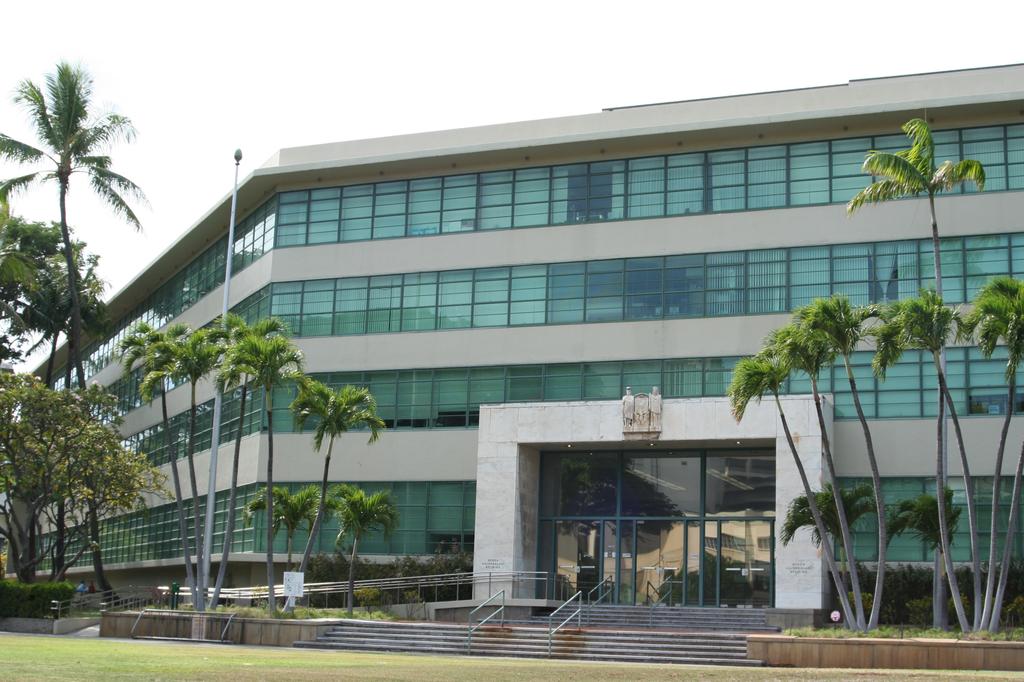
Our premature “mission accomplished” moment was when U.S. Education Secretary Ernie Duncan pronounced Hawaii “a model for rest of the country” — while teachers and administrators were vehemently condemning the micromanaging and destruction of our schools. Granted, there is a need for some changes and accountability. But the scorched-earth policy of the so-called “reform” movement that labels entire complex school communities as “failing,” thus warranting “takeover” by private contractors, is antithetical to the principle of local control of education and turns discontented education professionals into “insurgents.”
Hawaii’s Educator Effectiveness System for teacher evaluation was rolled out before it was operational, yet teachers were expected to agree to it by contract before they knew what they were voting for. Conscience led me to boycott it, as I didn’t want to compromise the education of my students through politically driven decrees created far from classrooms. While my administrators and students respected my civil disobedience reflected in otherwise high ratings, the system deemed me “marginal” for my noncompliance.
Contrarily, Hawaii’s DOE was praised by the national DOE for being compliant, compared to districts nationwide where teachers, parents, administrators and students have boycotted mass testing and other curricula directives. Last year’s EES results reveal the farther from the classroom, the rosier one’s ratings: While classroom teachers averaged “proficient,” teachers working outside classrooms that averaged “highly effective,” whereas DOE executives received generous pay raises and credit — all while entire schools condemned the improper and ineffective use of EES that piles on busy work for the caring, committed teachers and creates unnecessary divisions among staff.
Just as bad war policies of the past helped breed the current proliferation of terrorism, so, too, has a decade of mass testing instituted a culture where students, teachers, learning and entire schools have been reduced to dehumanizing scores. We treat children like stock market commodities: Numbers, without regard to any exploitation or ecocide behind those numbers.
Just as bad war policies helped breed the current proliferation of terrorism, so, too, has a decade of mass testing instituted a culture where students, teachers, learning and entire schools have been reduced to dehumanizing scores.
For students, this means learning has been replaced by mindless test prepping, stress-related illnesses, more cheating and general rebellion against a system that cares more about scores than student needs. When I asked a former “star student” why she looked beyond exhausted, she replied, “I’m having to choose between sleeping, eating or AP homework.” Why is it that those who can afford private schooling may receive an education based on cutting-edge, evidence-based learning, whereas public school students get standardized testing — something research has debunked as helpful for learning?
While education professionals advocate cultivating “the whole child” — nurturing multiple intelligences to nurture well-rounded critical thinkers and creative problem-solvers who can process information and ethically capitalize individual strengths — our system has been reduced to economic prerogatives. While “career & college readiness” is desirable, should that be education’s sole purpose? This narrow redefinition by chambers of commerce exalts data over wisdom, sapping relevancy, relationships and inspiration from schools.
Please don’t take my word for any of this. Engage any recent student or teacher on their experiences.
We need much more than air conditioners; public school students deserve an education of quality on par with private schools, as the health of any democracy necessitates a quality education system for all its citizens — not just those who can buy one.
Of course, this is where the military/education system analogy ends: There always seems to be money or deficit spending for wars, but rarely education. Our youth deserve better than “Whole Child Left Behind.”
 GET IN-DEPTH
REPORTING ON HAWAII’S BIGGEST ISSUES
GET IN-DEPTH
REPORTING ON HAWAII’S BIGGEST ISSUES
Community Voices aims to encourage broad discussion on many topics of community interest. It’s kind of a cross between Letters to the Editor and op-eds. This is your space to talk about important issues or interesting people who are making a difference in our world. Column lengths should be no more than 800 words and we need a current photo of the author and a bio. We welcome video commentary and other multimedia formats. Send to news@civilbeat.org. The opinions and information expressed in Community Voices are solely those of the authors and not Civil Beat.
