

Peter Apo: What Does it Mean to Be Hawaiian?
All politics aside, indigenous identity seems more malleable than many people suggest.
Another Hawaiian who took issue with a Civil Beat column I wrote in support of the Mauna Kea Thirty Meter Telescope recently confronted me.
In that hallway conversation our exchange was respectful, but it was one in which the person was seriously asking, “How can you call yourself a Hawaiian?”
I walked away from that encounter thinking: ‘Mmmmmm, good question.’
So I am asking myself: “What does it mean to be a Hawaiian?”
I begin by repeating my statement in a previous column that the word “Hawaiian” is not a Hawaiian word. It is an English word. Hawaiian words don’t end in consonants.
The origin of the word Hawaiian was not intended as a reference to ancestry or ethnicity. When Hawaii was a sovereign nation the word Hawaiian referred to anyone, irrespective of ancestry, who was from that place called Hawaii.
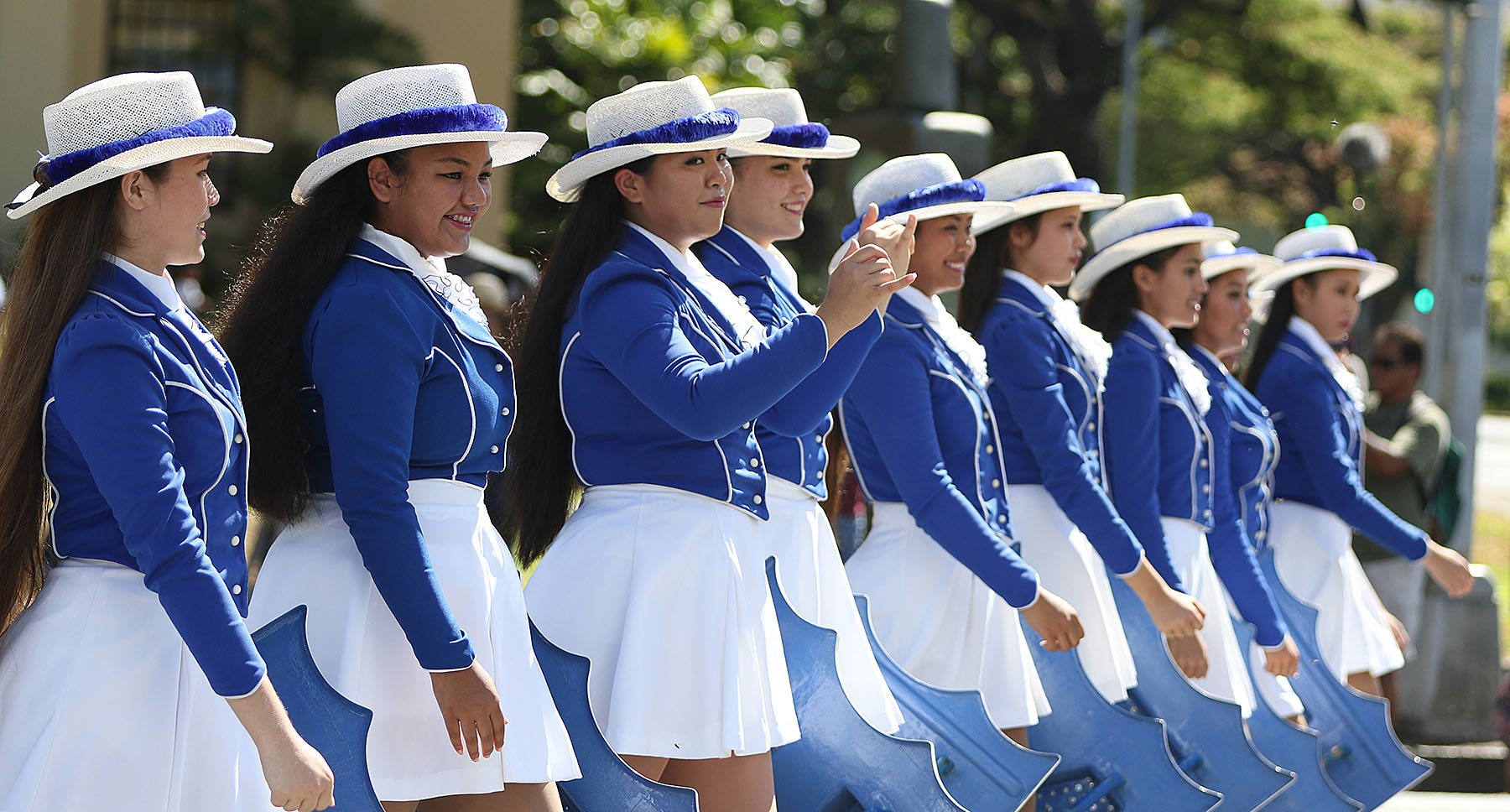
This included everyone who was part of Hawaii’s multi-cultural citizenry. Over the last century the word Hawaiian seems to have evolved to mean a person of Hawaiian ancestry and for this column I will defer to that definition of Hawaiian, but I will point out that the Oxford American Dictionary doubles down on the meaning as “a native or inhabitant of Hawaii.”
Hawaiian by Genealogical Credentials
If there were a depth chart to measure the degree of a person’s Hawaiianess nothing could trump a person’s Hawaiian genealogy. In the absence of a written language the most important statement of one’s Hawaiianess in ancient times lay in their birth chant. On major political occasions requiring opening protocol one’s credentials had to be established by the chanting of their genealogy, some of which could go on for hours.
Hawaiian by Law
There are two formal political definitions of Hawaiian generated by congressional language to separately define two Hawaiian beneficiary groups as qualifying criteria for federal and state entitlement programs. The first is native Hawaiian, spelled with a small “n,” which refers to a beneficiary class of Hawaiians with a 50 percent or more blood quantum that qualifies them for Department of Hawaiian Homelands homestead leases. The second beneficiary group is Native Hawaiian, spelled with a capital “N,” which refers to anyone with any quantum of Hawaiian blood.
Hawaiian by Cultural Choice
What it means to be Hawaiian starts to get complicated as Hawaiians routinely turn to assessing a person’s Hawaiianess by their behavioral choices, rather than by their ethnicity. One of the fascinating socio-cultural behavior phenomena about Hawaiian cultural identity is that it does not require ancestry. A scan of the thousands of folk engaged in Hawaiian cultural practices, traditions and customs finds hundreds of practitioners who are not Hawaiian by ancestry. Many are of multi-ethnic ancestry, but Hawaiian is a small part of their ethnic mix.
These people are Hawaiian by lifestyle and emotional commitment. They self-identify themselves as being cultural Hawaiians who embrace, live and breathe Hawaiian culture.
It is even more fascinating to note that a number of the Hawaiian community’s most respected and accomplished cultural and spiritual leaders are not of Hawaiian blood.
This is an important element of cultural inclusiveness, which suggests that embracing and practicing the cultural concepts and values of the Hawaiian culture qualifies anyone to think of himself or herself as Hawaiian.

Hawaiian by Values
An important measure of any claim to being a Hawaiian is proportionate to the degree a person consciously embraces Hawaiian values as a guide to their daily behavior toward people. Here are a few examples:
Aloha is an overarching values statement that, in its deepest meaning, is the unconditional extension of trust and friendship, even to strangers.
Kokua is the act of being helpful without having to be asked.
Kupono is about uncompromising honesty, fairness, and justice.
Ho’ohiki means keeping your promises.
Hanohano speaks to conducting oneself with distinction and self-respect.
The Hawaiian vocabulary is loaded with such behavior-guiding language and, in my opinion, no matter how accomplished a person becomes in any Hawaiian cultural pursuit or how high they rise into prominent positions of community leadership, if they don’t practice the values, they are missing the essence of being Hawaiian. I would go so far to say that absent living by Hawaiian values a person cannot claim to be Hawaiian because the values that drive his or her behavior are fundamental to who that person has decided to be.
It saddens me to have seen so many wayward and misguided Hawaiians by ancestry unabashedly proclaim their Hawaiianess by engaging in disrespectful and egregious behavior as a “shock and awe” political strategy.
We saw some of this last year when the U.S. Department of Interior held statewide hearings on federal recognition for Hawaiians. A few of these individuals were shouting abuse, including racial slurs and acting out all manner of degenerate behavior. This generated embarrassment and a judgment of all Hawaiians by some mainstream media. These people, in my opinion, cannot ever claim to be Hawaiian because — in my judgment — behavior trumps blood quantum as a defining characteristic of one’s Hawaiianess.
What Does a Hawaiian Look Like?
It’s a distinguishing characteristic of the early Hawaiians, particularly following the influx of immigrants from Europe and Asia, that Hawaiians were ethnically colorblind. That is, Hawaiians were absent prejudice based on skin color or cultural persuasion. Hence, the aloha brand was born as Hawaiians welcomed waves of immigrants with an unconditional hand of friendship.
When we flaunt our multi-cultural society to the world we sometimes get a response that says: Hey, I’m from New York, or Los Angeles, and we have a lot of diversity in our town too. So then, we have to point out a not-so-insignificant difference between their multi-cultural communities and ours — in Hawaii we marry each other!
My point here is that over the years inter-marriage between Hawaiians and other ethnicities has produced a very large segment of Hawaii’s population whose common denominator is the part of them that is Hawaiian. The Hawaiian genes are then joined by every kind of Hawaiian-European-Asian combination.
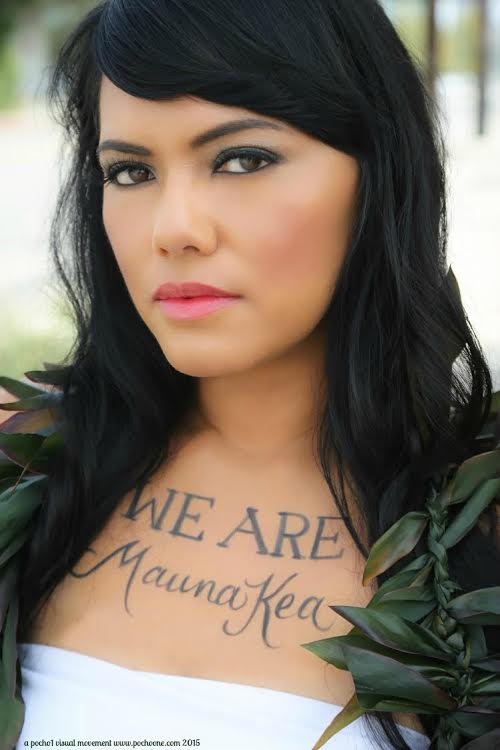
So, there are thousands of part-Hawaiians who — though holding their Hawaiian heritage as being special — cannot be recognized by their appearance alone. There was a time when it was easy to recognize Hawaiians in the crowd because they looked like Hawaiians. But intermarriage and gene-pool blends have blurred the lines of recognition.
Hawaiian by Political Behavior
Of all the options Hawaiians have to identify themselves as Hawaiian, none is more definitive than the politics of being a Hawaiian. This arena seems to bring out the best and worst of Hawaiian behavior. It’s an arena of high drama and passionate exchanges, some of which are not so polite.
Hawaiian politics is an all-encompassing field of political movement. All the issues affecting and driving Hawaiians — whether it’s Mauna Kea, Haleakala, the Office of Hawaiian Affairs, the Department of Hawaiian Homelands, the Alii Trusts, Hawaiian education, Hawaiian health, environmental stewardship (aloha ‘aina), Makua Valley, or Pohakuloa — lead to the same intersection of Nationhood and Sovereignty.
For many, many Hawaiians — regardless of their cultural pursuits, beneficiary status, occupation, religious beliefs or socio-economic status — Hawaiian politics is the one arena where one is most easily identified as Hawaiian, and not just by ancestry.
Achieving some form of nationhood and self-determination is seen by thousands of Hawaiians as the Holy Grail — the summit of Hawaiian socio-cultural and political ambition for the 21st Century.
The Mainstream Hawaiian
Notwithstanding the inclusiveness of those who are Hawaiian by cultural criteria other than ethnicity, I believe there is a mainstream Hawaiian. It is a Hawaiian by ancestry, but of mixed ethnic genealogy, who is emotionally invested in Hawaiian culture but also well-integrated into Hawaii’s multi-cultural hybrid society. This person is American-educated and in pursuit of key elements of the American dream — to home ownership, family prosperity, education for their children, quality health care, surrounded by friends from many walks of life with whom they laugh, cry and celebrate the blessing of these islands.
The mainstream Hawaiian is also viscerally invested in the call for political justice and a model of reconciliation with the federal government that makes Hawaii a better place for everyone.
So, here is a question for you: What does it mean to be a Hawaiian?
If you have a story about diversity, race, ethnicity and/or identity means to you in the islands, feel free to share it in our Connections section. Click on the red pencil in the Connections section, or drop a note to epape@civilbeat.com.

