Global Warming Contrarians Are A Danger To The Planet
Columnist Cal Thomas ignored a plethora of facts when he criticized President Obama’s decision to reject the Keystone Pipeline plan.
Syndicated columnist Cal Thomas’s dangerously irresponsible piece on the Keystone Pipeline decision and climate change is so full of errors, that it’s hard to know where to begin refuting it.
Clearly the tide has turned against the ideologically motivated global warming science deniers, especially given the recent expose that Exxon repressed and ignored its own climate scientists when they reported the threat of global warming to the oil giant decades ago. The facts and ensuing danger of climate disruption are irrefutable, and the evidence has been especially clear for those living in Hawaii.
As futurist Aldous Huxley warned, “Facts do not cease to exist because they are ignored.”
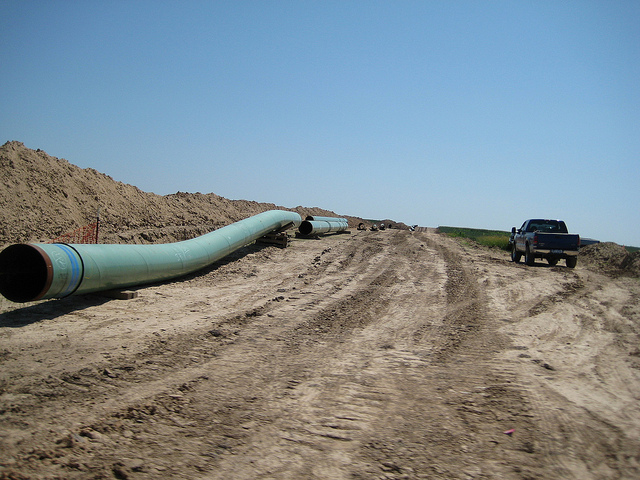
Here are some of the many facts that Thomas ignores:
• Most of Keystone’s oil would have been exported, and TransCanada itself claimed to be creating only “a few hundred permanent jobs.”
• Only 20 percent of U.S. oil imports come from Persian Gulf countries and there’s currently such a domestic glut that the House voted to begin exporting it.
• Because Alberta oil sands projects are hemorrhaging cash and have lost 35,000 jobs, the president has good reason “to think Canadian oil is going to remain in the ground.”
• And China is indeed concerned about curtailing its carbon output, as shown by its support for increased emissions cuts every five years, and plans to start a cap-and-trade market in 2017 to cap coal consumption in 2020, and cut carbon dioxide emissions by 2030.
Most importantly, it is flat out wrong to state, as Thomas does, “that there is a growing body of evidence that the earth isn’t warming.”
Numerous studies by thousands of scientists have documented that the Earth is warming far more rapidly than it ever has since humans have been on the planet, including NASA’s data below.

Concerning recent reports that Antarctic sea ice is expanding, the truth does not deny global warming. Thomas’ assertion is simply a common tactic of the climate change contrarians to seize on one piece of evidence to make their politically motivated claims.
In fact, the ice is melting rapidly on the Antarctic Peninsula, and the increasing cover of sea ice around the main continent is thin and temporary. As Kevin Trenberth of the National Center for Atmospheric Research recently pointed out, “(T)he ice … is very thin. So increases in Antarctic sea ice do not equate with increased volume.”
And note that Arctic ice has receded dramatically in recent decades to the point that there will be no north polar ice cap during the summer in coming decades.
As President Obama recently noted, the effects of climate change are already negatively impacting the world, with more frequent record-breaking temperatures, increasing rainfall in some places, and drought-prone regions like the Mediterranean and the U.S. Southwest getting drier.
A significant increase in the intensity of tropical North Atlantic cyclones is affecting the Caribbean and Central America. The fact that the streets of Waikiki will be underwater by the end of the century, and the recent unprecedented stack of three Category 4 hurricanes in the vicinity of Hawaii at the same time bring that threat home.
Cal Thomas dismisses Obama’s “bogus ‘climate change’ position” as a belief held with the fervency of a cult member.”
It is clear from the tenor of the Thomas commentary that this is what psychologists call “projection.” It is, in fact, Cal Thomas who is like the “fervent cult member” — the diehard ideologue, committed to denying reality in the interest of preserving a free market fundamentalism which allows us all to continue to pursue the short term, self-interested thinking that created this mess in the first place.
Ninety-seven percent of all climate scientists and the majority of U.S. citizens now agree that human-caused global warming is happening. The fact that some of the world’s most conservative institutions — the Pentagon, the Vatican, the World Bank, the Rockefeller Brothers Fund — are all taking global warming very seriously is evidence that something dire is happening.
As Albert Einstein wisely pointed out, “You cannot solve a problem with the same sort of thinking that created the problem in the first place.”
It is time to open our minds to the reality that 200 years of short-term-profit-motivated thinking harnessed to a gargantuan fossil fuel burning industrial economy has created problems which require radically creative global and long term solutions.
We need to be rigorous in preventing the lies and disinformation of the global warming contrarians from confusing the public, especially on the eve of the Paris climate talks. This might be our last chance to avert crossing a tipping point toward an uncontrollable global catastrophe. It is also an unprecedented opportunity to collectively create a more sustainable global economy.
A radical response to global warming is no longer a matter of concern just for future generations; it has become critical to the quality of life on Earth, for all of us, here and now.
 GET IN-DEPTH
REPORTING ON HAWAII’S BIGGEST ISSUES
GET IN-DEPTH
REPORTING ON HAWAII’S BIGGEST ISSUES
Community Voices aims to encourage broad discussion on many topics of community interest. It’s kind of a cross between Letters to the Editor and op-eds. This is your space to talk about important issues or interesting people who are making a difference in our world. Column lengths should be no more than 800 words and we need a current photo of the author and a bio. We welcome video commentary and other multimedia formats. Send to news@civilbeat.org. The opinions and information expressed in Community Voices are solely those of the authors and not Civil Beat.