

Imua Hawaii: Native Hawaiians Must Speak Out On Self Governance
Only five weeks remain for public comment on a federal rule to govern relations between the United States and a Native Hawaiian government.
With just a little more than five weeks left before the deadline for public comments on a proposed rule that would govern relations between the U.S. government and a potential Native Hawaiian government, leaders of multiple Hawaiian organizations and the larger Hawaiian community are urging people to make their voices heard.
Members of Imua Hawaii said in an editorial board discussion at Civil Beat on Thursday that it’s critical to take part in this once-in-a-lifetime opportunity to leverage a formal government-to-government relationship.
While Native Hawaiians have been recognized in various ways in federal law since 1920, there hasn’t been an independent Native Hawaiian government since 1893. That’s when Hawaiian Queen Liliuokalani and her government were overthrown by a cabal of U.S. businessmen supported by the federal government.
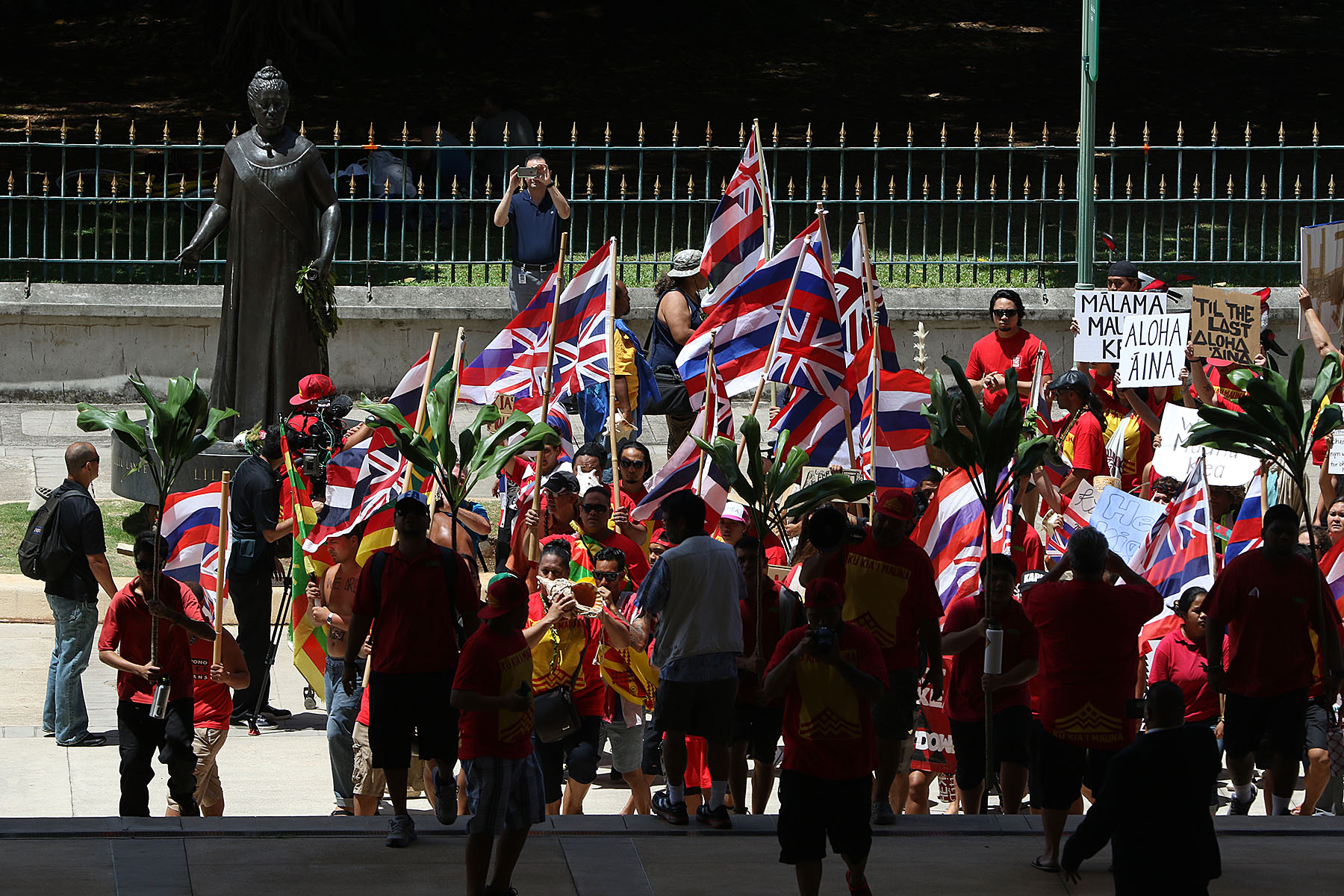
Various movements to create a Native Hawaiian government have mobilized over the years, without ultimate success. But an election is now underway to select delegates for a convention next year that could create the framework for a Native Hawaiian government. Voting ends Nov. 30, and delegates for an eight-week convention are scheduled to be announced the following day.
The rule proposed by the U.S. Department of the Interior outlines procedures that the federal government would follow in establishing a relationship with whatever government might emerge from that process. At stake, say Imua Hawaii members, is achieving equal standing to other indigenous peoples with governments that have formal relationships with the U.S.
“A Native Hawaii government could attend to the health, education, housing, general welfare and self governance interests of our community,” said Jade Danner Jones, an Imua Hawaii member and former majority policy director for the U.S. Senate Committee on Indian Affairs under Sen. Daniel Akaka of Hawaii.
Delegate elections enrolled about 95,000 registered voters against a Native Hawaiian population across the United States estimated at 577,000.
Until such a government exists, Native Hawaiians are in a sort of legal limbo, the say — recognized in some parts of federal law, but at risk for race-based lawsuits, and lacking the practical abilities that a Native Hawaiian government would have to tend to the needs of its people.
Plaintiffs associated with the Grassroot Institute of Hawaii, in fact, sued to stop the delegate election, calling it “racially exclusive.”
The group lost that suit in October, and lost an emergency appeal to the U.S. 9th Circuit Court of Appeals on Thursday in its effort to prevent the election ballots from being counted.
The Grassroot Institute and its allies aren’t the only ones who disapprove of the delegate election process.
Longtime Native Hawaiian activists and community leaders such as Walter Ritte and Mililani Trask have denounced the elections as exclusionary and the Interior rule as one that would lock in a Native Hawaiian government lacking in authority and political power. Despite publicly announcing his withdrawal as a delegate candidate, Ritte did not formally withdraw; his name remains on the ballot for a delegate seat representing Molokai.
An Opportunity To Move Forward
Others, such as a group of millennial Native Hawaiians known as Nā Makalehua, have come out in strong support of the election, calling it “the first opportunity for our generation to participate in a convention empowered by so many Native Hawaiians to move our community forward.”
That group includes up-and-coming notables such as state Rep. Kaniela Ing and Catelin Aiwohi of the Office of Hawaiian Affairs’s Washington, D.C., office.
The election, being overseen by the nonprofit Na’i Aupuni organization, have enrolled about 95,000 registered voters against a Native Hawaiian population across the U.S. estimated at 577,000. Ballots went to registered voters at the end of October.
Some Native Hawaiians have said another critical element to take into account for this election and a potential government-to-government relationship is the 14 months remaining in President Barrack Obama’s second term. A native of Hawaii, the president is thought to understand and see as a priority the idea of Native Hawaiian governance — qualities that might not exist in his successor.
That makes weighing in on the Interior rule and taking part in the delegate elections critical, said Imua Hawaii Executive Director Keali’i Lopez, who formerly served as director of the state Office of Commerce and Consumer Affairs.
“This is an opportunity that we may not see (again) in our lifetime,” she said.
To take part in the Department of Interior’s public comment process for its proposed rule, click here. Information on delegates election is available here.

