The CARE Act: Helping Caregivers And The Cared-For Succeed
The CARE Act would provide new support to caregivers and involve them more directly in key planning and decision making for elderly patients.
As a geriatric physician who specializes in the care of older adults, I strongly support Hawaii’s CARE (Caregiver Advise Record and Enable) Act. Dr. Kathleen Kozak’s recent Health Beat criticism of the proposed legislation contained factual errors about the bill and lacked understanding of the needs of caregivers.
Transitions of care (i.e., hospital to home) are difficult and risky episodes for older people. Research in this area is well established and shows that involving caregivers in discharge planning decreases hospital re-admissions and emergency room visits while improving patient and caregiver satisfaction with care. Enacted already in 18 states, the CARE Act will save money and improve care. In fact, many hospitals and even Medicare are independently adopting some of the components of the CARE Act.
I agree with Dr. Kozak that caregivers provide much needed care for the frail, seriously ill and those recovering from illness or hospitalization. The CARE Act supports caregivers and specifically does not place any additional liability upon them or on hospitals.
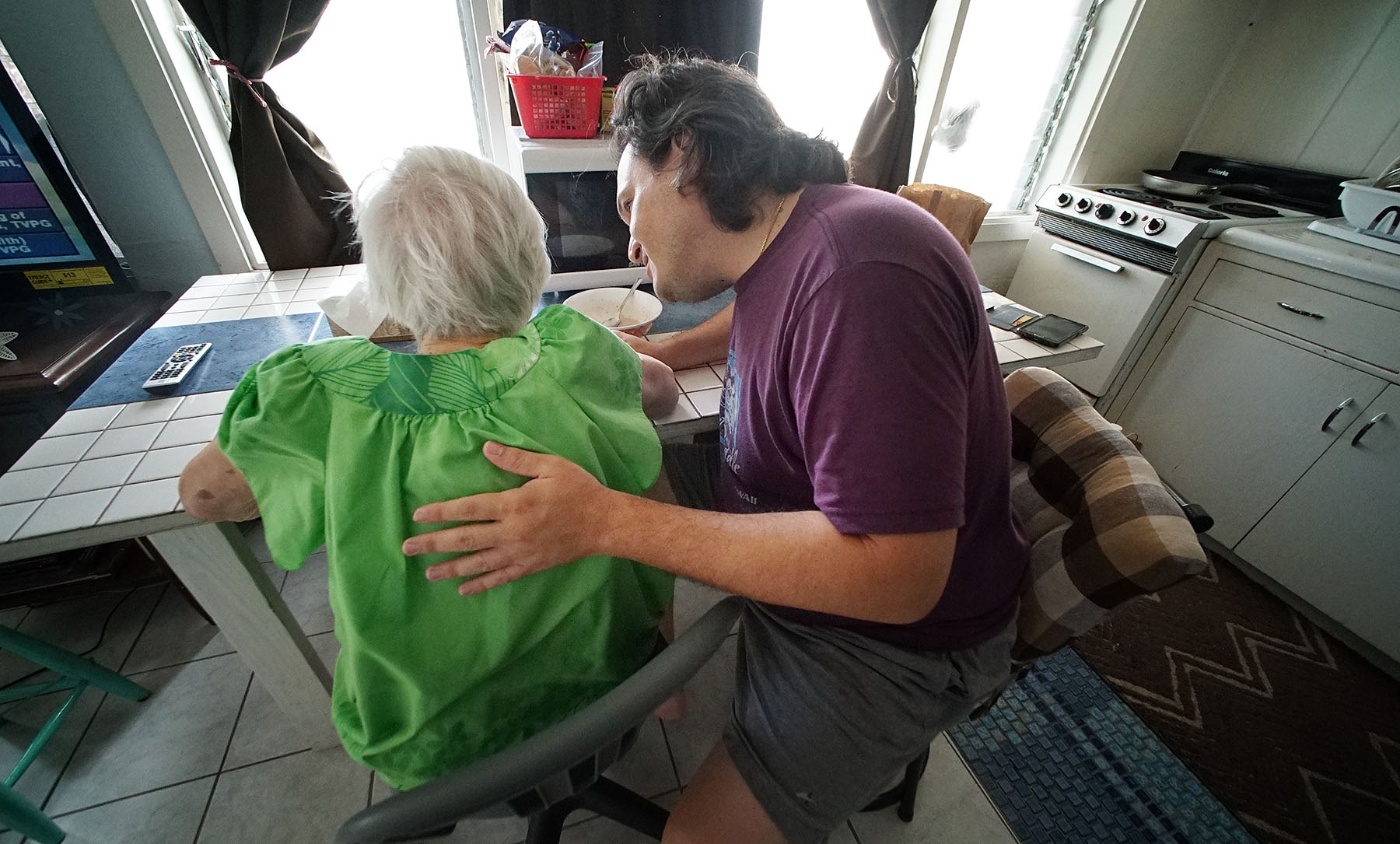
Furthermore, the legislation explicitly states that the timing of a hospital discharge must not be delayed by notifying a designated caregiver. Ultimately it is important for the medical team to know how the patient will get home, pick up needed medications, prepare meals, etc., to insure that the patient will not be swiftly re-admitted if left without adequate care.
This is common sense hospital discharge planning for anyone recovering from an illness or injury.
The CARE Act is not heavy-handed. It does not “mandate” a patient to name a caregiver. Hospital staff would give a patient the option to name a caregiver that currently helps them or who might help if they were recovering from illness.
If the patient says yes, then the hospital staff would ask if they would like the caregiver to be contacted before the time of discharge to update them on the care needed, any medication changes and the plans for the discharge. A patient may decline the offer of involving the caregiver in discharge planning so long as the medical team feels comfortable that the patient can manage independently at the time of discharge. If not, then other discharge options are discussed with the patient.
Additional funding for expanded home care may someday be available, but we cannot wait for that day to give caregivers and patients the help this legislation provides.
Geriatric care is “team” care. This means that good care often includes home nursing services, physical and occupational therapy and social work services. It also engages and values the family/friend caregivers that are crucial to supporting a person who desires to live at home.
The CARE Act supports this team care and does not require caregivers to perform professional nursing tasks or replace other members of the care team. The provisions of the CARE Act do not “burden” the caregiver, as Dr. Kozak suggests. The information provided is helpful to a caregiver and validates them as an important part of the care team.
The CARE Act does not “mandate” that a caregiver is trained to a professional nursing level. It does not “mandate” caregiver training. The legislation asks hospitals to explain to the caregiver what the patient needs at home after discharge and to ask the caregiver if he/she needs any additional information or instruction.
This type of communication is common sense. Just like the “golden rule,” it is what we would desire if we were caregivers.
The upcoming session of the state Legislature will include consideration of the CARE Act, and voters can contact their local legislators and encourage them to support its passage. Importantly, the legislation has been welcomed in every state in which it has been introduced, encountering little opposition.
I join Dr. Kozak in her appreciation for the costly and dedicated work that caregivers provide in Hawaii. Additional funding for expanded home care may someday be available, but we cannot wait for that day to give caregivers and patients the help this legislation provides. Hawaii’s caregivers are asking for it now, and we should pass the CARE Act.
 GET IN-DEPTH
REPORTING ON HAWAII’S BIGGEST ISSUES
Community Voices aims to encourage broad discussion on many topics of community interest. It’s kind of a cross between Letters to the Editor and op-eds. This is your space to talk about important issues or interesting people who are making a difference in our world. Column lengths should be no more than 800 words and we need a current photo of the author and a bio. We welcome video commentary and other multimedia formats. Send to news@civilbeat.org. The opinions and information expressed in Community Voices are solely those of the authors and not Civil Beat.