

Peter Apo: Don’t Misunderstand The Office of Hawaiian Affairs
Most people have heard of OHA, but that doesn’t mean they understand what it is, or what it does.
There is no other institution in the state quite like the Office of Hawaiian Affairs.
It has a sweeping constitutional mandate and a complex mission that doesn’t stop with service to OHA’s Native Hawaiian beneficiaries. OHA does not — and cannot — exist in a vacuum. As a de facto governing entity that is the center of gravity for the future of 250,000 Hawaiians living in the state, OHA’s decisions affect everyone in Hawaii. And so, the kuleana is enormous.
It’s been 38 years since the 1978 Hawaii State Constitutional Convention, when delegates created the Office of Hawaiian Affairs. After all these years, the number one question that I get as an elected trustee of the body is: What does OHA do? It’s a fair question to ask, but a challenge to answer.
The queries about what OHA does come in many forms. And the way a person asks the question can be instructive. Many people ask because they genuinely don’t know and want more information; but some folk ask the question in frustration about the way they believe OHA manages its resources.
There is also no shortage of questions from Hawaiian beneficiaries who strongly oppose OHA’s official commitment to federal recognition and establishing a government-to-government relationship with the United States. Such people self-identify as independents or “Hawaiian nationals,” a group that does not recognize federal or state jurisdiction over Hawaii. They argue that Queen Liliuokalani never relinquished her throne and therefore the Kingdom of Hawaii still exists and is being illegally occupied. Since OHA is a creature of the state of Hawaii, it is an accomplice to the crime.
There is also an ethnically mixed group of people who believe the political path that took Hawaii from a kingdom to the annexation by the United States was a legitimate transfer of sovereignty. They sometimes ask questions that implicitly challenge OHA on the legal front. Such people oppose all Hawaiian self-determination initiatives as racist and in violation of the 14th Amendment of the U.S. Constitution; and they are vociferous in their opposition to Hawaiians’ quest for any form of self-governance.
But the most interesting group, in my opinion, actually almost never asks any questions. This non-Native Hawaiian group believes that Hawaiians should be left to determine their own political future. They are generally supportive of Hawaiian self-determination, but are content to remain observers and do not engage. Their hands-off inclination is manifested by not participating in the election of OHA trustees partly as a respectful gesture to leave Hawaiian politics to Native Hawaiians.
And so, in nautical terms, we have a “confused sea.” In response, OHA has to rise to the occasion with a heightened determination to better communicate what it does.
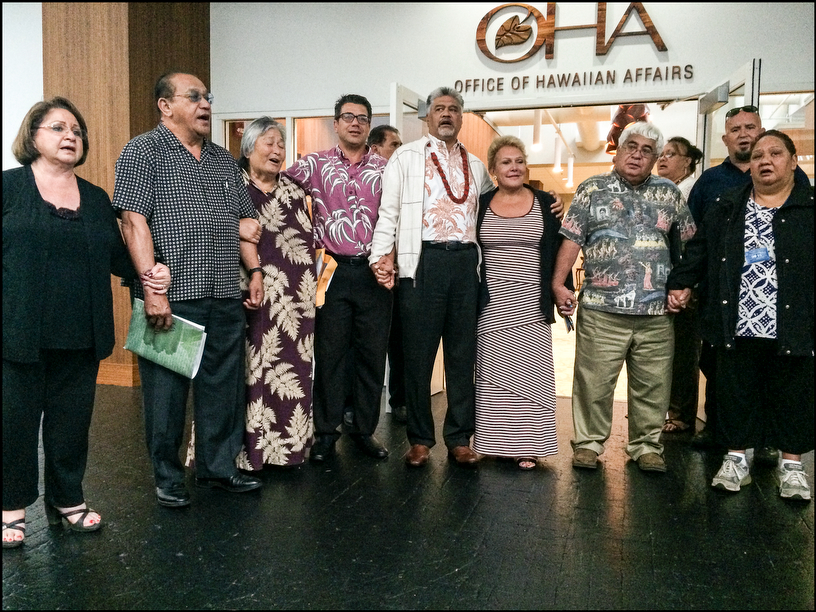
Why OHA?
To understand why OHA was created requires becoming familiar with the period of Hawaiian unrest and activism that spawned the creation of OHA in the late 1970s.
In the many years since Hawaii was annexed by the United States, Hawaiians have not, by and large, simply accepted the loss of their sovereignty as a footnote of history, even if that sentiment lay dormant for many decades until the mid-‘70s. There was strong sentiment that, as a matter of justice, the issue somehow had to be addressed.
A political spark was lit in the early ‘70s when a band of Hawaiian activists that I joined began to protest the U.S. military’s use of the island of Kahoolawe as a bombing target. Passions rose quickly and a movement to stop the bombings soon dominated headlines.
During that same time period, another initiative was set in motion. It was a Hawaiian cultural-retrieval project that involved building a replica of an ancient voyaging canoe, named Hokulea, and affirming by re-enactment the navigational exploits of ancient Polynesian voyagers. The voyaging canoe traditions that were revisited required reviving many cultural Hawaiian disciplines. It fired the imagination of thousands of Hawaiians, triggering a historic renaissance of Hawaiian culture that continues today.
After all these years, the number one question that I get as an elected trustee of the body is: What does OHA do? It’s a fair question to ask, but a challenge to answer.
The Kahoolawe movement and the Hokulea project collectively woke up Hawaii’s political establishment: The natives were restless. A state constitutional convention was scheduled for 1978 and the concept of some sort of office of Hawaiian affairs took root. The idea was to provide a vehicle for Hawaiian self-determination. So OHA was created, and much of the third-party trust responsibility that previously had been carried out by the state on behalf of Native Hawaiians was transferred directly to OHA. This was a strategic political accommodation that gave Hawaiians a constitutionally protected platform through which they could pursue self-determination and create a vehicle to manage their own resources.
The act that created OHA empowers the office to assume the responsibility of managing a mix of trust resources that include lands and state-generated revenue derived from trust lands. One of the most difficult challenges for OHA was to find some form of political redress for the 1893 overthrow of the Kingdom of Hawaii. These days, redress is characterized by words like sovereignty, federal recognition and independence.
With all that in mind, here is some basic, but crucial information about OHA to respond to the questions I’m often asked:
The OHA Board of Trustees
OHA is governed by a set of nine trustees elected in a statewide vote who are subject to the same set of laws that govern all elected officials.
While the state constitution originally intended for the OHA trustee election to be a Hawaiians-only affair, that provision was ruled illegal by the courts as a violation of federal election law. The result: all registered voters of Hawaii have a right to vote for OHA trustees and are eligible to be a candidate.
OHA Isn’t Just For Hawaiians
In the end, OHA is an integral part of the Hawaii economy and makes an important contribution to the quality of Hawaii’s growth that is not limited to the Hawaiian community because, while beneficiary services are intended for Hawaiians, the flow of dollars to every sector in the provision of those services is color blind. For instance, you don’t need to be a Hawaiian to work for OHA, or to qualify for one of its contracts to manage programs and other activities. In fact, programs that may be administered by people who are not Hawaiian can qualify for OHA grant funds, if they service Hawaiians.
It is unfortunate that most of what OHA does occurs under the radar. People only seem to hear about OHA when there are controversies. Consequently too many folks, including many Hawaiians, view what OHA does through a hazed-over window. OHA’s workforce spend much of their time addressing quality-of-life issues for Hawaiians and, in doing so, help make Hawaii a better place for many others.
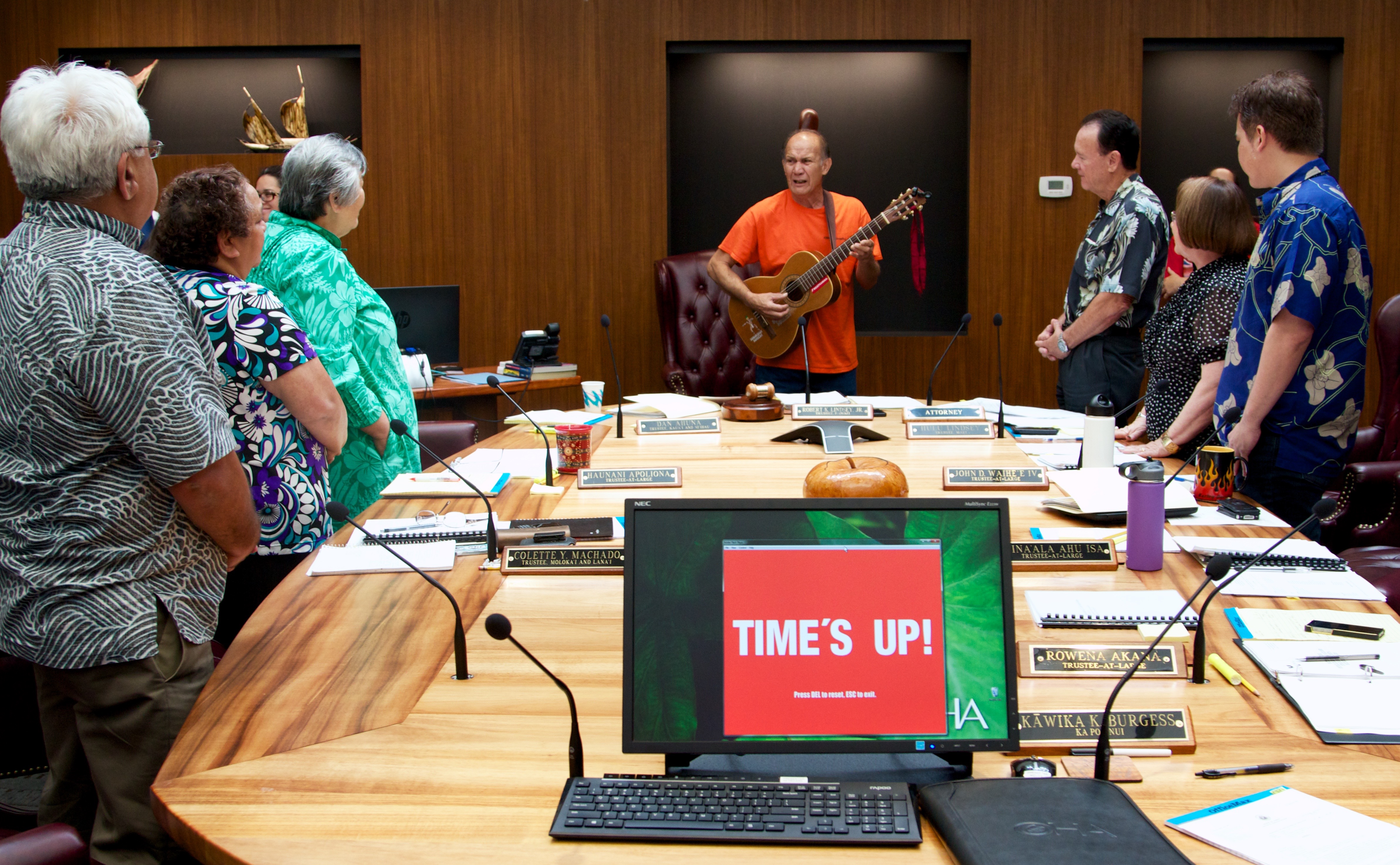
What Does OHA Do?
OHA is a state agency that is subject to state law. But there are a few notable exceptions. OHA serves Native Hawaiians, not the general public, and it has autonomy over its budgeting and resource-allocation processes. It can own lands, separate from state lands, and engage in the business of managing commercially valuable properties. The agency can also maintain a privately held investment portfolio. Most notably, OHA is not directly accountable to the governor or the Legislature.
OHA’s primary duty is to manage a group of trust assets on behalf of its Native Hawaiian beneficiaries. Trust assets include a Wall Street investment portfolio, revenue derived from a number of other sources, commercial real-estate properties and culturally valuable legacy properties, including historic sites whose primary focus is not to generate revenue. These assets have a total value of around $630 million.
OHA’s annual operating budget of approximately $50 million includes about $7.5 million in contracts that go to third-party vendors that provide consulting on legal services, real property management, equipment purchases, land use planning and more.
The agency has a workforce of 160 employees with an annual payroll of about $13 million.
OHA funds the Native Hawaiian Legal Corporation that works in conjunction with other legal organizations and OHA’s in-house compliance and enforcement team. Much of this work has to do with water rights, public access to beaches, historic sites, and traditional and customary rights.
OHA also helped fund the Humpback Whale Sanctuary, and is a co-manager of Papahānaumokuākea Marine National Monument in the Northwest Hawaiian Islands.
OHA supports a number of annual events such the Merrie Monarch hula competition, the Na Hoku Hanohano music awards and the Hawaii Book and Music Festival.
OHA also gives out community-based grants totaling about $11.5 million a year. These fall into six broad categories: culture, health, income, education, governance and land and water.
OHA supports 13 Hawaiian-focused charter schools statewide. OHA strongly encourages high school students to go to college and has awarded hundreds of scholarships over the years.
OHA’s health grants include supporting services for prevention of diabetes, obesity and heart disease, and programs targeting hundreds of people on four islands to adopt holistic healthy lifestyles in order to decrease their rates of chronic illness. These programs provide services for hundreds of people every year.
OHA also provides loan assistance for home improvements, business loans, debt consolidation, education, auto repairs, home repairs, funeral expenses, career advancement and legal fees. The housing programs offer financial literacy and down payment assistance for people who are moving from rentals into home ownership.
One of OHA’s flagship initiatives is the acquisition of various culturally valuable lands. These are lands that are not intended for commercial activity as the primary reason for acquisition. Such lands are culturally important to grow a geo-cultural footprint of Hawaiian lands that gives rise to at least the concept of the physical manifestation of a Hawaiian nation. Examples are Waimea Valley on Oahu, Kukaniloko (the Galbraith property in Wahiawa), Wao Kele O Puna Forest lands on Hawaii Island, Palauea Cultural Reserve on Maui and the Waialua courthouse in Haleiwa, to name a few.
OHA also manages several million dollars’ worth of commercial real estate properties, most notably 30 acres at Kakaako Makai adjacent to Kewalo Basin, and the Na Lama Kukui Building, formerly the Gentry-Pacific Building, on Nimitz Highway in Iwilei.
And OHA boasts one of the best research divisions in the state. It provides research on a wide range of topics as well as a political advocacy team that is hyperactive on a number of fronts, especially on state and federal issues.
The Long View
The road that OHA travels — picking up the pieces of a once-proud and vibrant nation, achieving a fully restored sense of cultural dignity, recovering Native Hawaiian capacity for self-determination, prosperity and quality of life — is a road that can only be traveled one day, one year, one generation at a time.
The drama will continue to play itself out over the next few years in unsuspecting ways that will affect everyone who calls Hawaii home. And it will be OHA’s responsibility to meet the challenge in ways that lift all people in Hawaii, because Hawaiians are still the people of aloha.

