

Luke Evslin: The Dark Side Of Renewable Energy
Kauai’s remarkable progress towards eliminating greenhouse gas emissions is shifting costs from the wealthiest to the lowest-income families.
Silence. That’s the sound of the renewable energy revolution; the sound of a PV panel; the sound of an off-line power plant.
And it also happens to be the sound that a utility makes when its business model is overturned, but more on that later.
On Dec. 31, 2015, the Kauai Island Utility Cooperative turned off each of the 10 diesel generators at its Port Allen facility. Other than during hurricanes Iniki, Iwa, and a few other islandwide power outages, it was the first time since the plant’s construction in 1964 that it was completely offline. No burning fossil fuels, no smokestack emissions, and no noise.
And so, as we ushered in the 2016 New Year with a frenzy of firecracker explosions, the cooperative was quietly leading Kauai into a new era of solar power.
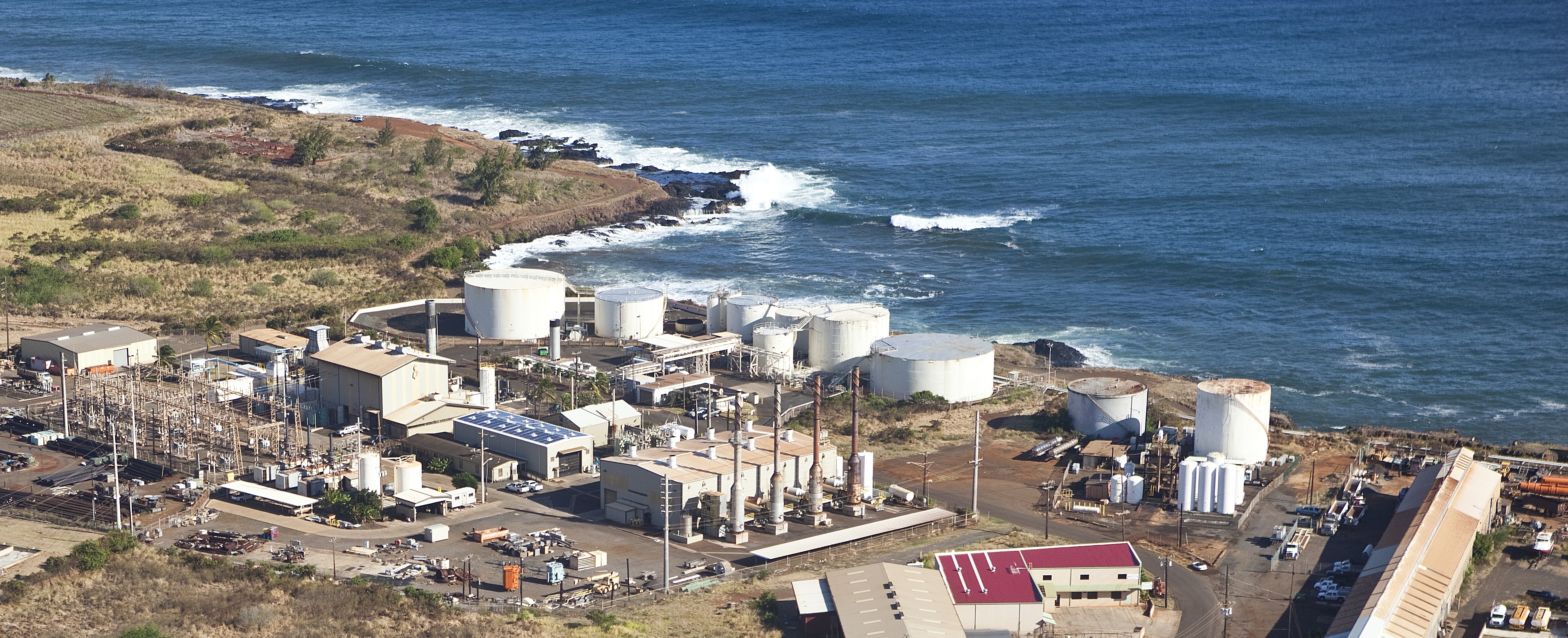
Each morning, as the sun climbs into the sky and our renewable energy load approaches 90 percent, the utility begins the daily ritual of powering down the Port Allen generators. Depending on the weather, the plant will sit idle for up to six hours. That saves, on average, 10,000 gallons of fuel per day. And then every afternoon between 2 p.m.and 4 p.m. the generators fire up again to prepare for our early evening power spike.
The utility is on track to consume 30 percent less fuel this year than it did in 2010. It has successfully reduced greenhouse gas emissions to below 1990 levels, and it has done this while stabilizing electricity rates. Kauai’s cooperative already is achieving what most utilities are just beginning to dream about.
Kauai hit a record-breaking 97 percent renewable for a short period on a sunny day last month, but the real accomplishment is our island’s globally unprecedented reliance on solar electricity.
And while many utilities are looking at solar as a threat to their existence, the cooperative sees it as the key to a clean energy future.
“I believe our co-op structure has driven us to push the envelope on renewables because we are so member-focused,” explains Power Supply Manager Brad Rockwell. “I take a bit of pride that we have not shied away from high solar penetration, and instead have welcomed the challenge.”

In 2008, less than 8 percent of Kauai’s energy load came from renewable energy — and that mainly in the form of hydroelectricity left over from the sugar era. But through a combination of Act 234 (which required the state to achieve 1990 level emissions by 2020), the spike in oil prices after Hurricane Katrina, an ambitious board of directors, and CEOs who understood the big picture the cooperative adopted a bold strategic plan calling for 50 percent renewable by 2023.
In just eight years, that ambitious goal enabled them to double down on smart grid technology, to reject two new fossil fuel burning plants, and to expand solar from near zero to up to 77 percent of our mid-day load.
And this week the Public Utilities Commission approved two new projects which will help ensure that the utility reaches 50 percent renewable by 2019. The first hydroelectric plant built on Kauai in 80 years will be constructed on the Olokele ditch on the west side. And the country’s first utility-scale solar array and battery storage system will provide up to 13 megawatts of electricity during our evening peak.
But that rapid transition to a sea of solar panels and an idle power plant are beginning to expose the dark side of the renewable revolution.
Rooftop solar has completely changed the rules of the game. While it’s an important part of the equation in getting to 100 percent renewable, it comes at the cost of upending our traditional utility structure.
Electrons used to flow one way — from a power plant to your home. But now, every time a customer installs a solar panel they are converting the utility from a supplier of electricity to a marketplace of electrons. And it’s not a function they were designed for.

In Hawaii, you can generate your own power from solar cheaper than you can buy it from the utility. And when you generate more than you use, then the utility will pay you for that power. So, if you can afford to do so, it makes sense to fill up your roof, yard, and chicken coop with as many panels as you can fit.
But the sun doesn’t always shine. So at night and on cloudy days we all still rely on the utility for power. And we need the power plant, the power lines and all of the maintenance that goes into keeping those in working order.
Yet, if you’re producing enough solar electricity during the day to bring your bill to zero, then you’re no longer contributing toward the fixed costs of maintaining the grid. Every house with a roof full of solar panels is one less customer for the utility.
And as more people oversize their rooftop systems, the smaller the base of paying customers is getting, and the higher that rates have to rise to cover the fixed overhead — which, correspondingly, makes the return on investment from those solar panels better and better.
So, we have a spiral where it makes increasing financial sense to cover your roof with solar panels— or even to leave the grid (which I mistakenly did, but more on that in a future post).
Low-income families are subsidizing the grid for those with oversized PV systems.
Electricity use correlates closely with income — meaning that rich people use lots of it, and low-income people use less. And in this way, the system used to be progressive, where high-income (and high-use) customers were partially subsidizing grid overhead for low-income (and low-use) customers.
Now, rooftop solar flips that equation. The declining revenue base caused by rooftop solar has caused rates to rise by as much as 20 percent in some places. And the only families stuck footing the difference are those who can’t afford the upfront cost of solar or those who don’t own their own home.
Because of rooftop solar, a rate structure that was naturally progressive is becoming regressive: Low-income families are subsidizing the grid for those with oversized PV systems.
And, if we could get solar panels on every house on Kauai, then the existing rate structure would be worse than regressive — it would lead the utility toward insolvency.
Every day that the Port Allen facility powers down, the utility cooperative is learning to balance our island’s grid on the rough and uncertain sea of solar power. With a brewing storm of climate change, we have no choice but to plow toward a zero carbon future as fast as possible. But, before we can get there, the cooperative has to navigate through both the technical and the equitable aspects of the renewable energy revolution.
How is Kauai solving these fundamental issues? What does our roadmap to 100 percent renewable look like? And why is off-grid a terrible option?
All are questions for future posts. Stay tuned.
Full Disclosure: Luke Evslin is a member of Apollo Kauai, a renewable energy advocacy group.

