

Peter Apo: A Tribute To A Prince Of Hawaii
How Prince Kuhio opened the door to U.S. recognition of the rights of Native Hawaiians.
Jonah Kalaniana’ole Kuhio was a Prince of Hawaii and a delegate to the United States Congress. He left a legacy of congressional service that provided Native Hawaiians a place of political refuge and trans-generational opportunity to recover from the trauma of the fall of the Hawaiian Kingdom in 1893, the decimation of a once vibrant culture, and a spiraling of an entire native population into near extinction.
Prince Kuhio was born into the Royal House of Kalakaua in 1871. He was raised on Kauai but attended the Royal School on Oahu, followed by four years at St. Matthew’s College in California and the Royal Agricultural College in England. He eventually graduated from a business school also in England. In 1884 he was appointed to the Royal Cabinet as head of the Department of the Interior.
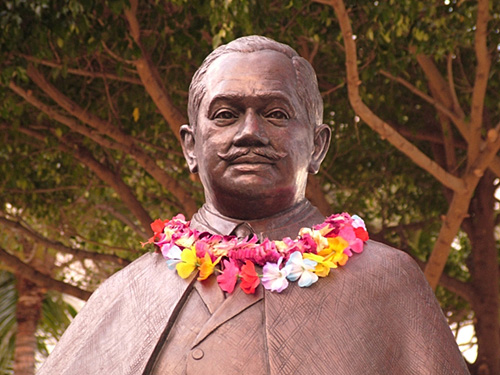
His life began to unravel in 1893 when American businessmen overthrew the Hawaiian kingdom and established the Republic of Hawaii. The Prince joined other native Hawaiians in a revolutionary uprising attempting to restore the monarchy. He and other royalists were arrested, but spared the death penalty after Queen Liliuokalani formally abdicated.
Price Kuhio’s world had collapsed. On his release from prison he left Hawaii for South Africa with no intention of returning to his homeland. He then joined the British Army and fought in the Boer War. He traveled abroad with his wife Chiefess Elizabeth Kahanu Ka’auwai. That union unfortunately produced no children, leaving no heirs to his legacy.
The Return Of The Prince
In a change of heart, Prince Kuhio returned home soon after the 1898 annexation of Hawaii as a territory of the United States. Had the Royal Kingdom survived the overthrow, Prince Kuhio most likely would have succeeded Queen Liliuokalani to become King of Hawaii.
In 1903, he re-organized the Royal Order of Kamehameha and established Kamehameha Day as a royal holiday which we continue to celebrate. He notably founded the first Hawaiian Civic Club, now a network of clubs whose members represent the very fabric of the Hawaiian community.
In 1903 he was elected Territorial delegate to the United States Congress. He was the only royal prince to serve in the United States Congress. In 1919 he sponsored the first legislation calling for Hawaii Statehood.
But his most notable achievement — the full importance of which wasn’t clear for decades — was his authorship of the Hawaiian Homes Commission Act of 1920, commonly referred to as the Homestead Act.
Before explaining why, let’s set the stage. In 1968, the Indian Civil Rights Act, in a nutshell, formally guaranteed Bill of Rights protections for Native American Indians (and, later, Native Alaskans). Prior to this act, Native Americans weren’t legally guaranteed freedom of speech, religion, the press, the right of assembly, the right to petition for grievances, due process, equal protection, and so forth, in dealings with their own tribal communities. Under the U.S. Constitution, federal regulations and court rulings, tribes can seek federal recognition as nations within a nation. They can negotiate government-to-government relationships with the United States and are recognized as having a right to self-determination.
Hawaiians, although qualifying as both indigenous peoples and Native Americans by every other standard, continue to be denied inclusion and therefore are now branded as racist every time they attempt to organize themselves as Native Hawaiians seeking self-determination. So, without the same constitutional protections afforded American Indians and Native Alaskans, Hawaiians are left vulnerable to judicial constitutional challenges that prevent any full expression of political self-determination.
The Weight Of The Homestead Act
But in 1920, Prince Kuhio’s Homestead Act singled out ethnic Hawaiians as a special class of people entitled to recognition for the purpose of federal entitlement of access to land for homesteading. I don’t believe that even the Prince could have foreseen how the full weight of the Homestead Act would be felt decades later. This act of the prince unsuspectingly established a federal pathway to self-determination by providing a strategic shield of congressional protection for his people as Native Hawaiians. It was, and still is, the foundation of congressional recognition that acknowledges and gives standing to Hawaiians as an indigenous people warranting special status. The Homestead Act, this tiny little window, this gift from a Prince of Hawaii, gave us a vital opportunity for recovery and survival.
The first major congressional reference to the Homestead Act of 1920, that opened the door to a flow of entitlements, was the Native Hawaiian Education Act of 1965. It reaffirmed a special relationship between the United States and Native Hawaiians. Then, again in 1988, the milestone Native Hawaiian Health Care Act was passed, reaffirming the distinct land rights, and other rights, of Native Hawaiian people.
So, from the Hawaiian Homestead Act has flowed a genealogy of congressional actions; more than 230 federal entitlement programs have translated into millions of dollars for health care, education, jobs and business opportunities. This act of the prince bought Hawaiians the precious time to recover from our trans-generational trauma. The Hawaiian Homestead Act kept us afloat during all the years of struggling just to stand up again. The Hawaiian Homestead Act paved the way for the restoration of our dignity and honor as a people.
Prince Kuhio served in Congress from 1903 till his death in 1922. This is the legacy Hawaiians celebrate on Prince Kuhio Day.

