

Hawaii News Media Access Bill Dies
Measure would have allowed journalists to cover hazards like lava flows with government supervision.
Not so fast there, Clark Kent.
Hawaii won’t give you any more access to natural hazards than anybody else.
House Rep. Gregg Takayama thought he had a deal with his Senate counterpart on a news media access bill late last week.
Takayama’s legislation, House Bill 1344, would have allowed journalists and newscasters to cover a hazardous situation, including accessing areas closed by emergency order from the governor or county mayors.
The 2014-2015 lava flow on the Big Island, which threatened to destroy the rural town of Pahoa, provided the inspiration for the bill.
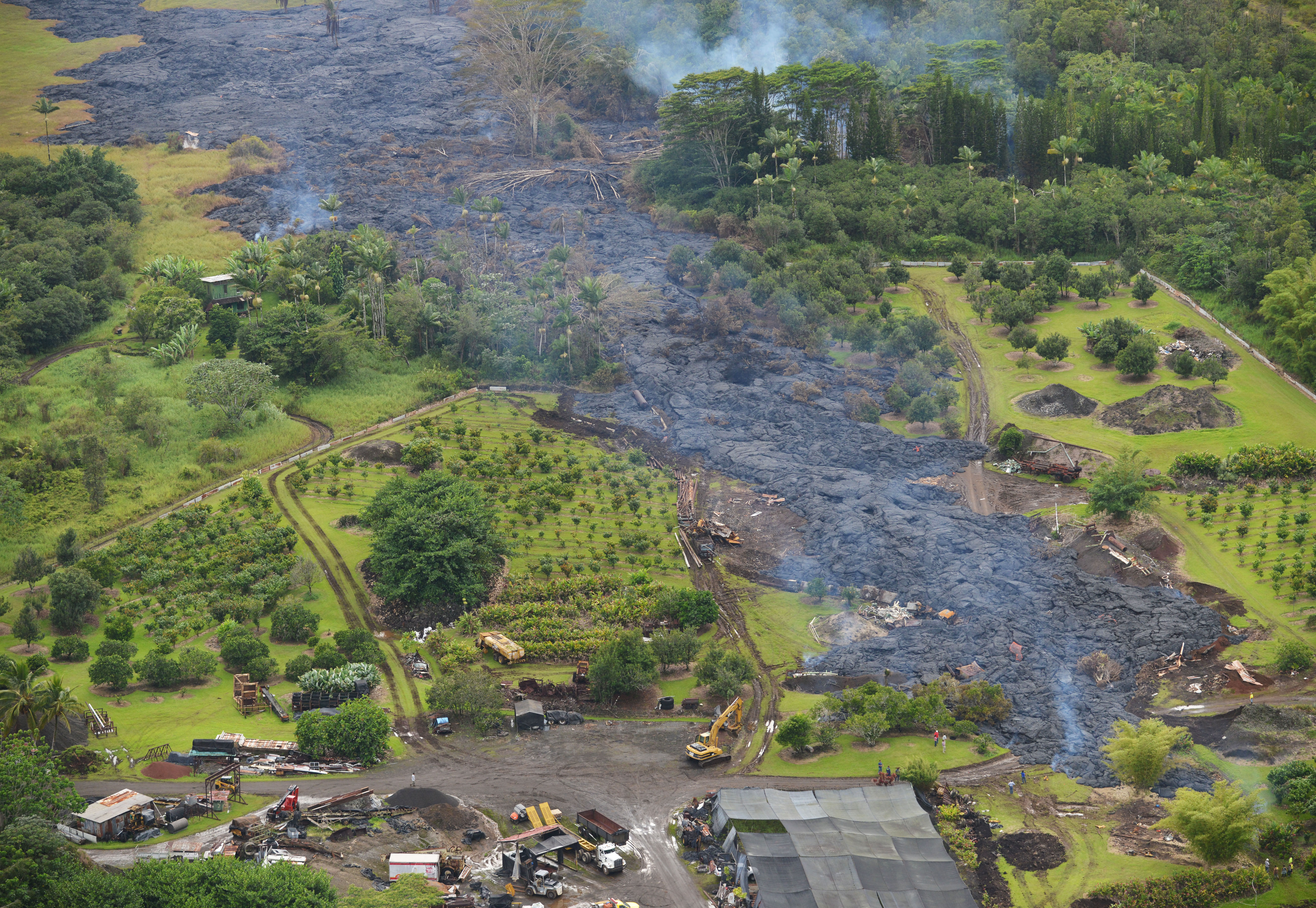
The media were restricted from accessing areas that were closed, and so reporters could not share crucial information with area residents.
But Takayama’s conference committee counterpart, Sen. Clarence Nishihara, told him Friday that the bill would be deferred — that is, killed.

“We had prepared a conference draft and I thought the Senate was good with that,” said Takayama, who is a former journalist. “It would have met the objections of law enforcement people and the desire of the news media by allowing media access to emergency areas.”
Takayama explained that the access would be at the discretion of emergency responders and civil defense personnel. Depending on the nature of the emergency and the availability of personnel, reporters would be provided an escort into an emergency zone.
“We had agreed on that and then met for conference,” said Takayama. “It would have been a reasonable measure that met the needs of news media as well as concerns of government agencies. So I am a little bit disappointed.”

Nishihara said that there were concerns from Civil Defense about whether journalists would be at risk under the bill’s provisions, and said he did not have agreement from the Senate’s money committee on the bill. He said Majority Leader Kalani English said those concerns were expressed to Senate leadership.
Sen. Lorraine Inouye, who represents part of the Big Island and who had pushed for the legislation, agreed that HB 1344 did not receive approval from Senate leadership or the Ways and Means committee. The bill called for funding two positions in the state Department of Defense to oversee hazardous situations.
But Inouye felt that the money appropriation could have been dropped and the bill agreed upon. But that did not happen.
“I am very disappointed,” said Inouye. “We worked the last two years on this measure. … It’s so sad when the people need to know what is happening in our country as well as our state and we are not willing to allow our own press into areas where there is a disaster. People need to know what is happening. It’s about transparency.”
Earlier this year, the Big Island Press Club awarded its Torch of Light honor to Inouye for her efforts to amend Act 111, the state law that gives broad emergency powers to the government.

