

The Flaws In The Airbnb Bill Call For A Gubernatorial Veto
A loophole letting hosts illegally offer campsites on public beaches as vacation rentals is reason enough to reject this problematic bill.
Some of the newer consumer services play a highly disruptive role in the marketplace.
Take Uber, for example. The “global ridesharing company,” as it describes itself, has turned an economy once defined by taxi cabs and limo services on its head. Its fast-growing customer base can now use Uber’s ride-share app in 444 cities around the world. Whether Uber drivers are adequately vetted is another matter.
Airbnb and similar companies have similarly disrupted the visitor accommodations industry. Offering more than 1.5 million privately owned and hosted accommodations in 190 countries around the world, Airbnb is valued at $24 billion, according to Investopedia and the Wall Street Journal.
Those listings include dwellings throughout the Hawaiian Islands. A search earlier this week for accommodations turned up 306 options on Hawaii Island, Maui, Kauai and Oahu. That number is increasing quickly as more would-be hosts discover that the site offers an easy route to extra income in a state where the cost of living is sky high.
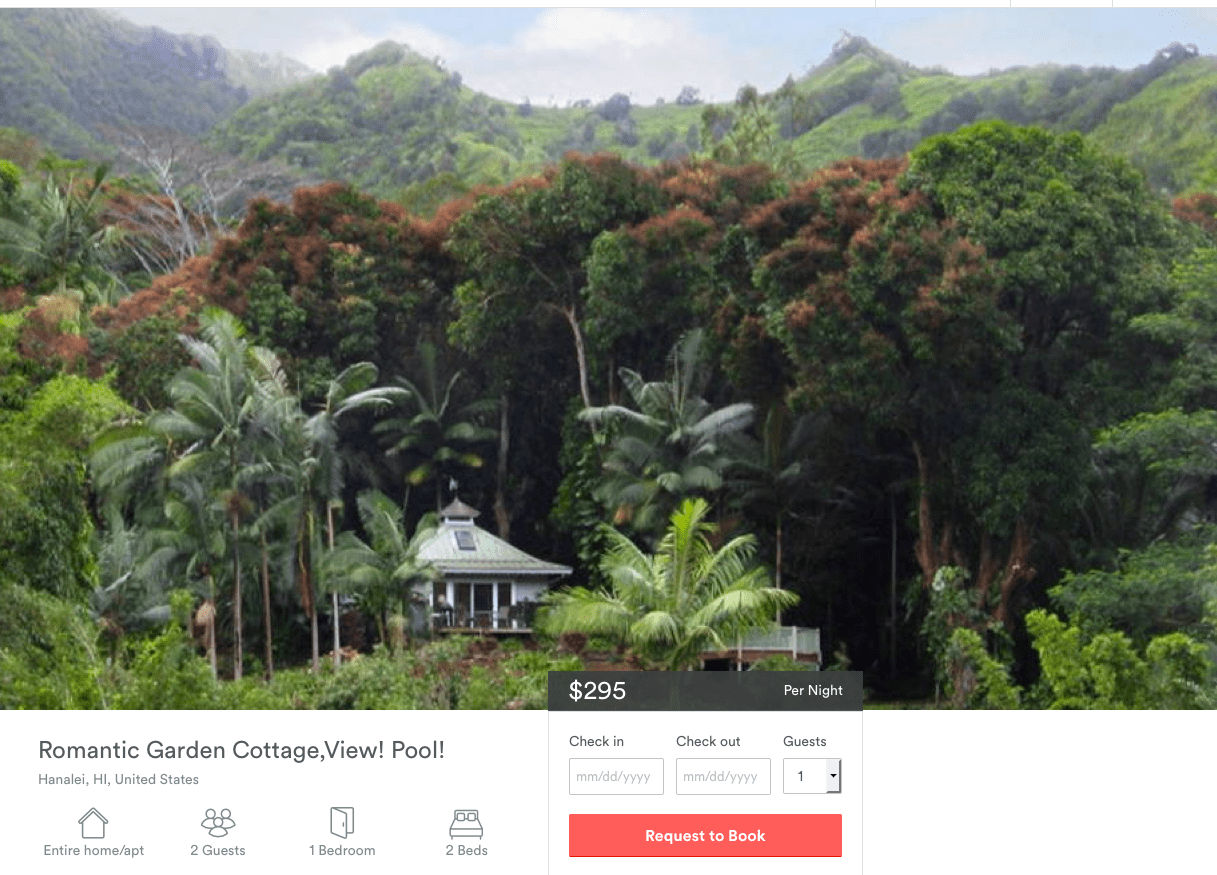
In some ways, this may be a positive development for Hawaii. It grows the state’s largest economic sector without putting undue further stress on already heavily leveraged tourist destinations such as Waikiki and Lahaina. It draws visitors into neighborhoods and communities where they can enjoy a lodging experience that simulates what it’s like to actually live here.
But it also pulls apartments out of the already-scarce long-term rental market. And there are other issues.
Hawaii legislators attuned to the growing popularity of the service understand that Airbnb hosts are difficult to track. That makes collecting transient accommodations taxes particularly challenging. As Airbnb and its competitors grow, these unpaid taxes pose a real problem for a state with fiscal needs that outstrip its general fund revenues.
The Legislature has approved House Bill 1850 and sent it to Gov. David Ige’s desk. The bill’s preamble compares transient accommodations brokers to direct-marketing business owners. Hawaii statutes allow those professionals to enter into agreements with the state to act as tax collection agents on its behalf. Giving similar responsibility to Airbnb and others could aid in the actual collection of both transient accommodations and general excise taxes.
So far, so good. But Airbnb’s heady growth combined with its reluctance to address what is a significant problem for Hawaii has left a fatal flaw in HB 1850, one that outweighs the bill’s benefits.
HB 1850 carries no requirement that transient accommodations services ensure their hosts are legally entitled to offer for rent any accommodations that they list on the services.
State law already allows Hawaii to collect taxes on accommodations hosts. Furthermore, the state Tax Department may fine any host who advertises rentals without also posting a tax ID number.
Already, stories abound of hosts who have illegally rented out public campsites on Hawaii’s beaches, profiting from accommodations they aren’t entitled to offer, likely to customers who don’t know the difference. As Sen. Laura Thielen, the former director of the state Department of Land and Natural Resources, wrote in a recent Civil Beat Community Voice titled “We Can’t Let Airbnb Commercialize Hawaii’s Beaches,” the company worked quickly to scrub its site of beach camping offerings as pushback against HB 1850 grew on this point over the course of the legislative session.
Indeed, a scan of Hawaii listings failed to turn up a current beach camping listing.
But the company wouldn’t commit to screening its listings on an ongoing basis. If HB 1850 were signed into law, Airbnb could allow beach camping listings to come back with a vengeance. That would create an enforcement issue for state Department of Land and Natural Resources officers and county law enforcement agencies.
As Thielen argued, it also would undercut a value and legal right that Hawaii and its people have cherished for generations — the non-commercial nature of our beaches and other public lands and the public’s right to access them, unfettered.
These values and rights are always in danger of being trampled without diligent oversight, whether by wedding-business operators or other commercial interests. Those public rights been upheld in the courts, but they could be jeopardized if we crawl into bed with a businesses as a tax collector that has plainly said, in response to a Senate effort to require accommodations screening, “Airbnb is an open platform, meaning we do not pre-screen or control the listings posted by hosts…”
There is also a more fundamental problem inherent in joining forces with transient accommodations brokers. The same qualities that customers love about Airbnb, et al — their ability to make off-the-beaten path rentals easily accessible for a more authentically Hawaiian experience — makes them unwelcome presences in many Hawaii neighborhoods.
As hosted accommodations grow in certain areas, they crowd out residents in favor of visitors who have little stake in the communities. Over time, that dynamic could transform some of the state’s best places to put down roots and raise a family into places where few people ever sleep under the same roof for more than a few nights in a row.
State law already allows Hawaii to collect taxes on accommodations hosts. Furthermore, the state Tax Department may fine any host who advertises rentals without also posting a tax ID number. The calculus on this issue is sadly transparent: Hawaii would rather transfer the responsibility for collecting these taxes to transient accommodations services, forgo bothersome enforcement, and walk away with a ledger full of comparatively easy revenue. Airbnb and its rivals, meanwhile, want to be able to profit while turning a blind eye to whether a rental is legal or not.
But — as we’re already seeing — allowing this bill become law is all but certain to have negative, long-term ramifications for Hawaii and its beaches.
The governor will soon announce his list of intended vetoes for the recently completed legislative session.
For the sake of Hawaii’s public spaces and their future users, HB 1850 should be on that list.

