Reader Rep: You Own What You Post On Social Media
The power to publish brings with it great responsibility whether it’s police seeking the public’s help or the public — and media — spreading it around.
Everybody can be a publisher (and a journalist) now, even police departments.
Facebook, Twitter and other social media, which let any of us share words and images throughout the world instantaneously, give all sorts of “news” the same shape and appearance. It might look like journalism, with headlines and photos, or videos with graphics, but it might really be something else.
Our rapidly evolving media ecology allows an organization like the Honolulu Police Department to have multiple media channels. The department offers information via Facebook, Twitter, YouTube, Nixle, Instagram, Google+ and FourSquare. Of course, the HPD was created to do law enforcement, not media production and distribution work. So its public communication systems and channels consist of a stretching of scope, with an uneven mix of varying fidelity, including hybrid strains of marketing, public relations, record keeping, community engagement and news.
In other words, you never really know what you might get.
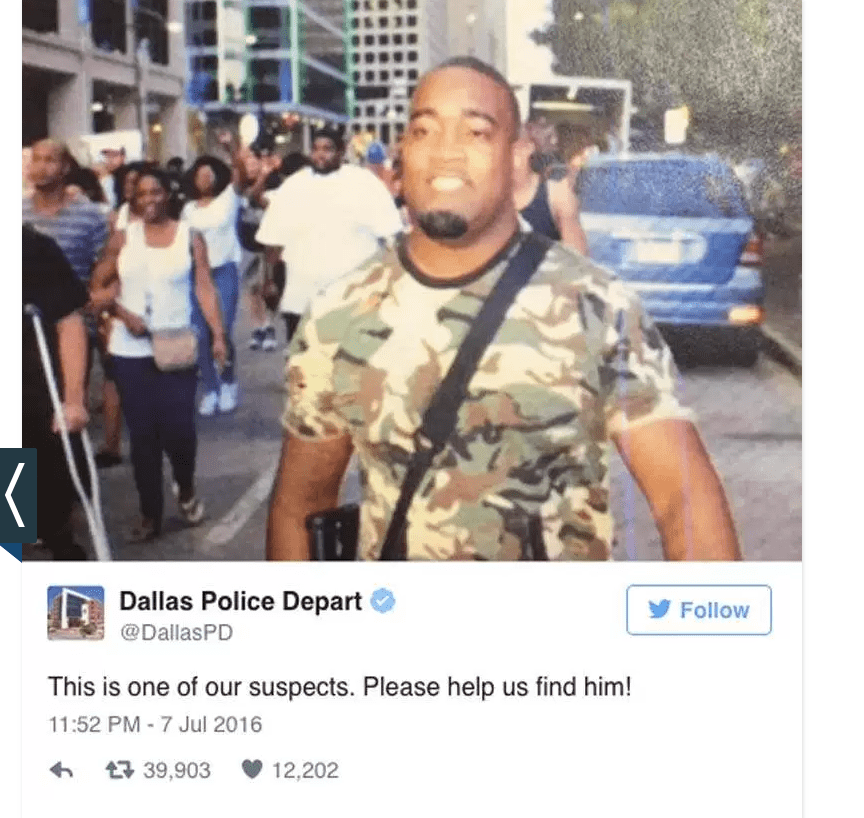
When five Dallas Police Department officers were ambushed and killed earlier this month, amid the chaos Dallas Police tweeted out a photo of a “suspect” named Mark Hughes. This happened at a protest about the recent deaths of two black men, Alton Sterling and Philando Castile, under questionable circumstances involving police. Hughes, also an African American, showed up at the Dallas rally in a camouflage shirt, strapped with an AR-15 rifle.
Hughes was exercising his constitutional rights, including the First Amendment right to assemble in protest and the Second Amendment right to keep and bear arms. He seems to have bought, licensed and displayed his weapon legally and properly. (Whether anyone should be allowed to freely carry an AR-15 rifle through a city is for another discussion.) But when the bullets flew, police officers started looking around for people with guns. And Hughes had one.
Discussing what happened — and why — could take us in a lot of emotional and political directions. Even Texas police officers now are questioning the sanity of open carry laws.
But I want to focus solely on media issues in this case, because they created a novel communication crisis to consider.
The Dallas Experience
A decade ago, before the rise of social media, Dallas police likely would have distributed a bulletin (by fax or email), like it did on Twitter, only directly to newsrooms. Journalists would have been the filter between that bulletin and the public and would have created friction (and time for reflection), slowed by their weighing pragmatic issues related to traditional news production and distribution procedures.
Newspapers would have had several hours to investigate the content before the presses started rolling. Television news reporters would have had to cut into regularly scheduled programming and might have refrained from showing Hughes’ photo until more information became available. Social media, though, blows all of those gates up, for better and worse.
With the Dallas police now serving as publisher and distributor, tens of thousands of members of the public suddenly were shown Hughes’ photo – that day, in that context, immediately and on the spot – and told he was a “suspect.”
Suspect, by the way, has specific negative connotations. It is police code for someone highly suspicious and probably involved in illegal activity, about as close to guilty as one can get before prosecutors get involved. Officers typically have other labels for people they just want to talk to, such as a “person of interest.” So Hughes being labeled as a “suspect” suddenly elevated suspicion about him to dangerous levels.
By serving as pseudo-media organizations, police departments also have shifted from a journalistic source to a journalistic competitor. So when the Dallas police publish this kind of information on Twitter, in the hyper-competitive national media environment, that content has the potential to get amplified both as a primary and secondary source. People might read it on the Dallas Police channel or on those of any of the other media organizations that instantly feel compelled by competition to repeat it and, because of the official nature of the source, immediately justified in doing so.
Once it is on the Dallas police channel, in other words, all constraints are off, because journalists can simply report on what is being reported and then it can spread through the accounts of any social-media user who comes across it.
Because the Dallas police’s core motive is to act fast and catch bad people, that organization functions in cop culture during a chaotic situation rather than within a journalistic culture, as a detached news organization trying to find out the truth of what’s going on.
Journalists traditionally try to let the dust settle before sharing information with their audiences because they carry the great responsibility of public trust. Police departments traditionally have been careful about how they label people in their investigations, knowing that such labels tend to be socially sticky. But the media ecology has changed — and so have the rules of engagement.
Police departments no longer need (or have) media filters between them, the information they produce and the public. Those filters used to create significant space for mistakes to happen and get cleaned up before anyone noticed.
But not anymore. And here was Hughes, in a tense, helter-skelter situation, carrying an AR-15 rifle, while someone else was mowing down cops with a similar weapon about a block away from him. Oh, and a bunch of armed police officers, plus other random gun-toting Texans, were looking around the area to serve justice.
Then, the photo of Hughes at the rally started getting distributed via Twitter by the Dallas police (including on mobile phones in the area), calling him a suspect, and urging citizens to “Please help us find him!” According to a screenshot captured by the Washington Post before it was deleted, within two hours that post had been retweeted (shared with others) about 40,000 times and liked by another 17,000 people.

Even after Hughes was cleared by the Dallas police – 17 hours later and without nearly the same mediated enthusiasm – he continued to be identified as the “suspect” by people he encountered. According to the New York Daily News, he reported being surrounded by an angry mob at his hotel, looking at a photo of him on their phones, and being threatened to the point where he had to flee the state. He since has received “hundreds” of death threats from people who still think he was involved.
Fueling The Media Frenzy
This isn’t the first time, of course, that law enforcement and media organizations have collaborated to quickly convict and whip up a posse after the wrong person. Richard Jewell, an Olympic Park security guard in Atlanta during the 1996 Summer Games, for example, became a hero, then a bombing suspect, before being cleared and leading a short, tainted life afterward.
But this seems to be a new kind of a witch hunt, initiated from police department media and its direct connections to the public.
Frictionless digital media, social media and direct access to audiences vaporizes a lot of the traditional vetting practices of the policing process, usually done by journalists. When citizen journalists get involved as well (and you deputize yourself as a citizen journalist when you participate in such a story through social media), people trying to be first and fastest easily can be wrong.
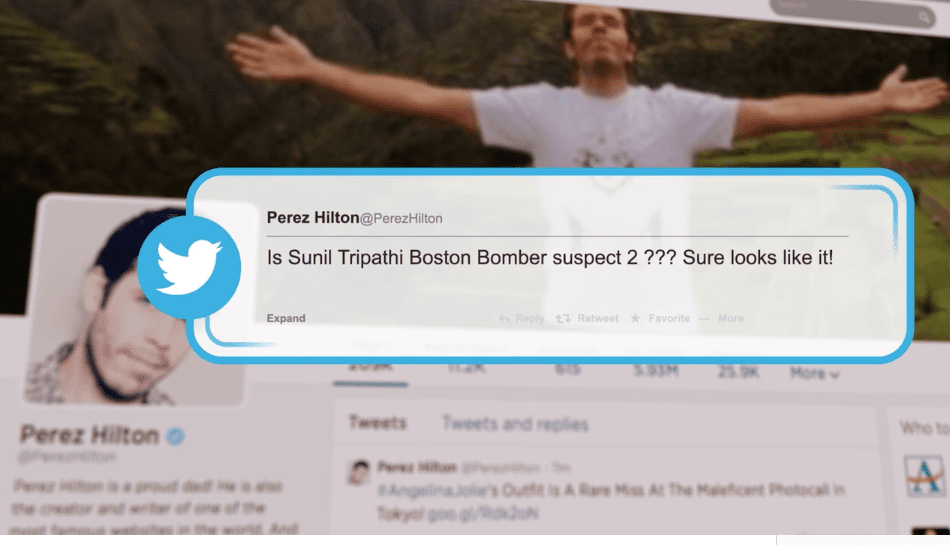
The online mob (and the New York Post) was wrong in the Boston Marathon bombing (Sunil Tripathi suffered for it). Websleuths targeted the wrong “tall Asian male” at Virginia Tech (Wayne Chiang). They were wrong in Sandy Hook (picking on the wrong brother, Ryan Lanza).
These sorts of errors eventually get corrected, although without the intense fanfare. As there get to be fewer people with journalistic training (and a journalistic ideology) between you and the news, and that news comes in faster but from less clear sources on social media, mistakes like this are bound to proliferate.
Police departments aren’t filled with trained journalists. They are not well stocked with trained media managers. Police are thinking more about catching bad people, as they should, than about crafting and maintaining messages. For example, the Dallas Police Department now has deleted both of its Hughes tweets (instead of correcting them), which makes it look like they are destroying the evidence and trying to cover up the error. (That hide-the-evidence approach has been rejected in journalism ethics practices in favor of transparency in corrections.) In a glitch I noticed on the @DallasPD Twitter feed, when I recently checked it, Hughes’ face still inexplicably remains, like a ghost, without explanation, at the beginning of an “Untitled” July 7 Periscope press conference about the tragedy.
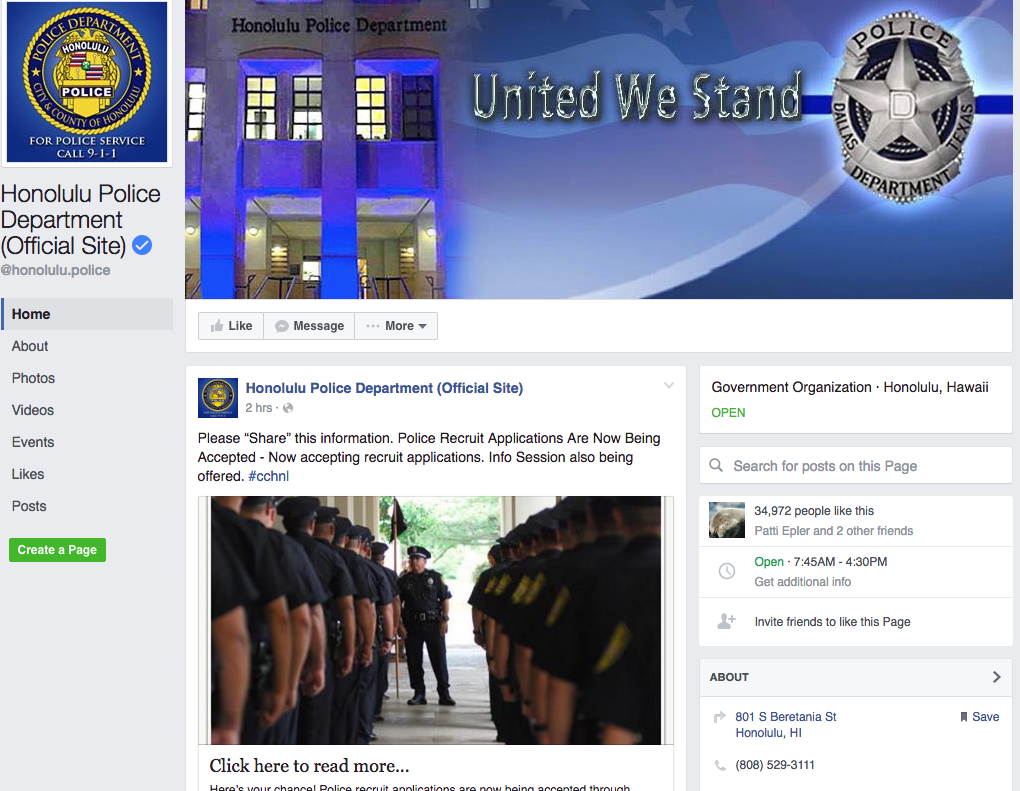
From our state’s perspective, the Honolulu Police Department’s media channels show signs of neglect. The FourSquare channel, for example, has not been updated since 2013. The Instagram link from the main site is old (the new channel mixes public-relations photo ops with missing-person alerts). Its YouTube channel touts its “new” design and features in a video posted three years ago. Its Twitter is heavy with road closures. Its Facebook feed shows an occasional touristy image of Hanauma Bay and Bishop Museum, but also a spotlight on HPD Wanted Persons.
While no major web mobs appear to be forming to locate and identify this particular thief portrayed on the Honolulu department’s site, HPD shows with this example how it might handle such a case by publishing directly online and asking for the public’s help. Through these various media examples, we can start to see how the lack of journalists – and a journalistic ideology – in the middle of the communication process affects the quality of public discourse.
Before the rapid rise of Facebook (2004) and Twitter (2006), media audiences primarily gathered intellectually around newspapers and magazines (which require a multi-million dollar printing press, plus the people and technical skills to run it) and radio or television stations (which require multi-million dollar broadcasting equipment, plus the necessary people and technical skills to run those, and federally mandated licenses).
Now, every person has a finger on the “publish” button. If you have a social-media channel or website, you are “the media.” You own what you circulate and so do police departments.