Reader Rep: Taking Issue With Civil Beat’s New Commenting System
Some news organizations have abolished comments. Civil Beat migrated to a new system, which isn’t necessarily an improvement.
We began a vigorous debate last week about author transparency and conflicts of interest within reader comments. This column will focus on the commenting system now employed by Civil Beat, including evaluation of the recent changes in that system when it migrated from Facebook to Civil comments.
Common ground we should share at the start of this conversation thread:
• No commenting system is perfect for everyone; they all have different affordances and constraints, which allow commenters to do some things and not do other things.
If there was a perfect reader-commenting system, everyone would use it. But there is not. So media organizations have chosen many different approaches and strategies to handle reader comments, including abandoning them altogether because of the hassles they cause.

• Reader comments are important and worthwhile and should not be diverted entirely to social media. Despite their dark side – such as becoming a beacon for trolls, providing a forum for misinformation and creating a space where people can get personally attacked – reader comments have emerged through disruptive technological advances to create dynamic two-way journalistic channels.
Instead of one-way broadcast messages, journalists now can strive to prompt and support open and dialectical discourse, the dream scenario of democracy.
• While I might enjoy and appreciate what some people contribute and disdain and dismiss what other people contribute, I fully support and encourage (almost) all types of participation. Free speech is an ever-dispensing gift (and many other places around the world are not so fortunate).
When I disagree with someone, it is my responsibility to add more speech to the discussion as a counter perspective. Free speech also has some limits and legal restrictions, though, in terms of libelous content, discriminatory labels, threatening statements, etc. Reader comments, at minimum, should follow all laws and reflect such social norms, aiming for dialectical higher ground.
I’m skeptical that this peer-review method will work because it does not include an established and explicit code of conduct for the peer reviewers.
Since the commenting system switch at Civil Beat in May, readers have been raising various questions and concerns about that system. Lorie Farrell summed up the primary tension in this change succinctly by stating: “the real question is ‘how will Civil Beat(?)’ moderate their community and define civil.”
As a contributor to this site but also an organizational outsider, I do not have inside knowledge about the backstage of this particular system (or any influence over it). I do, though, have thoughts about it and the reader comments, prompted by observations you have made. Those include:
• Civility comes from the community, not the commenting system. Some people have complained about their comments being unfairly labeled as “uncivil,” and rejected by unknown peers, even though, as reader Kenneth Conklin claimed, his comments “contain no nasty X-rated words and no libel or slander against individuals.” Reader Curtis Kropar said he has been “sanctioned” several times even though, he said, “never once did I swear; never once have I tore into someone.”
The reader self-labeled “Translator” has been treating the system like a science experiment, looking for the thin line between civil and uncivil. That person wrote, “My initial sense is that folks are too sensitive. My first rejection was just a mildly snarky, poor attempt at humor, and quite far from the ‘Flag Comment’ parameters of abuse, harassment, spam or threat of harm” threshold.
Reader Lana Ah Lan deSilva said she responds to the new system in a pattern that I also use. Most comments seem to me to be “sorta” appropriate, and I pass them through on the second checkpoint with a “Yes.” As deSilva suggested she does, I tend to think that unless the comment is outrageously inappropriate (as in legally questionable), I should get out of the way and let more free speech be the response.
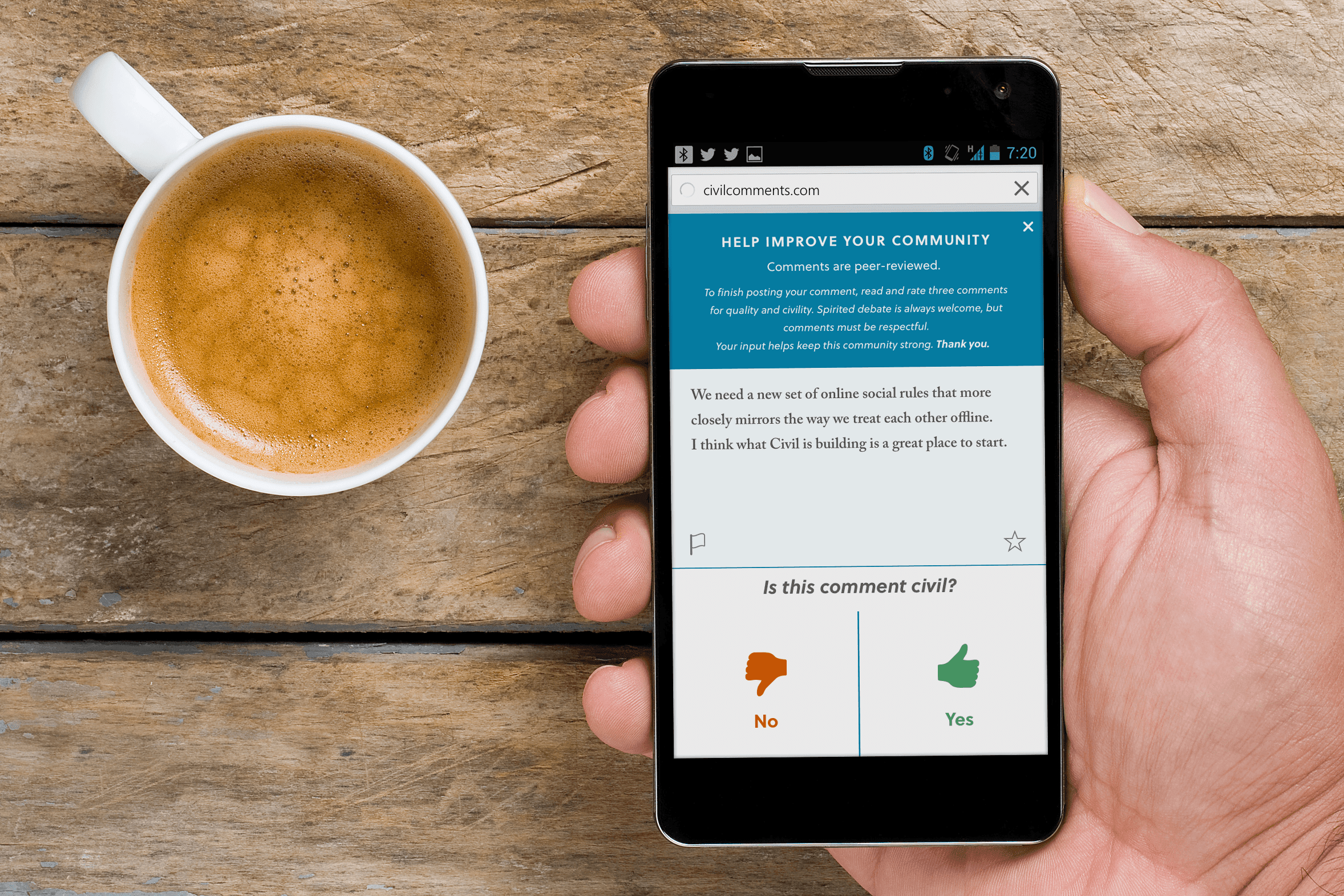
Several problems with this system, though, have become evident to me and were illustrated in the commentary connected to last week’s column, including posts that needlessly were repeated for effect, featured anonymous commenters picking sides instead of adding to the development of the discourse and ones that were civil but completely off topic. In addition, reader Keith Rollman warned, this new method of vetting comments has the potential to lead “to an internet version of a ‘safe space’ with a rather dull, homogenous incantation of approved ideas.”
Along those lines, I’m skeptical that this peer-review method will work because it does not include an established and explicit code of conduct for the peer reviewers. Without such a code, or at least a more descriptive set of review guidelines, the reviews are likely to be inconsistent and indiscriminate.
• Lack of social media links and length limits are confinements, not features. I sympathize with those who do not want to use Facebook for comments, especially people who find their corporate policies untenable. I would rather use a system that does not funnel information through that company or other similar corporate data mongers. But I also recognize that many – probably most – people enjoy sharing their comments with others on social media and I think they should have that option.
Ideally, both the people who like to use Facebook (such as Bill Boyd) and the people who dislike being connected to Facebook (such as “The Harpoon”) could access Civil Beat comments equally (and the only difference would be in the spreading of the comments through the commenter’s social media channels afterward or not).
Maybe as an alternative, the comment length could be removed but a warning flag could appear, after a certain number of words or characters are entered, stating something to the effect of, “You are getting a bit long-winded here; you sure you don’t want to wrap up this comment soon?”
Reader Kenneth Conklin also has raised concerns about another constraint of the system, the length limit on comments. He said, at times, that limit makes it “impossible to adequately explain my position on a complex controversial topic.”
I have had this experience, too, in which a few – not many but enough – of my comments have reached the cap and forced me to shorten them (or consider posting two comments instead).
While generally speaking, I am a proponent of parsimony, Conklin is correct that sometimes the seemingly arbitrary space allowed just isn’t enough.
Because these comments are in digital form, no extra ink is spilled. And if the reader does not want to read all of the comment, that person certainly can skip it. The writer is responsible for making it worthy of such extended attention.
Maybe as an alternative, the comment length could be removed but a warning flag could appear, after a certain number of words or characters are entered, stating something to the effect of, “You are getting a bit long-winded here; you sure you don’t want to wrap up this comment soon?”
• Anonymity isn’t worth the costs. Like with journalists using anonymous sources, I think anonymity in the comments section should be allowed only in special circumstances, approved by an editor who knows the real identity of the commenter and considers the case worthy of such protection. Whistleblowers should be shielded, of course, and so should people who might be threatened with physical harm for their perspectives. (Women, in particular, seem to have been vulnerable to such online abuse, so far, but everyone who participates in online forums feels similarly exposed by the capriciousness of the environment.)
Whistleblower revelations in comments sections, though, seem pretty unlikely. (Why wouldn’t the person just contact a journalist directly?) I do acknowledge that people in particularly sensitive situations should be sheltered. Yet they also should be the rare exception, chosen case by case, and not the standard default.
If you don’t like what someone else is saying, do not let them shout you down or intimidate you. I encourage you to practice your constitutional freedoms and stand up for what you believe, with your name behind it.
In making this switch from Facebook comments, which had some level of identity attached to the content, Civil Comments representative Christa_m argued “studies show that ‘real-name’ policies do more harm than good online.” Since that seems counter-intuitive to me, I asked Christa_m to post links to those studies, which she did, and I will be looking at those carefully and responding to them in a future column.
Some, like “QuietAndEffective,” appreciate the option to use a pseudonym, of course, and that person wrote, “It really does encourage diverse and often opposing views on the many issues facing Hawaii.” Another reader, “FarmerDave,” who revealed himself in his comments as Dave Burlew, said that he only feels “safe” through the pseudonym, because of fears of cyberstalking and other potential negative ramifications of making a digital footprint. Certainly, bad things can happen to people online. And do.
Yet reader Patricia Blair noted that such a veiled position in reader comments is contrary to Civil Beat’s policies otherwise advocating transparency. Reader John Williamson wrote that he thinks the comment section has become less civil under the new system. And reader Choon James wrote that anonymity equates to a lack of accountability, allowing “political cronies or paid PR hacks to manipulate the political conversations.”
Maybe an alternative approach, for those requesting anonymity, would be to allow people to apply for a pseudonym with Civil Beat’s editors, like one might do for a TSA “Trusted Traveler” program, agreeing to a code of conduct, aligned with the core of the Society of Professional Journalists’ Code of Ethics.
Without such a hybrid approach, anonymity just has too many negatives. Fear of internet trolls, essentially, seems to be contorting the system in this direction, and that’s a shame for everyone else. I think instead we should keep the system open, identify contributors by real names and respond to trolls as a community, committed and dedicated to keeping discourse on this site civil.
If you don’t like what someone else is saying, do not let them shout you down or intimidate you. I encourage you to practice your constitutional freedoms and stand up for what you believe, with your name behind it.
This community also should support such bravery and protect others in this group from being harassed by the Thought Police. A community can best deal with inappropriate behavior, as determined by that group, when we all know who is saying what and why.
How do you like the Civil Comments system? The University of Texas is doing some research on commenting systems. Please take its short survey about ours by clicking here.