Reader Rep: Trump And The Press: Alive And Well In Bizarro World
Instead of demolishing the Fourth Estate, what if our new president-elect built it back up?
As a form of post-election therapy, I will now transport you for a moment to Bizarro World, where everything we know is inverted in opposite proportions, on a square planet called htraE (Earth in reverse).
In this topsy-turvy place, Superman is lazy and unethical; Batman is naive, and the detinU setatS (our opposite nation) just elected Bizarro-Donald, a thoughtful, caring and progressive president who actively champions freedom of speech, freedom of expression and religious plurality.
This is a strange place where a journalist is one bigly, braggadocio and yuuuuuuugggge professional – well-compensated and widely respected, like a medical doctor – dedicated to the work not for the paycheck but for the public good it does.
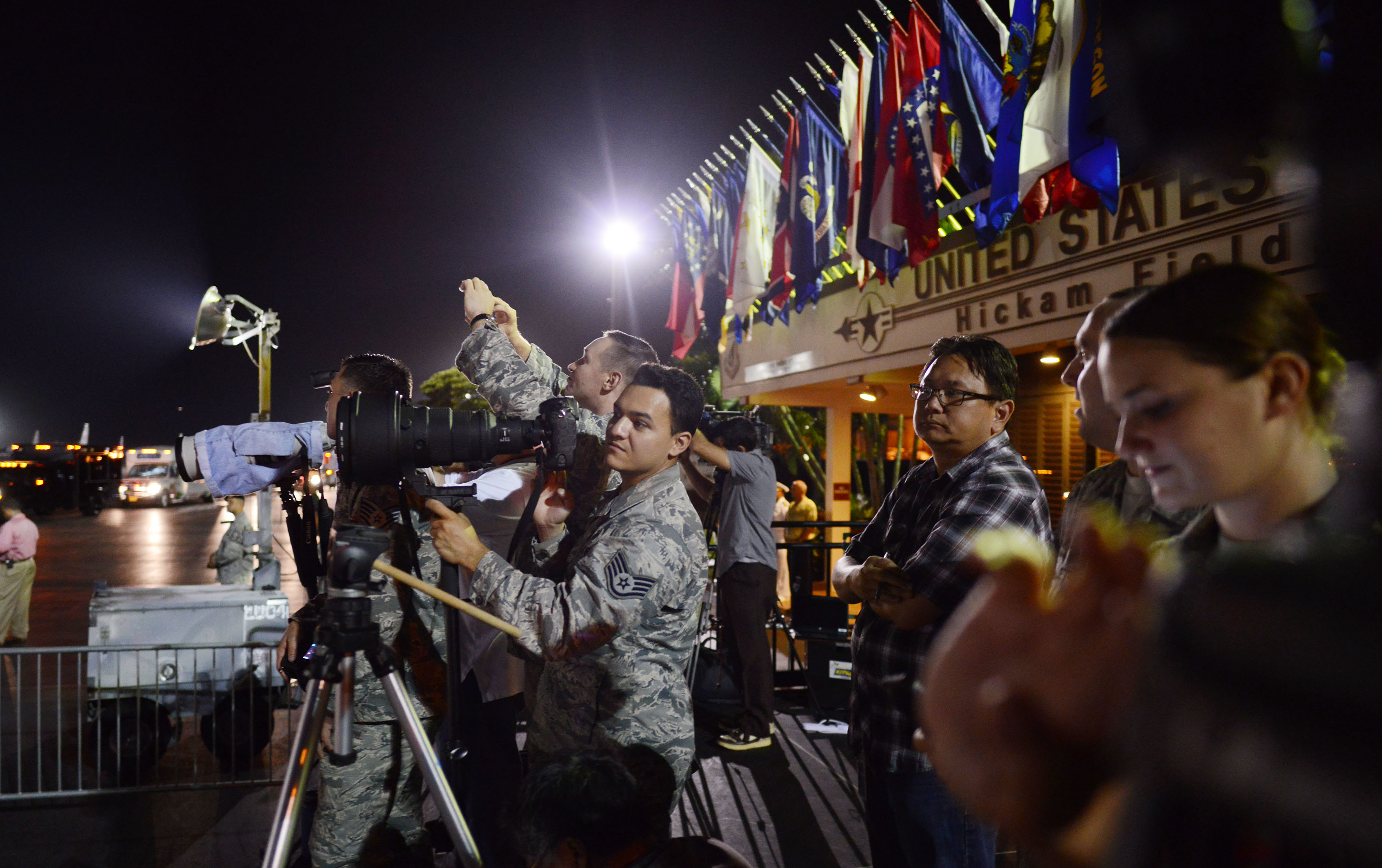
Media organizations meanwhile have lots of jobs and aren’t in the business to make money; they aspire to serve as the open hub of democracy, providing an accessible forum where all viewpoints can come together to talk in a civil manner about important and pressing contemporary issues.
I look around this phantasmical foreign landscape, and here is what else I see:
- Journalists everywhere consistently – and without ambiguity – call a racist a racist, a xenophobe a xenophobe and a fascist a fascist.
- Because of their blunt honesty, trustworthiness and critical importance in a democracy, journalists rank high in magazines when those publications put out their lists of society’s Top 10 jobs, usually placing them alongside other valuable (and highly valued) societal contributors, such as teachers, artists and social workers.
- The extremely endangered environment, which all of us share and vitally need to preserve for our children to have a chance at survival, is given more consideration during debate coverage than the female candidate’s fashion choices each night.
- False narratives and false equivalencies are given as much scrutiny by journalists as “facts.”
- Profiteering is explicitly outlawed in several key fields of public-interest, such as healthcare, pharmaceuticals, military, policing, prisons, higher education and mass media. Like in other countries, such as the United Kingdom, Australia, Canada, significant federal funds in the Bizarro U.S. are reserved for public media, including distribution in newspapers, radio, and television, producing high-quality work like the BBC.
- Journalists are given enough time to figure a story out, talk to the different stakeholders and get it right, every time. Quality is the primary metric in the job, not quantity, length or speed.
- Every medium to large city has multiple thriving media organizations, competing to give you the most accurate, insightful and useful information, including at least three major daily news sources. In Bizarro Honolulu, for example, corruption has been almost entirely eliminated due to the public outrage and increased civic engagement fueled by series after series of Pulitzer Prize-winning investigative reporting.
- When the morning editions of these papers drop on the street, lines form to get them, like when a new Harry Potter novel gets released.
- Local radio journalists get ample airtime to tell the community’s stories, on the publicly licensed airwaves, through rich and provocative acoustic narratives. People often are spotted idling in their driveways, just waiting for stories to finish.
- Folks in this Bizarro land support newspaper, radio, television, online and mobile journalism financially, at least as much and as fervently and as consistently as they do Netflix.
- Everyone votes; not because they have to, but because why wouldn’t any reasonable, rational, intelligent, sentient being want to have at least some input into how their society functions? Journalists write stories about the lone fool in town who chose not to vote, because that was such an odd choice to make in a robust democracy.
- People know at least as much about the political stakes in every race, from federal positions to city charter amendments, as they do about the players on their favorite football teams. So the level of knowledge about that backup wide receiver (6-foot-1, 175 pounds, a freshman, who was a four-star athlete at High School A and runs a 4.56-second 40-yard dash, who caught 27 passes last year for 473 yards and three touchdowns, averaging more than 17 yards a catch, including 5.3 yards after the catch) is not more nuanced and more deeply analyzed than the person running for Honolulu mayor.
- And in this Bizarro World, people spend at least as much time thinking about who should be president as they do binge-watching “Game of Thrones.”
So I’ve brought you along on this little journey. I hope you had a pleasant trip. Before you head back, look around for a moment and tell me what you can see that’s backwards in this Bizarro Hawaii, when it comes to journalists, journalism and media organizations. Leave those visions in the comments section below.