Reader Rep: Don’t Let Public’s Business Be Done Behind Our Backs
What we value here is an idea, at the core of our democracy, that we should know what’s happening in our government and have every right to ask about it.
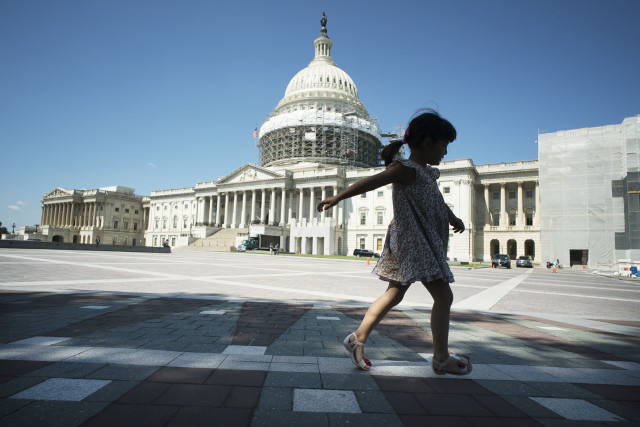
When Republicans in the U.S. House of Representatives began a new session last week by sneakily deciding to impale the chamber’s ethics watchdog as their first order of business, they ran into a surprise nonpartisan antagonist: American citizens.
We actually came together, across party lines, to resist such a stupid idea. Instead of incessantly bickering with each other about contrasting ideologies, we suddenly woke up – at least for a moment – to see the hyenas at the gates.
We also showed that our voices still matter. In a representative form of democracy, without direct power, our sway primarily comes from social pressure (or from large campaign donations).
Inspired by this unification, supporting higher standards of government accountability, I suggest we strike now at similar problems in Hawaii.
To begin with, only in the most twisted of bureaucracies does a response to a public complaint takes years to resolve. But that’s the position of the Office of Information Practices, the primary state agency designed to ensure public meetings remain open (according to the Sunshine Law) and all public information readily is available for public inspection (the Uniform Information Practices Act).
OIP receives about 1,000 complaints a year. As Civil Beat’s Nathan Eagle has reported, though, the OIP now has less than half of the resources it had 20 years ago (adjusted for inflation), a two-year backlog and more than 100 cases trying to squeeze through its bottleneck, including one of mine about the Sheriff Division. (I’ve been waiting seven months and counting.)
This is not just a state government issue. The Honolulu Ethics Commission imploded last year, and the city’s rail project is a good example of how little we know about the ways in which our local and state governments spend our taxes.
Do local citizens ever demand that public business be done in public view? Or is it just journalists who primarily hold such torches?
Being thrifty with oversight boards and instruments of transparency really doesn’t save money but costs us tremendously, in grift and in the perception of grift.
The Honolulu Police Department scandal is another example of how lack of accountability hurts us all. When the chief of police, Louis Kealoha, and his wife – also a powerful public employee – are under federal investigation and involved in corruption charges that include other officers, don’t you think that screams for any public actions on this case to be heard, you know, in public? The Honolulu Police Commission, though, decided to hold its meetings about the matter last week in private.
Did local citizens protest in outrage? Do we ever, when it comes to demanding that public business be done in public view? Or is it just journalists, and an occasional civic-minded gadfly, who primarily hold such torches?
Unlike at Standing Rock and Mauna Kea, there is no dirty pipeline or giant telescope to protest against. What we value here is not a thing but an idea, at the core of our democracy, that we should know what’s happening in our government and have every right to ask about it, in as much depth as we want. That’s not some trivial role citizens play. It’s embedded in the First Amendment of the U.S. Constitution.
Remember this extremely important point: Taxpaying citizens fund every single aspect of the government and even partially support non-profit organizations and big-money corporations through the infrastructure they create and through various tax exemptions.
In other words, without us, there is no them. We give these entities life as part of every paycheck we earn.
Public business is your business, and I doubt you want your business done behind your back. Journalists do a lot of the stand-in work for you, attending meetings, analyzing public documents, talking to public officials, as a way to help you keep track of what’s happening. So when they are restricted, you are restricted.
When rail public-relations firms, for example, are making millions of dollars to convince you how great rail will be for Honolulu, do you wonder if they are motivated by something other than altruism? Who are all of the other people making millions from this rail project? Maybe they are earnest hard-working community activists. But we don’t know, because we’re not being told, even when we ask.
So we can imagine the worst, or the best, depending on our sensibilities. Or we can demand that public information be made public. We can demand that oversight agencies and watchdogs that address ethical concerns get funded appropriately and operate in a reasonably timely manner.
How do we make such demands?
Maybe we should take a cue from all of those citizens around the country who stymied the U.S. House members trying to squash its ethics watchdog. Contact your representatives and let them know how you feel about the state of ethics and openness in Hawaii.