The Beauty Of Education Is In The Stories We Tell
Don’t let the positive narrative about public education get hijacked by stories about teacher burnout and low test scores.
What do you think about public education?:
“I think the students get what they pay for.”
“I know for a fact that we have great teachers and great schools but I believe the system is too big as a statewide system.”
“Is Hawaii the only state worse than___? Nice to have friends at the bottom.”
A simple question that usually receives pessimistic and negative responses. I asked this question to a few groups of peers recently. Some were young professionals, some fellow public school teachers, some parents, and my family, and each response was similar. Some were a bit sarcastic but still right on the nose:
Public education, especially in Hawaii, has been hijacked by a narrative of low test scores, teacher burnout, low teacher pay, an absence of a dedicated revenue stream that leads to lack of funding, overcrowding, and outdated methods.
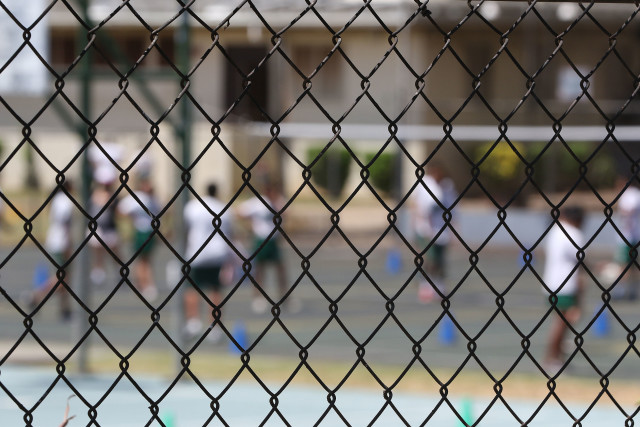
But public education is truly about triumphant communities rising up. How do we as teachers, students, parents, and communities take back the narrative to tell the story of education as the ultimate economic engine? How do we tell a story that resonates as a pathway to opportunity and a social service that lifts communities out of poverty?
Recently, I attended a talk focused on doing just this: changing narratives around social issues to give communities back ownership of these causes. The presenter, Julie Sweetland of Frameworks Institute, shared some insights about reclaiming narratives and telling stories that drive people to action. She defined a social issue as any problem that influences a considerable number of individuals.
As a public school teacher, something clicked. Education is a social issue and we don’t treat it as one. We aren’t sharing the narrative that needs to be told about education. People are not driven by lists of problems and complaints or even stories of successful individuals. As it turns out, according to Sweetland’s data-driven research, people are not driven by cases of inspiring individuals, it actually tends to reinforce stereotypes and these stories inspire just as much action as not saying anything at all.
Understanding that public education is a social issue, not a responsibility of the government, or a right of the people — but a problem that influences a large part of our community. Telling a story that drives change comes down to sharing community ingenuity and prosperity.
So the question remains: how do we as a community tell a story that changes minds and conversations about education? Public education is by no means broken, it just thrives on community engagement and involvement. The solution is within us, we just have to come together.
Education is a community effort and we must treat it as one.
The absolute beauty of seeing education as a social issue, one where many are influenced, instead of as an institution is that everyone has a story to tell. These stories are in all of us. Every single person has a teacher that impacted them, a program that made them who they are today, a project that taught a valuable lesson, a triumph of a community.
But with this new perspective comes a great responsibility. Every single one of us needs to engage in this conversation because our near future depends on it.
So what can we do?
Think of education as an assembly line. Everyone has a specific and essential duty they are responsible for. If educating for the future is the end product, then the students, parents, teachers, administrators, future parents, past students, community organizations and policymakers are the assembly line workers. If one worker is not there, the end product doesn’t get completed. Each of these “workers” is in charge of quality control for the following inputs: access to housing, culture, values, food, jobs, mental health, emotional health, social skills, minimum wage, transportation, health, quality instruction, classroom materials, buildings, technology and safety — each of these inputs needs to be of a high enough quality to produce an educated community.
The point of this analogy is that it is not any one person’s responsibility to change the narrative, much less change the current system so that it works more efficiently. Education is a community effort and we must treat it as one. No one “worker” is the source of the problems within education; further, no one “worker” holds the solution to our current system.
When all of the parts of the assembly line are assembled, the whole community succeeds. To put it in a local context, think of education as its own ahupua’a. An ahupua’a is a slice of land from the top of a mountain to the ocean, usually following the boundary of a stream. “As the native Hawaiians used the resources within their ‘ahupua’a, they practiced aloha (respect), laulima (cooperation), and malama (stewardship) which resulted in a desirable pono (balance),” according to “Ahupuaʻa: Sustainability” by Carlos Andrade.
Just as each community member needs to tend to their kuleana in the ahupua’a, each community member today needs to be a stakeholder in education. Make sure you are doing your part to achieve the same efficient sustainability in education that Native Hawaiians managed using this brilliant system of resource management. So how do we malama our public education system? What can communities do to engage in their success?
- Talk to children, find out what drives them in their education and what they need to be successful. Ask them questions; develop their social skills and emotional intelligence. Often, this conversation never happens even though they are the ones being affected by it most.
- Talk to teachers, especially your children’s teachers. Check in quarterly over the phone or in person. As a teacher, the moral support parents can give in this way is priceless and has direct impact on students.
- If you don’t have children, try and figure out how your role in the community is impacted by public education and start there. Does the company you work with or own have a workforce need that isn’t being met by the current workforce? That’s a gap in the public education system you can help address.
- A school near you may have a Parent Community Networking Center or school Facebook page to stay connected.
- Vote! Get informed and make it happen. You can register here.
- Attend Board of Education meetings. In Hawaii the Board of Education is not elected, so this is often the only way to get heard. If you can’t attend, you can see meeting agendas and submit written testimony to the BOE here. Submitting testimony can literally take 3 to 10 minutes.
- Submit written testimony to the State Legislature. It doesn’t even need to be about education. Having a voice in an issue that affects your community helps fulfill basic inputs of the assembly line which ultimately impacts education as well.
- Talk to your peers. Often having conversations can spark action, especially peer to peer.
- Download the 5Calls app and talk to your local representatives directly. Even though staffers answer the phones, they tally calls and community response to share directly with your representative. Your voice gets heard because they want to hear it.
We can create a future of educated communities together. Let’s work together to reclaim the narrative of public education.
What U.S. Attorney General Jeff Sessions didn’t understand when he dismissed this great state as some “island in the Pacific,” is that this very isolation is what makes us stronger as a community. Let’s use our community strength to improve the future of public education.
 GET IN-DEPTH
REPORTING ON HAWAII’S BIGGEST ISSUES
GET IN-DEPTH
REPORTING ON HAWAII’S BIGGEST ISSUES
Community Voices aims to encourage broad discussion on many topics of community interest. It’s kind of a cross between Letters to the Editor and op-eds. This is your space to talk about important issues or interesting people who are making a difference in our world. Column lengths should be no more than 800 words and we need a current photo of the author and a bio. We welcome video commentary and other multimedia formats. Send to news@civilbeat.org. The opinions and information expressed in Community Voices are solely those of the authors and not Civil Beat.