

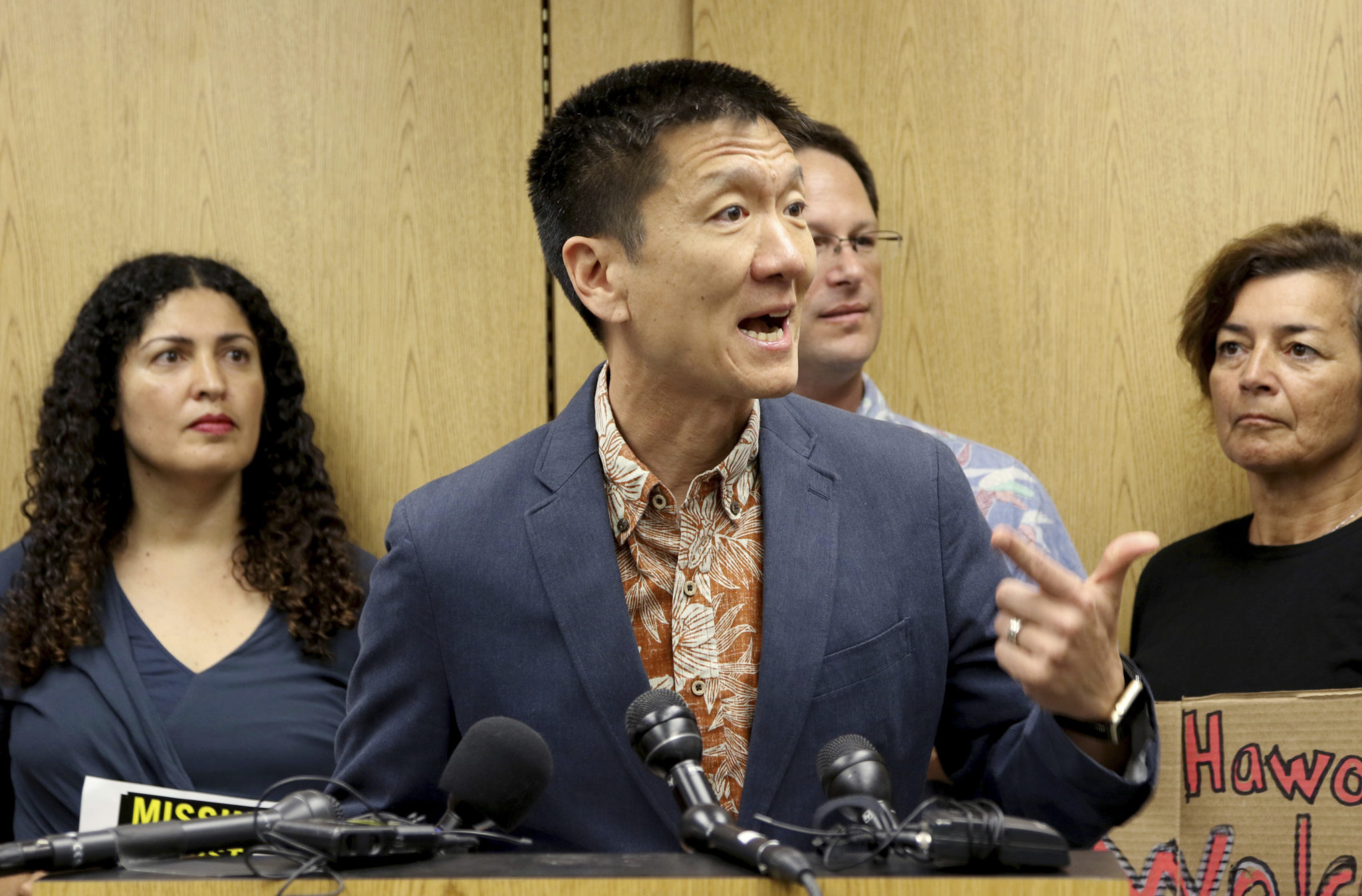
He spoke days after the Trump administration, acting after the Supreme Court partially restored Trump’s travel ban executive order, set new criteria barring entry to the U.S. for some citizens from six majority-Muslim countries.
Based on a schedule set by U.S. District Judge Derrick Watson, the administration has until Monday to respond to Hawaii’s motion, Chin said at the Friday press conference. The state will then have until Thursday to respond to the federal government, he said.
Watson will issue a decision after that, Chin said, adding there are no plans for a hearing at this time.
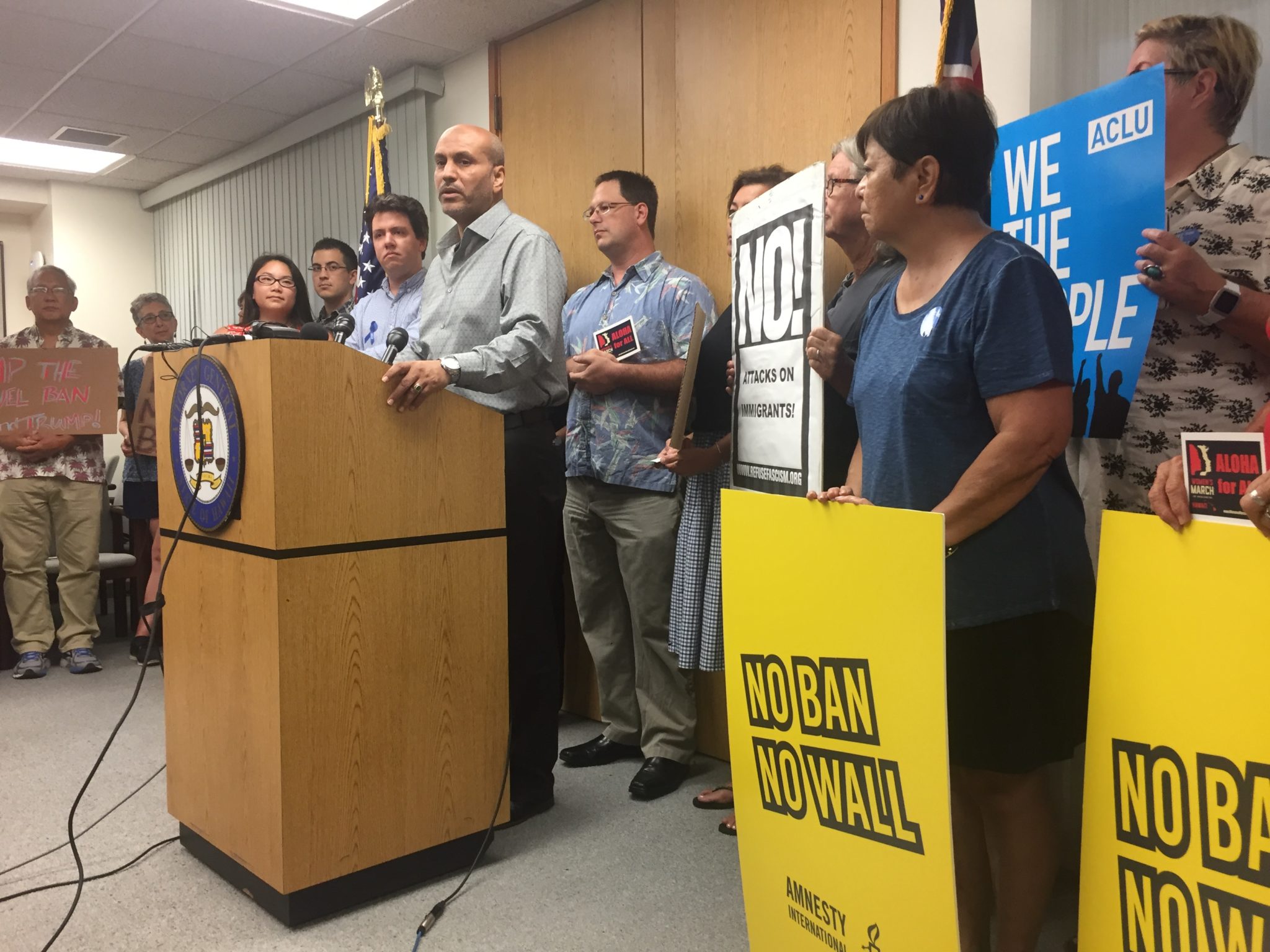
Hakim Ouansafi, the president of the Muslim Association of Hawaii, said Friday the new version of the travel ban would still affect families even though it is more limited than the initial plan by Trump’s administration.
”Now we have to struggle with explaining to our children that grandpa and grandma are not considered close family members,” Ouansafi said.
He said the ban was “vindictive in its inception and it continues to be.
“It seems that this policy is no longer about securing our country when you say to an 80-year-old grandpa you cannot come in,” he said.
Hawaii in February sued to stop Trump’s initial executive order banning people from majority-Muslim countries, saying the policy separates Hawaii’s families and degrades values Hawaii has worked hard to protect.
The U.S. Supreme Court earlier this week said it would hear full arguments on the case in October.
Until then, it allowed the ban to be enforced if visitors lack a “credible claim of a bona fide relationship with a person or entity in the United States.”
Civil Beat’s Courtney Teague contributed to this report.