

Neal Milner: Stop Talking About The Homeless As If They’re Not Like Us
Sweeps and bans and even safe zones do nothing to bring “deviant” homeless people back into the norms of our existence.
I want to show how property laws harm the way we deal with the homeless, to their detriment as well as ours.
The best way to do this is by telling a story about Crazy Bird and the raccoons.
I’ll do that in a minute.
But first: It’s not so much about property law as rules, the simplest being: “Private property. Keep out.”
It’s about property and emotions — how these laws affect what people think of themselves and others.
Property laws literally create boundaries that justify gates and walls.
But these laws also create or reinforce metaphorical boundaries, which can be even more formidable. Owning property changes the way you look at things. Often it leads you to becoming defensive, dismissive, overly protective, and arrogant.
But enough generalizations. Here is the Crazy Bird/raccoon story called “Vermin.” It’s from Lionel Shriver’s new collection entitled “Property.”
An artist and a musician in their 30s rent an eccentric, dilapidated house on a surprisingly quiet cul du sac in Brooklyn.
At first it is their playful oasis — a “joke house,” a source of warmth, humor and togetherness with a crazy mocking bird that imitated the neighborhood sounds from a tree outside their door and a group of raccoons that regularly emerge out of the yard’s overgrown grapevines to frolic and forage in their yard, including a mother and her five kits who take up residence.
This is New York City, remember.
The couple felt that they were living “wild lives,” “a secret world on a private little street.”
Then, in order to keep their landlord from selling the place to a neighbor, the couple decides to buy the house.
Immediately after they became property owners, the house begins to change from a haven to a fortress, and the relationships between one another and with the world outside change dramatically.
And it’s property law and ownership that drive these changes. The law casts an increasingly long shadow over the way the couple thinks about things.
Wiring to code, meeting homeowner insurance requirements. The musician becomes obsessed by these things and can’t understand his spouse’s discomfort and reluctance, which come to a head over the raccoons.
According to New York City laws, raccoons are “vermin” — something to get rid of, along with the grapevine that was now defined as a vermin enabler — a raccoon co-conspirator, rather than a source of enjoyment.
“They’re vermin. Officially,” the musician said to his wife.
The couple, now fully insured and legally fortified, he with great vigor she with enormous sadness, cut down the grapevine and have an exterminator remove the raccoons.
Crazy Bird leaves on its own. The marriage ultimately falls apart.
As ownership came to the forefront, the home went from a place to live lightly to a place to hunker down.
A Tale Of Two Sensibilities
At the same time that property law protected, it also created a sense of vulnerability, fear, and regimentation.
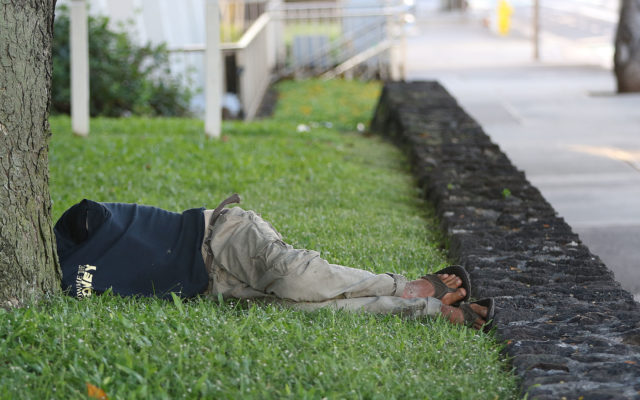
Of course we don’t officially call the homeless “vermin,” but there are vermin-defining qualities in the way we treat them. This is true in several ways.
First, the most common way of talking about the homeless depersonalizes them by defining them as different from us as possible.
They are “chronic” or “mentally ill.” Of course a portion are just that, but it’s significant how quickly conversations about the homeless focus on the most bizarre and stubborn—“chronic” is the usual descriptor.
That is, the focus is on the ones most different from us.
That makes it easier to condone “sweeps” (itself a dehumanizing word). A recent Civil Beat column added to this depersonalization by describing homeless removal as “free maid service,” as if a little yellow station wagon of housecleaners arrived to tidy up while their Kahala clients head off to the Waialae Country Club.
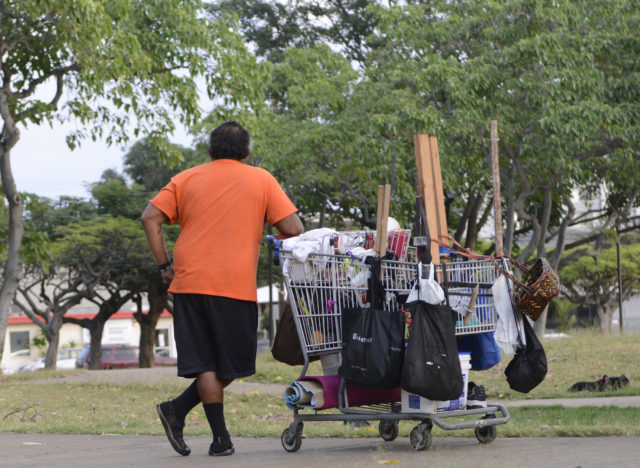
The law says they are trespassing. We can hoover them out, especially because they are so not like us.
Like the couple with the raccoons, you may feel sad about this, but when all is said and done, you don’t need to concern yourself with what happens to those swept. They are out of your orbit.
You are moving on.
That is, until they actually move near you, which, now that the Hawaii Legislature has mandated the creation of homeless safe zones, could happen.
Talk about NIMBYs. If neighborhoods oppose new apartments or “monster” houses — itself a fearful, out-grouping way to describe them — property owners are likely to double down on their opposition to homeless facilities nearby.
Fundamentally these property-driven, out-grouping views that stress the difference between the homeless and ourselves deprive them of their personhood.
“The home,” writes Matthew Desmond in his wonderful book “Evicted,” “is the wellspring of personhood. It is where our identity takes root and blossoms.”
But it is more than just depriving them of a home. Views that focus on homeless persons’ transgressions and deviance drive them further from participation in civic life.
“Civic life too begins at home,” Desmond says, “allowing us to plant roots and take ownership over community, participate in local politics, and reach out to our neighbors in a spirit of solidarity and generosity.”
As sympathetic as we might be toward those Brooklyn raccoons, it is easy to understand why they could not have such ownership or have such solidarity with their human neighbors.
After all, even if they had not been legally defined as vermin, they were still just raccoons.
But you can’t explain away the homeless this way unless you define them in ways that make them much more like rodents and much less like ourselves.
With the help of the law, always on the side of the proper, we do a pretty good job of doing just that.
Thoughts on this or any other story? Write a Letter to the Editor. Send to news@civilbeat.org and put Letter in the subject line. 200 words max. You need to use your name and city and include a contact phone for verification purposes. And you can still comment on stories on our Facebook page.

