

Big Island: Hamakua Flood Victims Feel Overshadowed By Lava Disaster
When Hurricane Lane dumped torrents of rain on this stretch of coastline, attention was still focused on volcanic eruptions.
HAMAKUA COAST, Hawaii Island — Turns out it’s not easy following Madame Pele.
Just ask folks living in the former plantation villages located along the Hamakua Coast who last August endured record-setting flooding as Hurricane Lane passed the island.

In a normal year, getting pummeled by more than 50 inches of rain in a few days’ time would generate media coverage, then public support and, ultimately, a government-financed rebuilding effort to restore lost infrastructure.
And while help is finally on the way, it’s not happening nearly as quickly as locals would like.
Last year was not a normal one for Big Island natural disasters. Kilauea volcano recorded its largest eruption in more than 200 years. Lava flowed nonstop for four months, exacting a staggering toll: 700-plus homes destroyed, thousands of residents displaced, businesses crippled and tens of millions of dollars worth of vital roads, parks and other public infrastructure covered in molten rock.
The eruption has stopped, but when it was raging with no apparent end, Red Cross volunteers arrived from the mainland to help those living in shelters, political leaders pledged their full support after flying over the ravaged communities, people donated their own money and even stranded pets got air-lifted to safety.
The focus was on helping Puna.
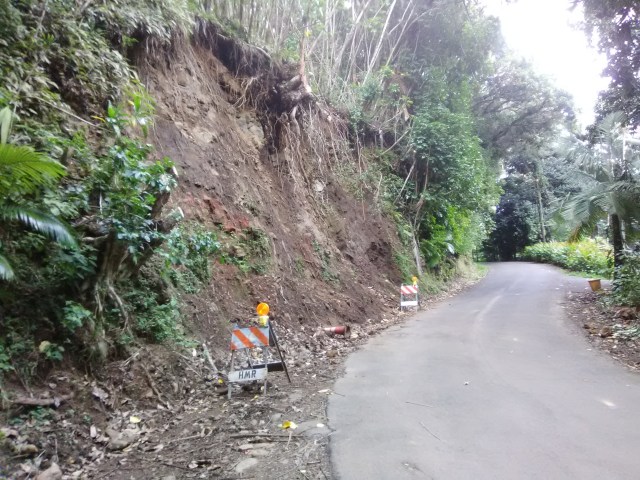
And then came Lane. Despite an early Category 5 status, it didn’t produce massive wind damage. But it did become the wettest tropical cyclone in Hawaii history and still trails only Hurricane Harvey as the second-wettest storm ever to drench the U.S. Rockslides closed essential roadways, swollen streams shook bridges and torrents of water wreaked havoc on other infrastructure.
“It’s unfortunate that this was right on top of the eruption,” said Ninole resident Bob Gentzel. “I feel this kind of got lost.”
While understanding the need to help Puna and expressing compassion for lava victims, he and other Hamakua residents feel they’ve been overlooked when it comes to getting disaster relief.
“The rest of the state does not know of the damage we sustained or that still remains,” Gentzel wrote in an email. “There is no one highlighting the trouble Hawaii County continues to face recuperating from Hurricane Lane.”
Flood damage throughout Hilo dominated the hurricane news coverage from the Big Island, he said.
“It’s the rural areas that get impacted and the side roads that don’t get the attention,” said Gentzel, who wants both past damage fixed and anti-flooding measures implemented like the recent construction of a rock wall stabilizing a cliff face and homes fronting Highway 19 in Pepeekeo.
The desired attention has started shifting to the secondary roads, however, with millions of dollars in federal and Hawaii County disaster relief money now undergoing the government approval process. Construction will follow, but it remains unclear when repairs and improvements will be finished. Until that happens, Hamakua residents will continue being inconvenienced, and in at least one case, living with compromised safety.
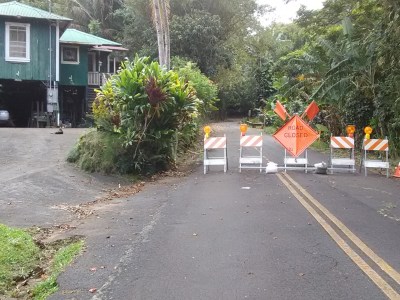
Damaged infrastructure includes the part of Old Mamalahoa Highway linking Ookala with Highway 19, the main two-lane road running along the coast. The vital road remains cordoned off five months after flood waters receded, hampering access to the village post office, a church and several homes, all of which are located a few hundred yards from barricades placed across the road.

The closure concerns Ookala resident Francine Haslam, who said the now-inaccessible route had been her only safe way out during a previous flood that made the southern exit on Old Mamalahoa Highway virtually impassable.
“We have no way else to get out because they closed this road,” said Haslam. She said she’s not been told when the road passing her home will be reopened.
Fellow resident Mary Mershon said living “off the grid” has helped prepare her to withstand the flood’s impact.
“We’re all pretty self-sufficient anyway,” Mershon said. “We don’t sit around and watch who’s going to rescue us.”
Still, there could be millions of dollars in relief coming.
Nearly $37 million in FEMA money is awaiting final approval by the Hawaii County Council. Lawmakers earlier this month backed the bill unanimously on the first of two supportive votes required for its passage. The money, along with the county’s 25 percent matching share of $12.3 million, is all tied to hurricane damage, and almost all of it is earmarked for Hamakua infrastructure projects.
The total aid actually exceeds the $33 million in combined FEMA and county money pending for eruption-related relief. However, Mayor Harry Kim is asking the Legislature to supplement that amount by approving his requested two-year, $155 million “lava relief package.”
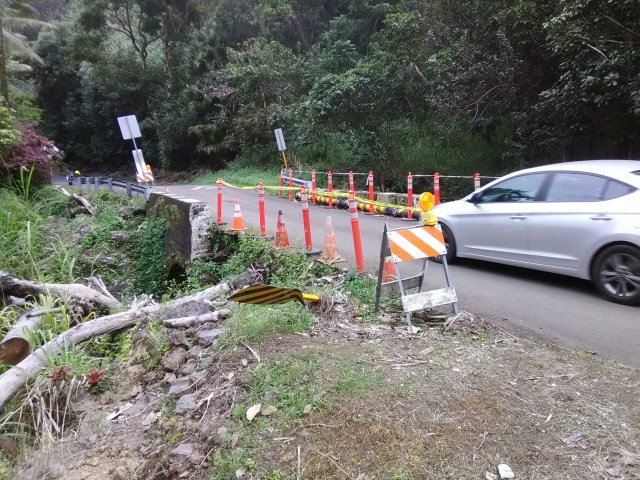
As for the flood relief, the most costly project is $20 million to fix Laupahoehoe Road, a steep and narrow dead-end route that crosses a bridge left badly damaged by the flooding. The road is used to reach about a dozen homes and Laupahoehoe Point Beach Park, which has recently been the only coastal park open along the Hamakua Coast. The county has announced it’s closing the park through Feb. 7 to fix damaged water lines.
The other big-ticket item in the county’s flood-relief package is $10 million for Old Mamalahoa Highway, which provides access to villages bypassed by the newer, two-lane Highway 19 that runs largely parallel to it.
The funding bill also includes $3 million for “various other roads” and $7.8 million for “various bridges,” according to a projects list county Finance Director Deanna Sako provided.
Affected residents just hope the help arrives before the next heavy rain.
“They knew that was going to happen,” Haslam said of flooding that’s hardly rare in windward Hamakua. “They wait too long, and when it’s really damaged, they go out and do it.”

