Just Because Vaping Is Legal Doesn’t Mean It’s Safe
Proposals before the Legislature call for regulating electronic cigarettes and banning flavored tobacco.
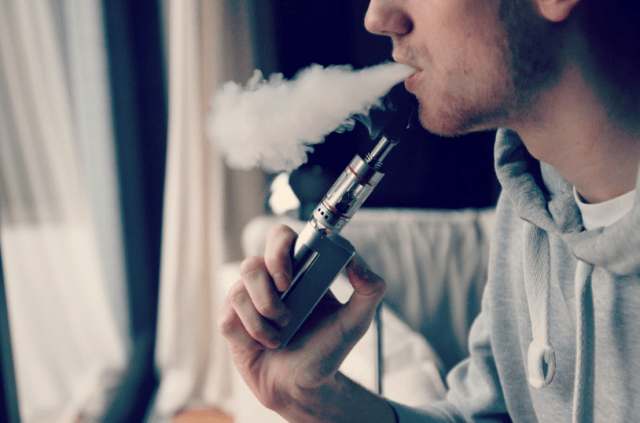
We are in the midst of a youth vaping epidemic in Hawaii, with 25.5 percent of high school and 15.7 percent of middle school students vaping regularly. To put this into perspective, 4.3 percent of adults in Hawaii vape.
Two pieces of important legislation aim to get ahead of this issue: House Bill 276 and Senate Bill 1009 call for an end to the sale of flavored tobacco products and vaping liquids in Hawaii, and House Bill 1574 and Senate Bill 1405 would regulate vaping products similar to tobacco.
Flavors attract kids. More than 80 percent of youth who vape say that they started because of the flavors and continue because of the flavors. They also say that if flavored vape was not available, they wouldn’t have started in the first place. The reality is that youth who start vaping don’t seek nicotine — many don’t even know that most vape products contain nicotine, which is derived from tobacco plants.
Menthol is a particularly insidious flavor in tobacco and vape products. Its cooling properties mask the harshness of tobacco smoke and nicotine, making it the starter product of choice for new tobacco users.
The tobacco industry’s long history of marketing menthol cigarettes to vulnerable populations has led to higher tobacco use and higher rates of lung cancer among Native Hawaiians and Filipinos.
Although many teenagers may vape with what manufacturers claim is “just flavored fluid,” the crux of the issue is the exposure of youth to the highly-addictive drug, nicotine, which is as addictive as heroin and cocaine. Nicotine doesn’t just interfere with brain development into the mid-20s, it permanently changes kids’ brains who are exposed to it.
Nicotine Changes Brains
Kids who intake nicotine will experience impaired learning and behavior and reduced impulse control, and they will likely experience increased anxiety and depression. Once nicotine changes their brains, kids are at higher risk for other addictions in their youth and in adulthood.
Because advertising of vape products targets them, kids think vaping is harmless. If it is legal to sell it must be safe, right?
What kids don’t appreciate is that vape products are not regulated. Federal rules to regulate vaping products that were set to start in 2018 were pushed back to 2022.
To this day, no vape product has been reviewed by FDA for safety, effectiveness, or quality. We see this in the regular reports of exploding e-cigarettes, with 133 documented injuries between 2009 and 2016, including a recently publicized death.
After more than 20 years of consistent reductions in youth tobacco use, from 36 percent of high school seniors smoking in 1997 to 8 percent in 2018, the fast-growing youth vaping epidemic is threatening public health. With the confluence of thousands of fun-sounding flavors and new generation, sleek, easily-concealable devices, kids are vaping in unprecedented numbers in school and at home.
“More than 80 percent of youth who vape say that they started because of the flavors and continue because of the flavors.”
Considering that vaping was essentially a non-existent habit in 2011, the best indicator that we are not doing enough is that U.S. high school student use of e-cigarettes jumped 78 percent in just one year, from 2017 to 2018. Among the 4.9 million youth that used tobacco, 3.5 million were using e-cigarettes.
Proponents of vaping will argue that using e-cigarettes has helped them to quit smoking tobacco cigarettes.
For long-time established adult smokers, e-cigarettes may reduce health risks for the individual user compared with the risk of smoking cigarettes or using other forms of tobacco. However, while the health benefits of switching have yet to be proven, this shouldn’t outweigh the wealth of evidence that e-cigarettes are addicting kids who have never smoked to nicotine and tobacco.
The two proposals before the Legislature — regulating vaping products and the ban on flavors — are efforts to reverse the youth vaping epidemic in Hawaii. These proposals do not ban vaping for adults — they regulate its sale and distribution to deter young people from using it. Adults will still have access to tobacco-flavored and unflavored products if they choose.
These same kinds of regulation were successfully used with cigarettes and other forms of tobacco to reduce the youth tobacco smoking rate in Hawaii, and we need the same bold policy action to protect current youth from a lifetime of addiction.
Think of your kids or kids you know and love. Think of how bright their future could and should be. Hawaii has a long history of putting the well-being of our keiki first. The arguments against e-cigarette restrictions are distractions from the real issue. The sad reality is that youth who vape may never reach their full potential.
Hawaii lawmakers must act now, for our keiki and for the generations to come. It is time to regulate e-cigarettes and end the sale and distribution of all flavored tobacco products, including menthol, throughout the state.
 GET IN-DEPTH
REPORTING ON HAWAII’S BIGGEST ISSUES
GET IN-DEPTH
REPORTING ON HAWAII’S BIGGEST ISSUES
Community Voices aims to encourage broad discussion on many topics of community interest. It’s kind of a cross between Letters to the Editor and op-eds. This is your space to talk about important issues or interesting people who are making a difference in our world. Column lengths should be no more than 800 words and we need a current photo of the author and a bio. We welcome video commentary and other multimedia formats. Send to news@civilbeat.org. The opinions and information expressed in Community Voices are solely those of the authors and not Civil Beat.