

A Last-Minute Rush To Get Hawaii Residents Signed Up For Health Insurance
After website glitches prohibited some from accessing the online insurance marketplace, the deadline to enroll was extended by 36 hours.
The holidays are a pivotal time for Americans to sign up or renew health insurance coverage through the federal marketplace.
In Hawaii, the rush is on among self-employed Hawaii residents and immigrants.
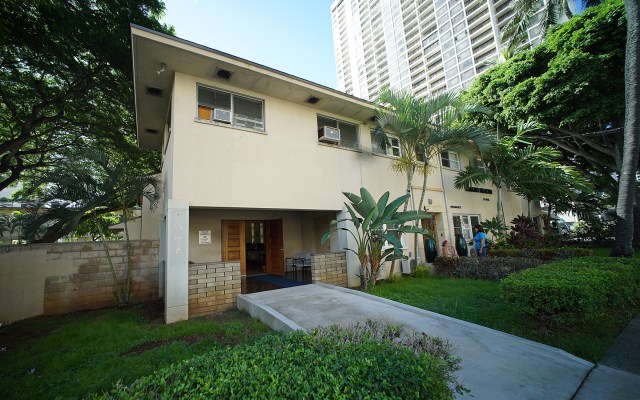
“There’s always a last minute mad dash,” said Cheryl Moreno, an eligibility specialist at Waikiki Health Center. “There’s a lot of self-employed people — taxi drivers, contractors, anybody.”
For a month and a half, community health workers like Moreno across the state scramble to help people during the open enrollment period, which began Nov. 1.
Heavy site traffic caused technical glitches so officials extended the deadline by 36 hours to Tuesday evening, Dec. 17, Hawaii Standard Time.
As of Dec. 7, the U.S. Centers for Medicare & Medicaid Services reported only 9,000 Hawaii residents had signed up or renewed their health plans, which is less than half of last year’s total. Those who miss the deadline will not be eligible for insurance until the end of 2020.
Navigating Healthcare.gov can be inhibitive. Others are unaware about deadlines or extensions. Nationally, only an estimated 5% of uninsured people actually know about the enrollment deadline.
On the Big Island, eligibility specialists at the West Hawaii Community Health Center assist immigrants from the Philippines, Mexico and Compact of Free Association nations.
“We’re having to help them to get a new email address and go through the process of setting up a healthcare.gov account,” said Tina Evans, an enrollment specialist at WHCHC. “There are several pages you have to complete and documents that have to be loaded into the system to complete the application process.”
In years past, dozens of people would line up on the sidewalk outside West Hawaii Community Health Center campuses on the Big Island for enrollment help, Evans said. This year, other enrollment events helped to keep lines down. But federal funding for “navigators” like Evans decreased in Hawaii by nearly 80% between 2016 and 2018.
In November alone, West Hawaii Community Health Center’s four eligibility workers assisted 300 people to sign up for federal health insurance plans, Evans said.
Many of those who seek help are from Pacific island countries that have the Compact of Free Association agreement with the U.S. In return for U.S. military control of much of the Pacific Ocean, citizens from the Federated States of Micronesia, Palau and the Republic of the Marshall Islands work and live in the U.S. legally. But COFA citizens between the ages of 19 and 64 do not qualify for state Medicaid health insurance, or Med-QUEST, unless they are pregnant or disabled.
Other immigrants, such as those who have green cards but have not met the five-year residency requirement for state health insurance eligibility, also must seek a plan from the federal marketplace.
“If they miss the deadline for open enrollment they have to wait a whole year to get onto medical insurance,” Evans said. “That’s why it’s a big deal.”
The number of Hawaii residents enrolling in plans via the federally run exchange has grown consistently over the past five years — a trend that runs counter to the rest of the nation.
More than 20,000 Hawaii residents enrolled in private plans during 2018’s enrollment period for 2019 plans, compared to about 8,600 in 2014.
The Big Island is home to the state’s highest rate of adults without health insurance, with approximately 9% of adults, compared to the state rate of 6.6% and the City and County of Honolulu at 5.6%.
The share of people with public health insurance is also the highest in Hawaii County, with nearly a third of residents relying on federal programs.

