Hawaii Researchers Search For Clues To The Mysteries Of COVID-19
By looking closely at the antibodies developed by recovered coronavirus patients, University of Hawaii scientists hope to help find ways to halt the progression of the disease.
So much is still unknown about COVID-19. Why do some healthy people fall severely ill, while others may not show symptoms? Two Hawaii researchers are hoping to find out.
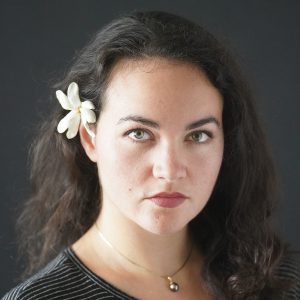
Alika Maunakea, a biomedical researcher at the University of Hawaii John A. Burns School of Medicine and Ruben Juarez, a mathematical economist at the University of Hawaii Economic Research Organization, are looking to track the recovery of Hawaii COVID-19 patients who have cleared quarantine and can donate blood at the medical school.
Maunakea and Juarez want to explore what the human immune system says about COVID-19 and find more clues about what can halt its progression. Ultimately, they hope to identify ways to prevent patients from falling severely ill, and “understand underlying disparities not only in infection rates but also severity and recovery of COVID-19,” said Maunakea.
“We want to collect some baseline information on recovering individuals because that’s something we don’t really have an understanding of right now, especially in Hawaii,” he said.
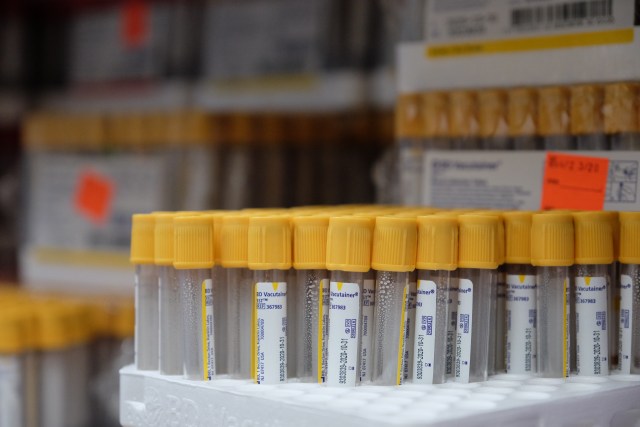
Those who are invited to participate are people who have tested positive for COVID-19 within the past 60 days and who are cleared from quarantine. Participants will be asked to donate a small blood sample once a week for six weeks at the UH medical school.
A coronavirus infection can not only trigger fever, coughing and shortness of breath, but gastro-intestinal problems, as well. In some cases the body may overreact in its response, which can lead to worst case scenarios: pneumonia, severe respiratory complications, kidney failure or death.
There’s a lot of variability in peoples’ ability to recover. Several risk factors have crystallized during the first six months of the pandemic: elderly people and those with preexisting medical conditions have a higher risk for complications. Research is also underway about why the disease has taken a higher toll on some people based on sex or ethnicity, often tied to socioeconomic factors.
By examining the development of antibodies, Maunakea and Juarez want to track patients’ immune response and use the science of immune health to address COVID-19 disparities.

During the course of infection, symptoms can appear belatedly. But once those symptoms subside, there is still vital information provided by antibodies.
Antibody tests could yield more information about people who had asymptomatic cases, they say.
“We’re looking at how individuals recover from the infection, because we don’t really understand to what degree of viral antibodies they may have produced and what their inflammatory response may look like during the course of infection,” said Maunakea.
There are certain biological pathways, such as microbiome composition, that can “either lead to resilience against the virus or contribute to complications,” he said.
The goal is to improve ways to target which patient populations will need most help, Juarez said.
“What are the diseases — like diabetes — that we should be paying more attention to?” he said. “If we’re able to design this and be able to get the results on the interactions on the microbiome with the disease it could potentially tell you or prescribe things you need to target, things like diet, or nutrition.”
The researchers will share what they find with others across the U.S. working on similar studies. Eventually, as Hawaii reopens its doors to trans-Pacific visitors, Juarez says he hopes the research will assist state lawmakers with policy decisions.
Testing For Travelers
This week, Gov. David Ige said COVID-19 testing is under discussion as a possible way to vet travelers arriving in Hawaii. Juarez says serological or blood testing could help in tandem with their research, since it can provide a historical picture of a patient’s possible immunity.
“This can help us understand what serological testing could be done in an appropriate way,” Juarez said.
More research is being conducted at the medical school.
Researchers there announced Friday they will conduct the state’s first outpatient clinical trial in hopes of finding a COVID-19 treatment. They’re searching for 40 adults with active infections to participate.
Dr. Cecilia Shikuma, Professor of Medicine at JABSOM and the lead investigator for this study, said research patients will be placed on either a placebo (sugar pill) or telmisartan, a blood pressure control medication.
“We hope to find preliminary evidence that taking the drug will also prevent much of the harmful effects of the virus,” she said. “It is an advantage that telmisartan is already FDA approved and much of the safety concerns of this drug is already known.”