

Oahu Turns To Community Health Centers To Boost COVID-19 Efforts
Clinic directors say coronavirus relief funds will help cover testing and contact tracing costs as well as provide families with direct financial relief.
Oahu officials are allocating $10 million to seven health centers on the island to ramp up COVID-19 testing and outreach among low-income and high-risk communities.
The community health centers can use the funds to cover testing costs, help people in quarantine, provide direct financial assistance to people with COVID-19 and hire “health care navigators” to assist patients in accessing medical care after diagnosis.
The city funds come from federal coronavirus relief grants and follow nearly $2 million allotted earlier this year for testing.
Honolulu Mayor Kirk Caldwell said the “Community Resource Network” program includes direct financial relief for families with household members who cannot work because of a COVID-19 diagnosis.
“If you test positive and you can’t quarantine safely in your home, and you’re offered a hotel but you’re leaving your family and they depend on you for financial support, you’re going to be really scared,” Caldwell said at a Thursday press conference. “Financial support is extremely important to get these earners the support they need so they can leave their family and be quarantined safely.”
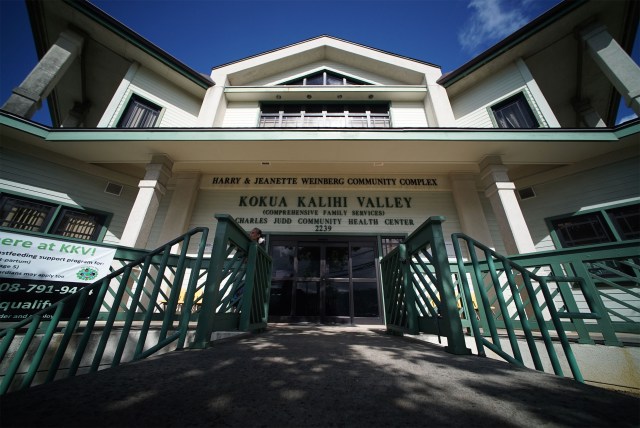
Dr. David Derauf, executive director of Kokua Kalihi Valley Comprehensive Family Services, said this type of funding is vital to address the wide-ranging needs of COVID-19 patients and their families.
During the past six weeks, the health center has provided $500,000 in direct economic assistance to families affected by the coronavirus. That money helped families cover rent, groceries and supplies such as face masks and hand sanitizer. The health center has also been able to provide local produce to the community.
“To the extent we can get those dollars out into the community through existing channels that have longstanding relationships, then that starts to happen faster,” he said. “We know there’s been a lot of frustration, for example, getting rental assistance out, and this is one way we can expedite that.”
The Kalihi-based health center was seeing as many as one in three patients test positive for COVID-19 during a peak of infection this summer. Among the 2,300 people tested at Kokua Kalihi Valley, 550 people were confirmed to have contracted the COVID-19 virus, according to Derauf. As of this week, approximately one in 10 people are testing positive, marking an improvement.
Wahiawa Health CEO Bev Harbin said the center received $460,000, which will cover the cost of hiring contact tracers who can reach out to community members dealing with outbreaks.
‘We are actually getting funding to do what has been needed in our community for several months,” she said.
The funds will cover medical and food support for COVID-19 patients as well as their families. That includes contact tracing, scheduling telehealth visits, transportation to hotels to quarantine, providing three meals a day, daily essentials, and ongoing medical visits while they’re in quarantine.
Caldwell said this outreach is meant to assist Pacific Islander and Filipino communities — the communities who have have been disproportionately affected by the pandemic compared to their population size.
“When people see people from their own community it breaks down so many walls,” said Josie Howard, program director of the nonprofit We Are Oceania. “It makes them feel comfortable that there’s someone they can trust and they’re not alone anymore.”

