Battlefields And Ballrooms: A Whirlwind Global Tour Set Up Prince Kūhiō For A Life In Politics
Prince Jonah Kūhiō Kalanianaʻole spent part of the early 1900s on African safari. Then he began tracking the most elusive quarry: Elected political office.
Editor’s Note: The articles in this series are the result of months of research in state and national archives, on Kauaʻi, on the Big Island and in Honolulu, and within the Washingtoniana collection at Martin Luther King Jr. Library and the Library of Congress in Washington, D.C. Key resources include congressional testimony, hearings and historical newspaper collections.
In early 1900, Prince Jonah Kūhiō Kalanianaʻole had many reasons for wanting to leave Hawaiʻi forever.
Raised as a prince in the household of King Kalākaua, a direct descendant of King Kaumualiʻi of Kauaʻi, he had grown up thinking he might one day rule the kingdom. But the overthrow of the monarchy and the annexation by the United States robbed his nation of its autonomy and stripped him of the role he had been groomed to play.
Feeling an unbearable sense of loss, Kūhiō and his wife, Elizabeth, fled the islands leaving those cares behind them, setting off by ship from Honolulu and traveling the globe for the next 18 months. They told newspaper reporters they did not think they would ever return to the islands.

In San Francisco, the young royals, who had inherited money when Kūhiō’s aunt died, took up apartments at the Palace Hotel, a luxurious establishment modeled on grand European hotels, taking side trips to haunts from Kūhiō’s childhood like his old surfing grounds at Santa Cruz. They attracted admiring attention in California, with the San Francisco Chronicle dubbing the prince “the social Adonis” of Hawaiʻi.
“He has the build of an ideal varsity half-back or tackle … but his every movement and his naturally graceful poses are all very suggestive of a leisurely tropical existence,” the Chronicle reported, adding that his “laughing eyes” give the impression that he “is not blind to the pleasures of existence.”
The young couple next headed off across the country, dipping into Canada along the way, and on to London, which Kūhiō said they were considering “making their home.”
From London, they were heading to Ireland, Scotland, Italy and then to Africa, according to a letter published in the Honolulu Independent on Sept. 10, 1900.
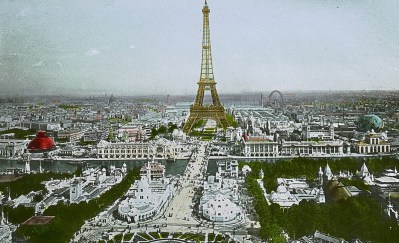
In October, they were spotted at the 1900 Paris Exposition, a celebration of artistic and technological achievement, where dazzled spectators got their first look at talking pictures, escalators and electrified bus lines. Paris was decked out for the event, with even metro station entrances given art nouveau makeovers.
Breathless news accounts speculated wildly about their plans. Kūhiō was rumored to have invested in a diamond mine or enlisted in the British Army — neither of which was true.
What was true, however, was surprising enough. Brandishing an official letter of introduction from mining magnate Cecil Rhodes, former prime minister of the Cape Colony, and accompanied by Sir John Richard Somers Vine, a colorful adventurer who was a friend of the Prince of Wales, Kūhiō and his bride were allowed to enter areas of South Africa that were off-limits to visitors.
Tourists were ordinarily banned from the interior because the British Empire and the Dutch-speaking Boer settlers were engaged in the Second Anglo-Boer War, a bloody conflict over lands that formerly belonged to Africans.
A Life Of Adventure
Rather cavalierly, the young pair set out on safari. At one point Kūhiō and another man were engaged in big-game hunting and were attacked by a herd of water buffalo, narrowly escaping with their lives. Kūhiō brought the most menacing of the animals down with a shot through the heart, saving both himself and his companion.
On another occasion, Kūhiō and Elizabeth were riding a primitive train from Cape Town that was ambushed by Boers at Blood River, a site that already had grim military history. They were trapped in the dark overnight, with partisans from both sides shooting at each other. Two Boers were killed and their bodies were buried by the side of the tracks. The royal couple was forced to take another route to get to their next destination.
Swept up in the romance of military life, Kūhiō accompanied British officers on five other expeditions, in one of which six Boers were killed and the British managed to capture thousands of head of livestock.
It seems odd that Kūhiō would take up arms on behalf of the British, but there is a long history of friendly association between the British and the islands. Queen Kapiʻolani and Kūhiō had been welcomed in London; Kūhiō had lived there for several formative years. In addition, Kūhiō’s years of military training at St. Matthews Hall in California had prepared him for combat of just that kind.
Kūhiō’s exploits in South Africa in 1901 came to light because he wrote friends in Honolulu about what had happened, and the letters were published in a variety of city newspapers, such as the Honolulu Independent, on Aug. 3, 1901. Kūhiō’s accounts were substantiated by others later, and the animal-head trophies were hung on the walls of his Waikīkī home for all to see.
Vine was 25 years older than Kūhiō and described at the time as a “robust” man, with a florid face and an iron-gray mustache. A former journalist who had been private secretary to the Lord Mayor of London, he proved a particularly valuable mentor to Kūhiō.
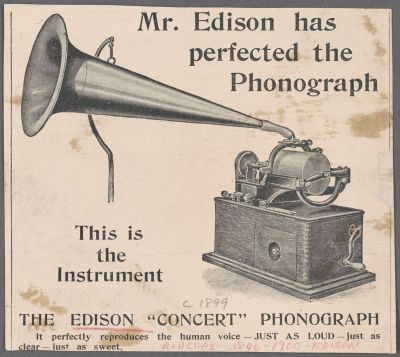
Vine also was experimenting with finding ways to preserve Indigenous languages that were otherwise at risk of disappearing. He was using a new invention, the phonograph machine, to record sounds that no one had yet managed to turn into written languages.
That was the kind of scientific project that would have been immensely interesting to Hawaiian speakers like Kūhiō and Elizabeth. As the number of Hawaiians fell year over year, the preservation of their own Indigenous culture was becoming a central preoccupation to them. The need to save languages by recording them would certainly have been a chilling thought.
Kūhiō had been having a grand time on his travels, but this kind of conversation would have been profoundly sobering. While traveling in South Africa, he and Vine engaged in some other deep conversations about Kūhiō’s obligations to his people.
Vine later visited Hawaiʻi and told a news reporter how he helped the prince chart his path forward. He recalled that he had told Kūhiō that he had enjoyed “some fine excitement” in South Africa, but that he needed to adopt a greater earnestness of purpose.
“When he was in Africa, he seemed to be reaching that state of mind where he had become indifferent to political events,” Vine told the Hawaiian Star newspaper, in a report published on April 10, 1903. “I told him that he was making a mistake on this score, that he should take an active part in the politics of his section.”
Soon after those conversations in Africa occurred, Kūhiō and his wife headed home, passing first through Australia and New Zealand, arriving in Hawaiʻi in September 1901.

Up until this time, Kūhiō’s public life, outside of his royal obligations, had been fun and games, literally, because he had been active in so many demanding sports at a high enough level that they received regular news coverage. But within two months of his return to Hawaiʻi his name began regularly appearing in news accounts of an entirely different kind. He was entering the political arena.
‘Hawaiʻi For Hawaiians’
As it turned out, big-game hunting and military combat had probably been a good preparation for what came next.
He was returning to a country that was facing a set of complex political and economic problems. In the 30 years since Kūhiō’s birth in 1871, the Native Hawaiian population had dropped by more than 10%, and there were now fewer than 40,000 of them, down from 71,000 in 1853.
In Kūhiō’s childhood, Hawaiians had made up 90% of the population in the island nation. Less than a tenth of the population, about 5,000 people, were foreign-born or white. That meant that Hawaiians, even when profoundly influenced by outsiders or newcomers, had numerically dominated the others. Hawaiian leaders had controlled the country and sought to shape its future.
Now a complete reversal had occurred. By 1900, Native Hawaiians comprised only a quarter of the population, and Hawaiians realized their power was eroding quickly.
The non-Hawaiian population however had increased more than 20-fold, mostly because sugar planters had brought in tens of thousands of immigrants to work in the fields. Annexation had brought America’s historically open immigration policies to Hawaiʻi and made it easier to bring foreign workers into the territory. Most of the newly arrived workers were not citizens and did not have the right to vote.
More white people had moved to Hawaiʻi, too.
Hawaiians were becoming a minority group in their own country, something that had happened in very short order.
Plantation owners, meanwhile, almost all of them white, were becoming immensely wealthy, in an era of lax government regulation by the United States, with corporations gaining enormous power.
Not surprisingly, ethnic relations were deteriorating.
To make matters worse, the new American domination meant people had to operate within a different, and often ruthless, legal system.
Hawaiian society was stratifying, with some people adapting and many others falling by the wayside, descending into poverty.
But annexation had also introduced universal male suffrage, and that meant that the broadened right to vote was creating a new outlet for political discussion of all these problems. In the past, voter participation in the islands had been spotty, partially out of a sense that rulers would make the necessary decisions on their behalf. Now voters surged to the polls, and the level of civic engagement was very high in 1900 — the first election after annexation and full incorporation into the United States.
Kūhiō had missed that election while he was away and he returned in time for the election of 1902.
Hawaiʻi had three major parties — Republican, Democrat and Home Rule. Of the three, the Home Rule Party was most direct at addressing what Hawaiians viewed as rising injustice. The party’s motto, “Hawaiʻi for Hawaiians,” proved to be hugely popular with Hawaiians.
That was important because Hawaiians still made up most of the electorate because most immigrants did not have the right to vote.
Kūhiō initially aligned himself with the Home Rule Party. One of its primary planks was calling for the establishment of county and municipal government, something he supported wholeheartedly. But Home Rule Party leaders also said and did things that exacerbated racial tensions and made other groups feel worried about their own futures in Hawaiʻi, so while they were numerically strong, they were also inspiring a backlash.
The Home Rule Party’s leader was the fiery and popular Native Hawaiian patriot Robert Wilcox, the son of an American sea captain and a Hawaiian mother. Wilcox had led several revolts in support of the Hawaiian monarchy, and many people viewed him as a hero.

While Kūhiō had been gone, his older brother, David Kawānanakoa, had become active in politics, but he had joined the Democratic Party believing that it was better to align with a major national party to advance Hawaiian goals. He ran for the position of delegate to the U.S. Congress but lost to Wilcox and the Home Rule Party in 1900.
Wilcox became the first Asian-Pacific American elected to Congress.
Kawānanakoa decided to step back from the fray. Two years later, he married a wealthy heiress, Abigail Campbell, the daughter of a Scottish industrialist and a Hawaiian mother, and withdrew from politics.
This opened the field for Kūhiō, who had grown increasingly disenchanted with the Home Rule Party.
He worried its hot racial rhetoric would alienate too many people and he pushed from within for a reorganization to make the party more moderate, believing he had the support of party leaders.
On July 10, 1902, Kūhiō presented his plan for change, but party stalwarts, including Wilcox, blocked its adoption. Kūhiō rose from his seat and accused Home Rule Party leaders of breaking faith with him.
“From now on I will split away from your side,” he was reported to have said, according to Wilcox biographer Ernest Andrade Jr. “I will resign from the Home Rule Party and never more will I be connected with it.”
He strode out of the hall, according to Andrade, followed by 40 delegates, which cut the organization in half, dealing it a major blow.
The remaining party delegates quickly renominated Wilcox for Congress.
“Kūhiō was disappointed with the Home Rule Party,” said Davianna Pōmaika‘i McGregor, professor of ethnic studies at University of Hawaiʻi Mānoa, who has researched Kūhiō’s life. “The leadership didn’t come through with the reforms they had promised to do.”
Needing a political home, Kūhiō decided to join the Republican Party. Then, after meeting with two friends at the elite Pacific Club, where all three were members, Kūhiō reluctantly decided to run for Congress himself, against Wilcox.
An Uncomfortable Alliance
Becoming a Republican does not seem to have been a difficult decision for Kūhiō. It probably made obvious sense to a man of his time. It was the party in power. Republican presidents had controlled the government for 22 of the 30 years that Kūhiō had been alive. In the next three decades, Republican presidents would preside over the country for all except eight years.
The Democrats continued to be in a decline, associated in people’s minds with the Civil War.
For Kūhiō, the calculus was simple: A small set of islands that comprised a territory of a large nation and lacked the rights of states to self-governance, Hawaiʻi needed all the friends it could get. The Republican Party could help Hawaiʻi accomplish things it could not do otherwise.
But the Republican Party was also the home of the sugar barons. They would have the power to provide material assistance. But it also meant Kūhiō would have to enter an uneasy alliance with people who had endorsed or tacitly supported the monarchy’s overthrow.
It put him in an uncomfortable spot. He personally believed that the sugar planters were responsible for the overthrow. In a speech at the U.S. Capitol in Washington, the text of which was later placed in the Hawaiʻi State Archives, Kūhiō explained that he believed that the main cause of the overthrow was the introduction of unfavorable tariff laws by the United States that threatened sugar plantation profits.
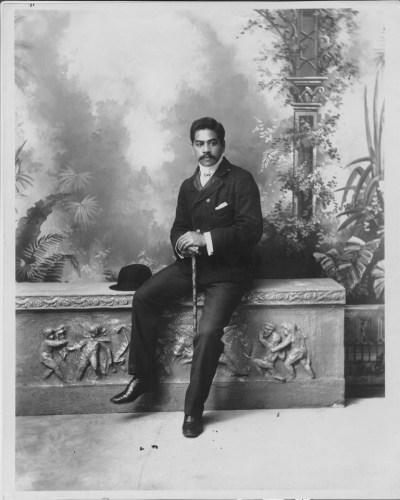
Some historians have been derisive about Kūhiō’s decision to join the Republican Party, stating that he played into the magnates’ hands by seeking the congressional seat.
“The choice of Kūhiō was superb from the oligarchy point of view,” wrote Lawrence H. Fuchs, author of “Hawaii Pono,” a book written in 1961 that examined Hawaiian history.
Kūhiō would also have to be a bigger man than his enemies, collaborating with people he believed had done his family and his people grave harm.
What else could he do? There was no reversing the tide of events. Conditions had changed, but the Hawaiians remained his people and he felt responsible for their care.
Consequently, Kūhiō was forced to interact with “oligarchs who were demeaning to him,” McGregor said. “He had such intelligence and brilliance to go through that and become a center of power for Hawaiʻi.”
The next daunting challenge was taking on Wilcox, who had defeated Kūhiō’s brother and was seen as unbeatable.
“No one was strong enough to run against Wilcox,” McGregor said.

To win the election, the prince would need to learn to win others over to get their votes. Naturally charming, he easily attracted support. Naturally competitive, once he got started, he wanted to win.
This meant traveling all over the islands by boat, on foot and on horseback, speaking at impromptu gatherings and lavish lūʻau, on lānai, in the open air, in stuffy meeting halls in Honolulu and in the smallest villages as well. Each vote would count.
Kūhiō had some trouble with the speechmaking at first, according to Kūhiō biographer Lori Kamae. He was a “very persuasive orator in the Hawaiian language,” but not as fluent in English, Kamae said. He had to work to polish his delivery. Campaign speeches at that time lasted for hours, and voters expected a good show, insightful and witty, with graceful literary flourishes.
Kūhiō campaigned hard, and came up with a trademark opening line that worked with all audiences: “Aloha, aloha, kamaʻāina,” he would say, drawing out the syllables.
The inclusive word kamaʻāina, which refers to all long-time Hawaiʻi residents, was welcoming and friendly to all and served to draw the audience together.
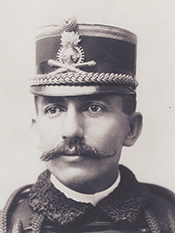
And he had a stroke of luck in a piece of bad judgment by Wilcox, who introduced a bill in Congress that called for the federal government to take over the leprosy colony on Molokaʻi and use it as a national resettlement spot for people with Hansen’s disease from all over the country. Wilcox reasoned that would save Hawaiʻi money.
Wilcox had not understood how much the idea would frighten residents of Hawaiʻi, who feared the disease.
The bill failed in Congress, but by then, “the political damage had been done,” Andrade wrote.
As the election grew closer, Kūhiō must have been thinking about what he would be giving up in victory.
If he won, he would be forced to leave behind the pleasures he loved — the swimming, the easy camaraderie with his lifelong friends and his daily life at his home on beautiful Waikīkī Beach.
If he won, he would have to fight for Hawaiian rights in Washington D.C., a city notorious for corruption, generally miserable climate and institutionalized racism.
In the end, the voters decided. Kūhiō attracted many white voters. In addition many Hawaiians decided to follow his lead. He had been their prince. He would be the one to represent them in Congress.
On Nov. 4, 1902, Kūhiō decisively defeated Wilcox by almost 2,000 votes, 6,636 to 4,696. He was on his way to Washington, to learn the political ropes of the nation’s capital.
Next: Kūhiō navigates the halls of power in Washington.