Local Government Was No Sure Thing In Hawaiʻi — Until Prince Kūhiō Got Involved
As kingdom and then a territory controlled by special interests, Hawaiʻi’s leaders had always had the power to control everything themselves, and to pick their own friends and allies as local administrators.
Editor’s Note: The articles in this series are the result of months of research in state and national archives, on Kauaʻi, on the Big Island and in Honolulu, and within the Washingtoniana collection at Martin Luther King Jr. Library and the Library of Congress in Washington, D.C. Key resources include congressional testimony, hearings and historical newspaper collections.
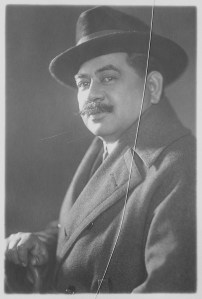
Almost immediately after he arrived in Washington, D.C., Prince Jonah Kūhiō Kalanianaʻole took on a contentious issue that would put him at odds with important power brokers in Hawaiʻi.
The newly elected territorial delegate, though still a stranger in the nation’s capital, helped pave the way for the creation of Hawaiʻi’s system of county governments, consisting of local officials elected to their posts by people who live in their districts.
Partly because of Kūhiō’s efforts, modern Honolulu has its mayor and nine-member City Council, and the neighbor islands also have their own elected officials.

This right of self-government did not exist in Hawaiʻi in 1903, when Kūhiō went to Congress, and he made the issue his first major cause.
Prince Kūhiō was determined to find ways to advance the interests of Hawaiʻi’s people.
“He wanted to make the counties independent to give people more economic and political decision-making power,” said Native Hawaiian educator Kū Kahakalau, who has studied Kūhiō’s life. “The oligarchs really prevented that.”
Hawaiʻi had never had a tradition of local self-government of the kind customary on the mainland, where even the smallest New England village could elect its own leaders and kick them out if they disappointed voters. In states across continental America, state legislatures authorize subordinate municipal units, under varying names, such as cities, towns, villages or boroughs, and use them to manage the schools, police, fire departments and do things like make zoning rules and impose local taxes in ways residents prefer.
In Hawaiʻi, that kind of local governmental unit had never existed, and successive generations of leaders had never found it desirable to allow them. Instead, power in Hawaiʻi has always been uniquely centralized.
Even now many states have more elected officials than Hawaiʻi. For example, the U.S. Conference of Mayors gathered in Washington, D.C., last week for their annual conference, with 268 mayors registered to attend. Some states sent more than a dozen mayors. Only three are coming from Hawaiʻi — from the Big Island, Maui and Kauaʻi, and the possible fourth, Honolulu Mayor Rick Blangiardi, canceled this year to focus on city budget issues.
Efforts to create separate municipalities, such as the plan that was considered in Kailua in 2019, are stymied by state law.
Why Hawaiʻi Lacked Local Government
Much of the discrepancy has historic roots.
In ancient Hawaiʻi, local and regional chiefs had exclusive power over the areas where they lived, subject to the will of higher-level chiefs of each island, the paramount chiefs. Many were benevolent and looked to the best interests of the people and the land, but some were tyrannical or selfish. It was possible to displace them but that could be risky because they also tended to be well-armed warriors.
On the creation of the unified kingdom, the government was consolidated in the person of King Kamehameha I, who conquered most of the islands and whose heirs seized the last of the independent islands, Kauaʻi, in the 1820s. The Kamehameha dynasty operated first as an absolute monarchy and gradually his successors added constitutional reforms and created a legislature.
But none of this allowed for local self-governance. Instead, leaders in Honolulu — first the monarchs, then the leaders of the overthrow government, then the Republic, and then the appointed leaders of America’s territorial government — each declined to establish such a system. They preferred instead to have the power to control everything themselves, and to pick their own friends and allies as local administrators.
It was a system that worked well for those in charge. During the prosperous years of Prince Kūhiō’s youth, his mother, Victoria Kinoiki Kekaulike, was appointed administrator of Hawaiʻi island by King Kalākaua, and then moved there for the job, archival records show.
Hawaiʻi’s annexation by the United States had been expected to make it possible for local residents to adopt local self-government of the kind prevalent on the mainland. The Organic Act of 1900, the law passed by Congress that established Hawaiʻi as a territory and created a system of government by which it would be managed, had seemed to make specific provision for giving Hawaiʻi residents that long-enshrined democratic right.
But a sly trick had perverted that effort. People from Hawaiʻi who had been consulted on the Act were startled and angry when they learned that the language in the original draft, which had said that local government “shall” be permitted, had been changed to say “may” be permitted. Somehow the bill had quietly been altered by unseen hands somewhere in the U.S. House of Representatives.
After Hawaiʻi was taken over by the United States, it was administered by a governor appointed by the U.S. president. The first person selected for that job was Sanford Dole, a supporter of the overthrow who had become president of the short-lived Republic of Hawaiʻi during the wait for annexation.
A newly formed, elected Legislature for Hawaiʻi, most of whose members were Native Hawaiians, made statewide decisions for everyone from a base in Honolulu, often without knowing about conditions elsewhere. The Legislature was also slow in getting organized. There was a dispute over who could be seated and how long their terms in office would be. There were other tensions too.
A Political Struggle Over Local Control
Legislators who were members of the popular Home Rule party, the group whose motto was “Hawaiʻi for Hawaiians,” first sought to disrupt the Legislature’s operations because they opposed annexation.
Then, in 1901, they drafted and passed a measure to create five counties, including two on Hawaiʻi island, that would provide local self-government. Governor Dole promptly shot down this initiative, using a pocket veto, and the Legislature let the matter drop.
Kūhiō had been supportive of the effort. He had been a member of the Home Rule party before he became a Republican, ran for Congress and was elected. The Republicans had been opposed to the local government plan, but they changed their position around the time Kūhiō joined their ranks.
People throughout Hawaiʻi, the senators concluded, were being denied the basic rights of citizens.
“Kūhiō encouraged his followers to make county rule the major issue,” wrote historian Lawrence H. Fuchs.
The public wanted self-government.
In 1902, three U.S. senators from the mainland came to Hawaiʻi to conduct a wide-ranging investigation into conditions in the newly annexed territory, conducting 43 hearings over 25 days, traveling to Oʻahu, Hawaiʻi island, Maui, Lānaʻi and Molokaʻi, inviting government officials, business people, ordinary citizens and the press to attend and participate. In 1903, they issued a two-volume, 800-page report of their findings.
The senators reported they had been startled by the “centralized” character of the government, describing it as monarchical, unrepublican and undemocratic. One official, they said, compared Hawaiʻi’s government to that of King Louis XIV, the autocratic French monarch who famously said “I am the state.”
Moreover, they said, the dominance of Honolulu-based officials caused residents on rural Oʻahu and on other islands to be virtually subjugated, forced to beg for basic services like road repairs while the lion’s share of the money went to Oʻahu.
People throughout Hawaiʻi, the senators concluded, were being denied the basic rights of citizens.
Everywhere they went, Hawaiʻi residents told them they wanted their own local elected leaders. The senators also received 17 separate petitions, signed by 846 people, asking for Hawaiʻi to be permitted to establish municipalities for self-governance, the senators said.
The senators pointedly noted that the Legislature’s attempt to create a system of counties had been squashed by Governor Dole, noting also the irregularity of how the word “shall” had gotten changed to “may” in the drafting of the Organic Act.
Powerful Opposition To Local Government
Dole had not been alone in throwing cold water on the principle of self-governance.

“The leading officials of the Territory and many of the leading planters and other business men of Honolulu, while disposed to be somewhat reticent on the subject, evinced a strong disposition in opposition to the organization of municipal governments,” the senators wrote.
The three senators’ final report ended with a vocal call to action: If the Legislature could not find a way to get a local government plan approved in Hawaiʻi, then the U.S. Congress would need to step in and force leaders in the islands to accept it.
“Your committee earnestly recommends an amendment to the organic act, providing directly for county and municipal organizations in the Territory of Hawaiʻi, or making it imperative on the Territorial government to do so,” they concluded.
The blistering report was issued in 1903.
That was the year that Kūhiō was sworn into office. He had ingratiated himself with Republican leaders by the gracious way he handled the seating issue in the Capitol, when he gave up a good desk in the House of Representatives chamber that he had won by a congressional lottery and gave it to a party leader. He learned in December that he had been selected as a member of the House Committee on Territories, a plum assignment for a freshman, a fact gleefully noted by the Hilo Tribune on Dec. 18, 1903.
Among the first things Kūhiō did was sponsor an amendment to Section 56 of the Organic Act, the problematic part of the legislation, to make the wording more explicit in favor of self-government. He even got a speedy hearing for the bill, quite a feat for a first-term congressman.
This appears to have been the first hearing at which he gave testimony himself, according to congressional records. It was Dec. 17, 1903. Kūhiō spoke before the House Committee on Pacific Islands and Puerto Rico, about 10 months after he arrived in Washington.
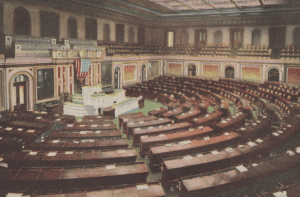
But his testimony was a little rocky. He was still having some trouble with English. He made some good points, telling his colleagues that the people of Hawaiʻi “want this bill passed,” and that it would also be good politically for Republicans to be able to claim sponsorship of it. But he stumbled a bit in describing what people in Hawaiʻi wanted, acknowledging that the concept of a “county” was new there.
Even so, the initiative looked to be on a good footing. Prince Kūhiō clearly had support on the committee and appeared to have formidable backing in Washington from the three senators who had issued their impassioned appeal on the topic.
But the terrain back in Hawaiʻi kept shifting. The Legislature tried again to enact a county act but, within a few weeks, the territorial Supreme Court ruled that it was legally invalid on technical grounds.
Meanwhile, opponents of the self-government measure were becoming more strident. Setting up a county government on Maui would be a “disaster, both to the governing powers and to those governed,” the Maui News editorialized on Jan. 23, 1904. The “voting majority of Maui is composed largely of an ignorant element, who do not understand what is best for themselves and for all the rest of us.”
And Kūhiō’s allies were disappearing. The three senators, perhaps coincidentally, soon found themselves ejected from office. One, Joseph. R. Burton, of Kansas, was accused of using his influence on behalf of a business venture: He became the first sitting senator in U.S. history ever convicted of a crime. Another, John Hipple Mitchell, who had a history of shady dealings, was convicted of misconduct in a land-fraud case and died while he was appealing the verdict. A third, Addison Foster, faced a coordinated assault on his post by party leaders in his state and lost his seat. Incumbents usually have a degree of political protection, but these three men had all lost their seats by 1905.
It is possible that each man had succumbed to his own failures. But it is also possible that in urging expanded political power for Hawaiians, they had proved to be a source of aggravation to the powerful sugar trust, a group of allied business interests that included plantation owners and sugar processing facilities in Hawaiʻi and on the mainland. They were rich and powerful and didn’t like being challenged.
This must have been a strange set of events for Kūhiō to watch unfold. Given the concentrated power bloc he faced back home, it is easy to imagine that Kūhiō could have decided at this point to drop the matter. To press for self-government would mean risking the anger of oligarchs who were, in effect, running the territorial government, while the territorial Legislature appeared to lack the necessary authority and resolve to press the matter.

Kūhiō questioned himself as well. Living almost 5,000 miles from his constituents, it was hard to know what they were thinking. He wondered if it would be better to leave it to the Legislature to solve or to drop the issue altogether, he mused in a letter to a friend in Hawaiʻi that has been preserved in the state archives.
In any case, he wrote, he would do his best.
“You can depend on it that my whole soul is in my work,” he said.
A Change In Strategy
Kūhiō was finding himself alone in navigating a system that rewards knowledgable insiders adept at pulling the levers of power. Around this time, he dismissed a loyal courtier from Hawaiʻi, Curtis Iaukea, who had come with him to Washington from Hawaiʻi, and instead hired a savvy political operator, a man from Kansas named George McClellan.
Together Kūhiō and McClellan made a different case for local governance at a hearing before the House Committee on Territories in early 1905.
For one thing, the amorphous language they had used for local government disappeared, and instead they began asking for a specific kind of municipal institution — one that would permit the Legislature to create a system that would use boards of supervisors, a common kind of administrative unit for counties on the mainland, and one familiar to lawmakers in other states. McClellan was better able to describe what the proposed amendment would do than Kūhiō alone had been able to.
On March 3, 1905, Kūhiō was able to announce his success in a cable to a Republican leader in Hawaiʻi — in a story that became front-page news in Hawaiʻi.
“Bill to elect Boards under county government has passed Congress,” it said.
He signed the cable with one word, “Kūhiō.”
The prince’s only regret was that the territorial government had managed to retain control over all the islands’ schools. At the 1905 hearing a senator pointed out that Honolulu was quite distant from, say, Hilo, and also from rural parts of Oʻahu, and that the centralized control of the schools would no doubt be problematic for parents who lived far from the home base of school administrators. Kūhiō agreed and said he wouldn’t like it if he were a parent.
The state’s control over schools throughout the islands remains controversial today.
In 1905, the Legislature enacted another law creating a county government. But this time, with favorable federal language on its side, Hawaiʻi’s Supreme Court declared the measure to be valid. The islands began operating as individual counties, mostly under boards of supervisors.
In 1907, Oʻahu County was renamed the City and County of Honolulu.
In 1909, Honolulu got its first mayor, a Native Hawaiian Democrat named Joseph James Fern.
In 1955, the Honolulu Board of Supervisors was renamed the Honolulu City Council.
For Kūhiō, it was a solid success in the first round. But now other problems were looming for Hawaiʻi, and the winds of war blowing in the Pacific would once again put the islands at center stage.
NEXT: Building up defenses at Pearl Harbor.