

Hawaii Governor Seeks Moratorium On Property Sales In Lahaina
The search through the rubble continued as the death toll from the wildfires rose to 99.
Gov. Josh Green vowed Monday not to let out-of-state buyers exploit land in devastated Lahaina for development at the expense of the local community.
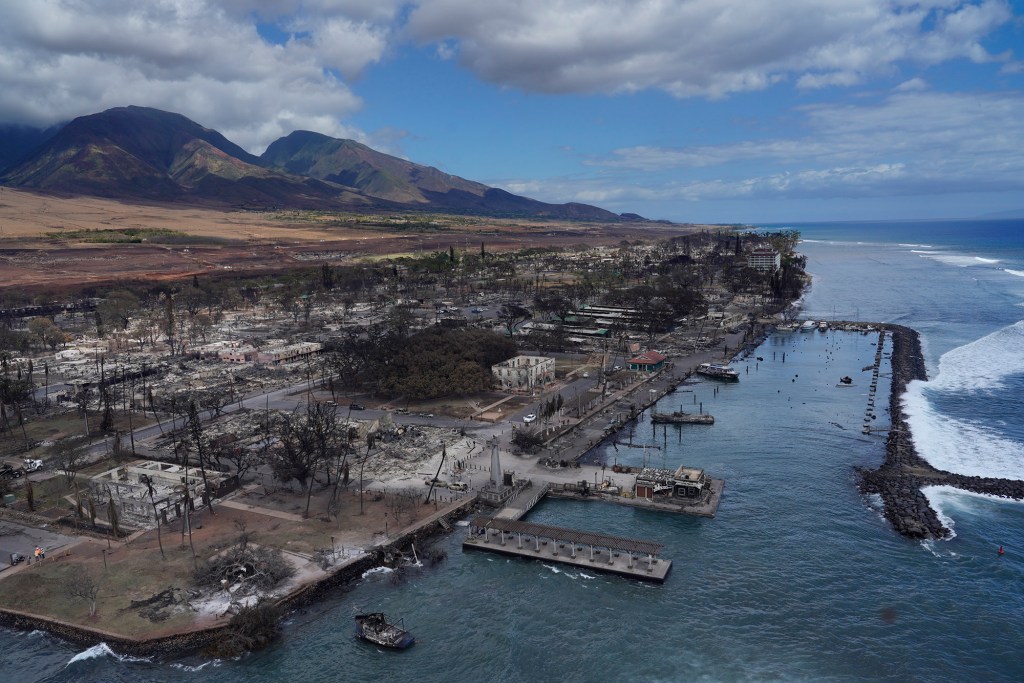
The comments addressed local fears that speculators will swoop in to build hotels or other buildings in the historic, coastal town that was left an ashen wasteland by wildfires a week ago.
“I’ve actually reached out to our attorney general to explore options to do a moratorium on any sales of properties that have been damaged or destroyed,” Green said at a press conference in response to a question about the concerns.
“Moreover, I would caution people that it’s going to be a very long time before any growth or housing can be built so you will be pretty poorly informed if you try to steal land from our people and then build here,” he added.
The Lahaina fire is the deadliest wildfire in the U.S. in more than a century, killing at least 99 people although officials expect that total to go much higher.
The fire destroyed at least 2,200 structures, about 1,500 of them residential, and burned more than 2,100 acres.
Search crews are still combing through the rubble with 20 dogs trained to detect bodies, and officials have said the death toll is expected to rise.
After days of slow progress in the immediate aftermath of the tragedy, the effort picked up speed on Friday as teams of forensics experts, search dogs and other assistance arrived from the mainland.
Some 25% of the area has now been searched, Maui Police Chief John Pelletier told reporters. That was up from 3% reported by officials on Sunday.
Pelletier said the hope was to have as much as 85% of the area searched by this weekend.
The question of rebuilding may seem premature, but it’s on the minds of many in the island state amid a housing crisis. Land is scarce and oceanside property is lucrative.
Separately, the state Department of Commerce and Consumer Affairs urged Maui homeowners affected by the fires to use caution and to report unsolicited offers to buy their properties to the agency.
The governor expressed hope that a memorial could be built on the site.
“We’ll also invest state resources to preserve and protect this land for our people, not for any development — for our people locally,” he said.
Green, who has made housing a priority for his administration, said the disaster would impact how we view “all of the development in our state.”
He acknowledged potential legal challenges. Green recently took the bold step of issuing an emergency housing proclamation that suspends several state and county laws in a bid to expedite the development process so more units could be built.
“Much of what we do is challenged by other laws, federal and otherwise, that don’t let us restrict who can buy in our state,” he said. “But we can do it deliberately during a crisis, and that’s what we’re doing.”
“And so for my part I will try to allow no one from outside our state to buy any land until we get through this crisis and decide what Lahaina should be in the future.”
The fires started early Tuesday in Central Maui, breaking out in Upcountry and Kula just after midnight. A blaze started in the Lahaina area about 6:30 a.m. Tuesday but fire officials said it had been contained. Around 5 p.m. Tuesday it broke out of containment and raced through the town.
The cause of the Lahaina fire has not been determined but some experts think it’s likely a powerline came down and sparked dry brush. A long-standing drought on Maui, exacerbated by climate change, has resulted in many areas of dried out undergrowth.
The fire also was whipped along by high winds caused by a hurricane that was passing hundreds of miles to the south of the Hawaiian Islands. Green has said the flames were moving through Lahaina at a mile a minute, leaving little time for residents to react.
Lahaina had a population of about 13,000 before Tuesday’s fire.
Civil Beat’s coverage of Maui County is supported in part by grants from the Nuestro Futuro Foundation.

