Building A Bike Path From Nanakuli To Manoa Could Take 20 Years
The City and County of Honolulu is soliciting contractors for help crafting an initial plan.
Residents commuting between the Leeward side of Oahu and the University of Hawaii Manoa may get a new alternative to H-1 traffic in the future.
The city has begun the planning stage for a multimodal path that would connect Nanakuli to Manoa for walkers and cyclists. It would span about 30 miles, longer than the current plan for the city’s Skyline rail system.
But the new path could also take longer to finish than the rail project.
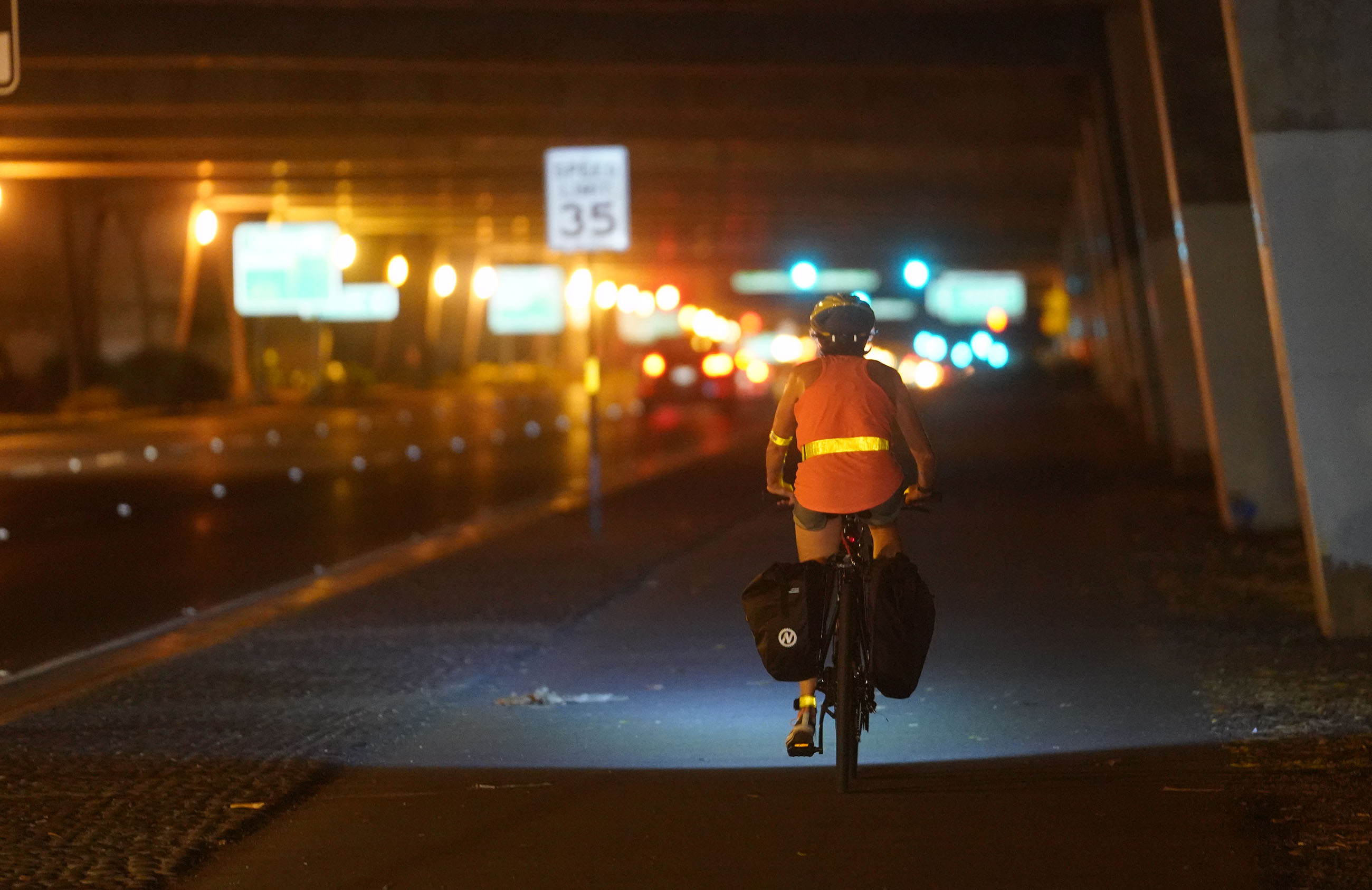
Although significant portions of the path already exist, officials say that connecting them will be a lengthy process.
“It could take 20 years. I mean, we don’t know,” said Jon Nouchi, deputy director for the City and County of Honolulu Department of Transportation Services.
The city put out a call for contractors last month, estimating that initial plans will cost $6 million. Contractors had until Dec. 20 to apply for the job, and the winner will be notified next month.
A First Substantial Step
Despite boasting warm weather year-round, Honolulu’s existing network of bike paths is limited, especially outside the urban core. Traveling from West Oahu to downtown requires driving, riding TheBus or completing a series of transfers between TheBus and the recently opened but still incomplete Skyline rail system.
The proposed path between Nanakuli and UH Manoa is intended to offer another option.
“This is kind of our effort to create a very expansive, huge opportunity for recreation, for transportation, and to merge those two uses together – whether you’re walking, whether you’re biking or using some other device,” said Nouchi.
Portions of the route that already exist include a protected two-way bike lane that runs along much of South King Street. Parts of the Pearl Harbor bike path give bicyclists and walkers a view of the waterfront.
But there are still harrowing sections that essentially require riding along the side of a highway, as a Civil Beat reporter experienced firsthand in 2018.

Nouchi pointed to Farrington Highway, which snakes from Kapolei up to Nanakuli and beyond. Bicyclists who attempt to ride that stretch do so at their peril.
“It is not a hospitable roadway,” he said.
The contract is estimated to start in August 2024. It will cover a hefty part of the planning process, including environmental and archaeological studies as well as community outreach — “more than design concept, but not every detail,” said Renee Espiau, the city’s Complete Streets administrator.
“So it’s a pretty major milestone actually … it is definitely the biggest part of any project,” Espiau said.
This step can take years – usually at least one to two years for any project, and maybe longer for one that spans about 30 miles and crosses city, state and federal jurisdictions, she said.
“A project like this – of this size and scope – you’ve got to do it right,” said Nouchi. “We’re going to find things we didn’t know about, and we have to address them now, before we go into more final design.”
‘This Isn’t Just A Planning Exercise’
A timespan this long for a bike plath isn’t unique to Honolulu.
San Diego’s 24-mile Bayshore Bikeway was originally planned during a bike boom in 1976, but it took about 30 years for those plans to be updated and another five after that for construction to actually begin, proceeding one segment at a time.
The route is mostly complete as a patchwork of road lanes and dedicated paths, similar to the vision for Honolulu’s eventual route. Incremental improvements on things like the traffic light signaling system are ongoing in San Diego.
Hawaii Bicycling League Director Travis Counsell’s perspective is that incremental changes can still have immediate impact.
“To their point, the whole project might take 20 years, but hopefully we can see some of these smaller plans happen in a much more rapid fashion,” Counsell said. City officials pointed to their plans for North King Street, where they are expecting to solicit contractors next year for bike lane construction, as one example of this.
In Counsell’s experience, a bicycle infrastructure project can take a long time because of obstacles like engineering challenges, as well as coordinating construction through different government jurisdictions.
“And then I think that there’s just a lot of projects going on, and sometimes it doesn’t receive the priority that we wish it would,” he said. “And that’s where we come in,” he said of his organization’s advocacy role.

It’s not unheard of for bike projects to be left on the shelf.
A project was proposed along Ala Wai Boulevard in Waikiki and even presented to community members last year. The plan was to convert the current narrow, painted lane into a two-way protected route.
But allocating space for bicycles can be controversial. When done along existing busy roads like Ala Wai Boulevard, it’s a zero-sum game where adding a lane for bicycles often means repurposing a lane used mainly by cars.
Mayor Rick Blangiardi dismissed that project during a town hall in May, saying that the number of people who bike down that road are dwarfed by the number of people who drive.
“There isn’t a time of day or a day of the week you don’t get on there and you feel like there’s a lot of cars on that street,” he said at the time. “And eliminating a lane for 168 bikes? That doesn’t make any sense to me.”
Nouchi’s and Espiau’s goal is for the path between Nanakuli and Manoa to not fall into the same limbo.
Nouchi said that a $4.8 million federal allocation, along with a partnership with the state Department of Transportation, are signs that this larger plan has more of a shot of succeeding.
“We’re serious about this. We want to carry this over the finish line – this isn’t just a planning exercise that we’re going to look at and then shelve,” Nouchi said.