

A Cautionary Tale For Preserving Hawaii History In A Digital Age
The state archivist had to go to great lengths to obtain all records from ex-Gov. David Ige’s administration after a staffer initially refused to share some.
Late in 2022, just days before Gov. David Ige was set to leave office to make way for newly elected Josh Green, the state archivist formally requested that the administration’s records be transferred to the Hawaii State Archives for preservation.
The Nov. 28 email from Adam Jansen to Linda Chu Takayama, Ige’s chief of staff, asked for all permanent records “in any format made or received” by Ige.
Two days later, Takayama sent an email declining Jansen’s request. The reason she gave —“Governor has discretion on what gets referred to Archives and respectfully declines to comply with this request.”
When inauguration day came on Dec. 5, some files had been successfully transferred, but those were in hard copy form and composed mostly of executive orders and proclamations that the state archives had already routinely culled from the administration’s website. It did not include any of the digital records.
The failure to transfer the entire archives alarmed Jansen and led him to go to great lengths to secure the data. He said it marked the first time that the state archives had not obtained all of the administrative files from a governor.
The documents requested included executive correspondence with state, federal and county government agencies; executive orders, briefing records and press releases; speeches, photos and websites and official personal folders.
The digital files were backed up by the state’s Information Technology department, the Office of Enterprise Technology Services and are now in the process of being taken into archives custody. That’s expected to be completed early this year.
But it’s a cautionary tale. As elected officials increasingly rely on digital data, the internet and social media, the fact that a governor’s files might not be preserved would be a tremendous blow to the public interest.
“And that would be an incredible hole in our history in general,” Jansen said, noting that Ige was governor when the Covid-19 pandemic began. He called it “the greatest tragedy that we have encountered since World War II” and said the records would be important in after-action analyses.
Lack of Guidance
The correspondence between Jansen and Takayama was obtained by Civil Beat through a public records request.
Asked about the reluctance of his own chief of staff to turn over the records, Ige said he is not clear on what exactly happened. In fact, he said he had instructed his executive departments to begin the process of archival transfer at the beginning of 2022, his last year in office.
Ige also said that the last full month in office — November 2022 — was chaotic and the priority was to focus on a smooth transition to the incoming Green administration.
State law may grant Jansen’s department authority over public archives and the disposal of records, but compliance is not mandatory. Ige and Jansen hope the Legislature will give more power to the public records law and more guidance on transferring materials from an administration to the state archives.
Some were concerned Ige’s records had somehow been intentionally withheld or even destroyed — something Ige vigorously denies.
“That’s a lie, a ridiculous statement, because we were working so hard and for such a long time to try and make sure that we turned over the records that needed to be turned over,” he said.
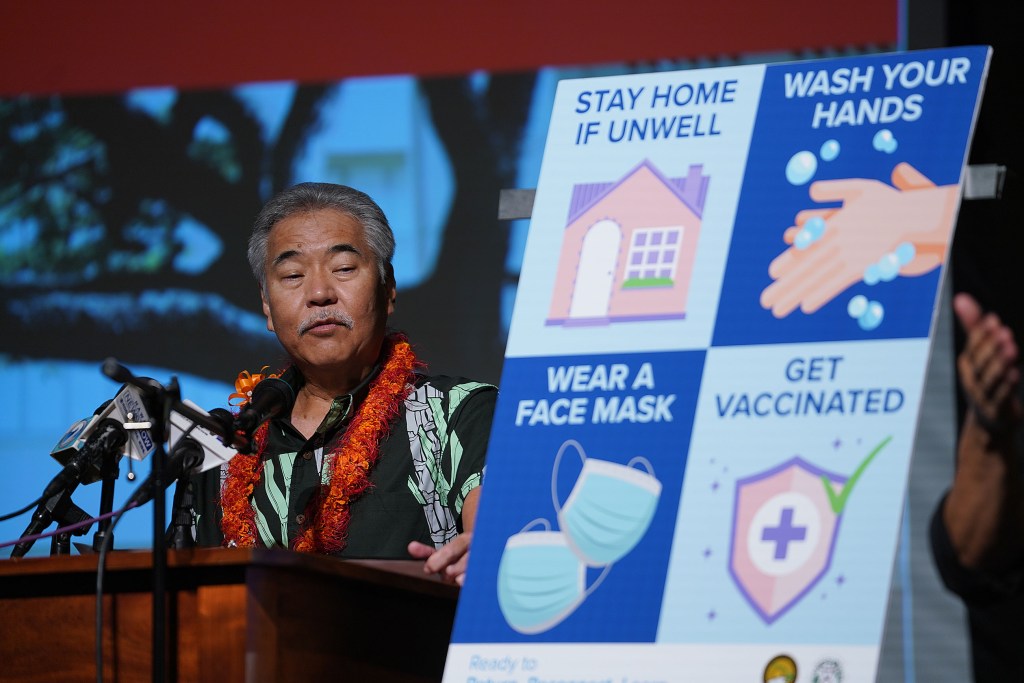
He also blamed challenges in capturing the digital data requested. That was compounded by the fact that there is now so much of it — emails, texts and especially social media. Ige described the work as time-consuming and said his attorney general had to be consulted for advice on how to deal with duplication of documents, for example.
It was also unclear how to categorize files. The data, Ige said, is scattered across multiple storage systems, and not all of it is clearly labeled by date and time.
Jansen’s background includes work as deputy state archivist in Washington state, where he helped set up fully functional digital archives for government records. He said it is not uncommon for governors to find it difficult to organize records.
“Because this is the first administration that really made that dramatic shift to almost exclusively the digital environment, it was a very different animal for us,” Jansen said of the Ige administration.
To appreciate just how large Ige’s archives is — 800 gigabytes — consider this rough measurement: An MP3 audio file that is 1 minute in length takes up perhaps 1 megabyte, while a single GB is equal to 1,000 MB. It would probably take at least several souped-up iPads to hold Ige’s 800 GB.
‘Keepers Of Public Memory’
The concern about preserving records is not limited to archiving the work of a governor. The Hawaii State Archives seeks to obtain the records and materials of other government officials, something that remains a work in progress, Jansen said.

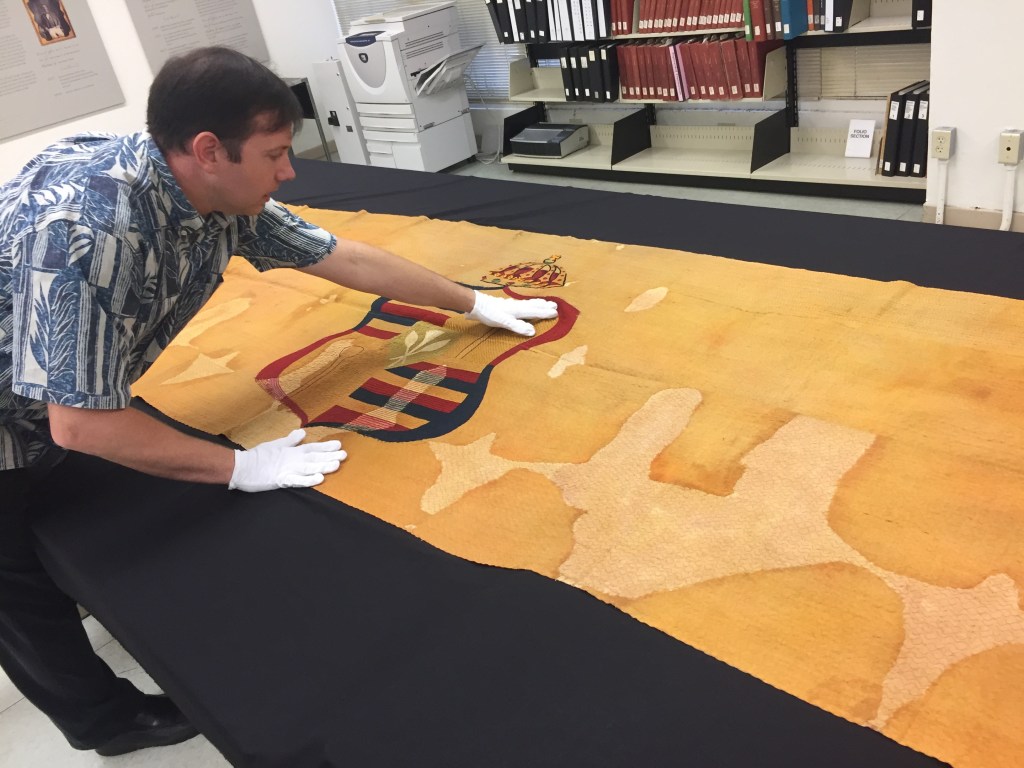
The state archives, a division within the Department of Accounting and General Services, is home to a vast trove of documents and other items that trace back to 19th century Hawaii. They include the 1894 Constitutional Convention, Kalakaua’s 1881 “Trip Around the World” and music from the Liliuokalani manuscript collections.
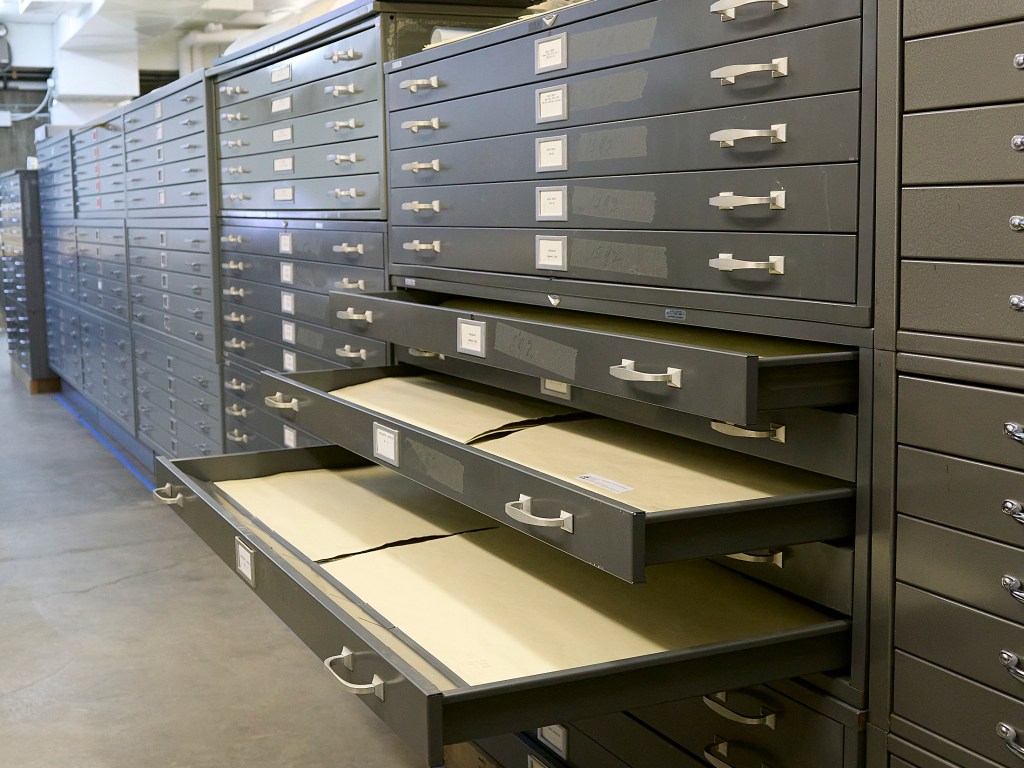
The archives also house the records of Hawaii governors dating back to the first, Sanford B. Dole, at the beginning of the territorial period in 1900. It was formed in 1905 to “collect all public archives,” Jansen explained, and to preserve, arrange, describe and make them available to the public.
“And as such, we take our mandate to preserve any record that protects the rights, identity, property or history of the people. In that way, we serve as the keepers of public memory,” he said. “Anything that happens that should not fade from public memory, whether good or bad, is eligible for preservation at the public archives and also for free access by anyone at any time for any reason.”
The Hawaii State Archives building, which also has a basement, is near Iolani Palace and the Hawaii State Capitol. The modest two-story structure is almost hidden by the giant banyan trees that tower over it.
But it stores some 14,000 cubic feet of records. The two largest “customer bases,” as Jansen puts it, are genealogists and land researchers. On the government side, it’s legislative staff and the attorney general’s office researching bills and other items.
Growing Digital Divide
While the priority and trend is to digitize archives, Jansen estimates that barely 1% of Hawaii’s is currently online. That makes it difficult to peruse the treasure trove of data.
The online archives include the 19th-century examples cited above that are part of what’s called the Digital Archives Catalog. The catalog’s online search functionality, however, does leave something to be desired, said Jansen.
In the meantime, the tremendous and expanding role of digital content — Gov. Green, for example, has official accounts on Facebook, Twitter (now called X), Instagram and Flickr — has vastly expanded the content and scope of a governor’s work.
“I think one advantage of the social media is, we provided just a whole ton of information in real time to the public,” said Ige. “And so I do think it provides that different granular kind of play by play to what was actually happening.”
While the full Ige archive is expected to be in the hands of the state archives within a week or two, public access will take many years. The digital files have to be scrubbed of personally identifiable information such as medical, dates of birth and Social Security numbers.
There are also files that may involved attorney-client privilege and other restricted information. And Jansen only has a staff of five.
Ige, meanwhile, has been in talks with state librarians and University of Hawaii President David Lassner to see what might be done in terms of accessing Ige’s documents. A pilot project, he explained, might entail setting up an online portal of sorts to provide easy access.
UH Hamilton Library, for example, holds documents from federal officials such as the late U.S. Sen. Dan Inouye but not for officials at the state level.

