New School Will Welcome Lahaina’s Hawaiian Immersion Students In April
A temporary campus being built to replace the destroyed King Kamehameha III Elementary School will also accommodate Hawaiian immersion students.
Many of Lahaina’s Hawaiian immersion students will be returning to their classrooms in April.
More than a third of Lahaina students in the Department of Education’s Hawaiian Language Immersion Program, or Ka Papahana Kaiapuni Hawaii, are doing distance learning.
While the three Lahaina campuses serving Kaiapuni students reopened in October, some families had concerns about environmental safety so close to the burn zone despite reassurances from the DOE that campuses are safe and have undergone extensive air, water and soil testing.
Since September, families in the immersion program have advocated for alternative learning options that would keep their students out of Lahaina schools. Program leaders sought the creation of a Napili campus that would solely serve Kaiapuni students in kindergarten through 12th grade, but their proposal was rejected.
Approximately 60 Kaiapuni students in kindergarten through eighth grade are now enrolled in distance learning, Superintendent Keith Hayashi said during Thursday’s Board of Education meeting. But in the spring, these students will be able to return to in-person instruction.
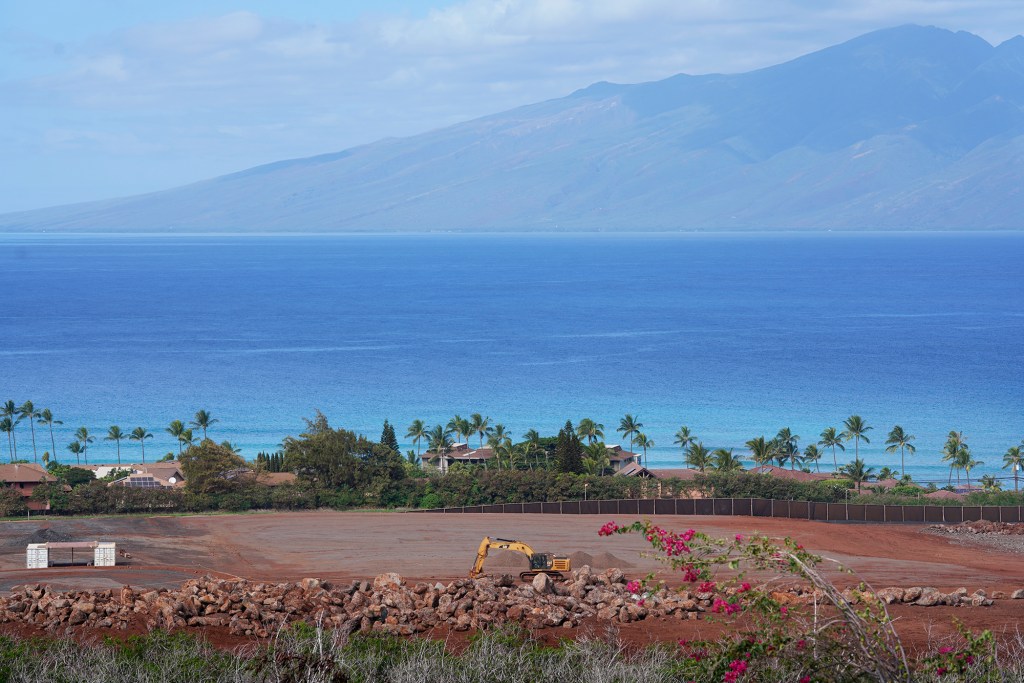
A new, temporary campus will open in April at the Pulelehua project, a mixed-use development located between Kaanapali and Napili. The school will serve students who went to King Kamehameha III Elementary before the deadly Aug. 8 wildfire burned it beyond repair.
The new school, which is being built by the U.S. Army Corps of Engineers and could cost up to $100 million, will accommodate 650 students.
But, as of now, the school will not reach full capacity if it only serves students from King Kamehameha III Elementary. Prior to the fires, King Kamehameha III Elementary had just over 600 students, but some have since moved off-island or transferred to other schools.
As a result, Hayashi said, four unused classrooms at the temporary site will be set aside for immersion students.
“We’ll continue to focus on what the department can do to provide for all of our students,” Hayashi said.
Other Lahaina distance learners are able to return to in-person instruction at any time, said Department of Education spokeswoman Nanea Kalani. But, she added, students must attend classes at the campus where they were originally enrolled.
As of November, roughly 150 Lahaina students opted into DOE’s distance learning program.

Currently, all four of Mikey Burke’s children are doing distance learning for the Kaiapuni program. Burke said she’s grateful for the flexibility to keep her children online, but she believes they ultimately need to be with their peers and teachers.
“This was not the ideal learning situation,” Burke said.
There’s no guarantee that Kaiapuni students will be able to remain at King Kamehameha III’s temporary campus in the fall.
DOE is still assessing demand for the temporary campus next year and is determining if the school will continue to have extra space for Kaiapuni students, Hayashi said.
Regardless, Kaiapuni families will continue to push for a space outside of Lahaina to accommodate their students, Burke said.
“We understand that it’s a really fluid situation, but we also need the superintendent and DOE to understand that we still are holding fast to keeping our kids together,” Burke said. “The priority is that it happens in northwest Maui and not at the campuses on Lahainaluna Road.”
Civil Beat’s education reporting is supported by a grant from Chamberlin Family Philanthropy.
Civil Beat’s coverage of Maui County is supported in part by grants from the Nuestro Futuro Foundation.