

Senate Panel Rejects Confirmation Of Interim UH Regents Chair
The fate of Alapaki Nahale-a is now in the hands of the full Senate, barring a withdrawal of the gubernatorial nomination.
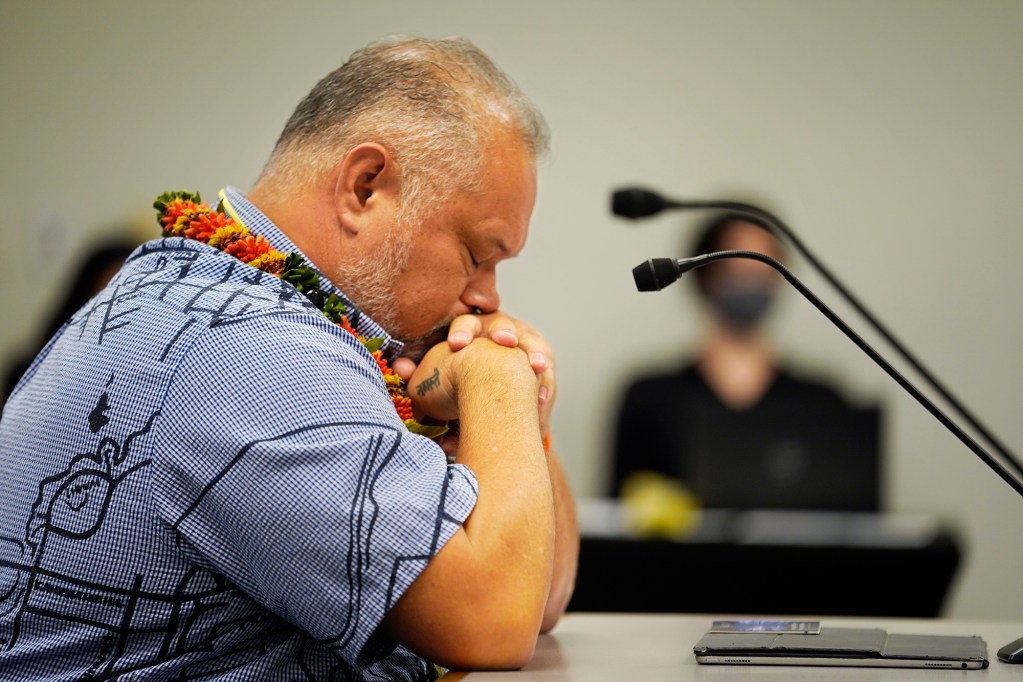
By a unanimous vote, the Hawaii Senate Higher Education Committee on Tuesday rejected the nomination of Alapaki Nahale-a to serve four more years on the University of Hawaii board of regents.
Committee Chair Donna Kim, Vice Chair Michelle Kidani and Sens. Troy Hashimoto and Kurt Fevella voted yes on a motion from Kim to not offer “advise and consent” to the full Senate. Sen. Carol Fukunaga voted with reservations, which counts also as a yes.
Kim said that such decisions aren’t always easy, but she said she had concerns on a number of issues regarding the nominee. They centered primarily on whether he was properly scrutinizing the decisions made by UH officials, something that Kim clearly doubted.
Nahale-a and the university had no immediate comment on the Senate committee’s decision. Should Nahale-a — who is currently the interim board chair — and Gov. Josh Green — who made the nomination — elect to stay the course, Nahale-a would face a full vote from the 25-member Senate.
Kim’s committee also approved the nomination of two other interim regents. Lauren Akitake was approved 5-to-0 while former Gov. Neil Abercrombie was approved 3-to-2. Fevella and Kidani voted against Abercrombie, and Fukunaga voted with reservations breaking the tie.
Nahale-a was CEO of the Global Resiliency Hub at lole in Kohala, Hawaii, and previously worked in various roles for Kamehameha Schools. He has also served as president and executive director of the Hawaii Charter School Network.
Kim’s concerns about Nahale-a varied, but she repeated several times that she was worried that the regents were not transparent and accountable to the public. She said she had closely examined the minutes of Board of Regents meetings, which to Kim showed that Nahale-a and other regents were too deferential to the administration of UH President David Lassner.
Kim reminded Nahale-a that it is the regents who have authority over the president, including the authority to hire and fire.
Nahale-a defended his management style, saying it was his intent to change “the culture” of the regents so that they performed in a more collaborative manner.

Nahale-a had his supporters, including BOR Vice Chair Ernie Wilson, who told the legislators that the board has indeed been evolving to meet the needs of students and others in the UH system. There was also effusive written testimony in support from Hawaii County Mayor Mitch Roth and the Office of Hawaiian Affairs.
“We would also be remiss not to mention how important it is for Native Hawaiians to serve our state in leadership positions on the Board of Regents,” OHA wrote. “Our state government deserves a diverse group of leaders and must include team members who can ensure the perspective of these islands’ first people are represented. Additionally, it is important for keiki to see other kanaka maoli in leadership positions. It helps them see a future for themselves here in Hawaii.”
But Kim and her colleagues brought up reports earlier this year about how some student housing facilities had stood vacant for as long as seven years. Hashimoto, who is from Maui, said student housing was a problem 20 years ago and influenced his decision not to attend the Manoa campus.
Surprise Appearance
It’s rare for the Senate to overrule a committee chair in a confirmation, but it is not unheard of. A simple majority of 13 senators is all that is needed to scuttle a nominee.
But at least two other senators appear already opposed to Nahale-a. Donovan Dela Cruz and Lynne DeCoite joined the Higher Education Committee midway through the confirmation and asked as many questions as committee members, even though neither Dela Cruz nor DeCoite are members.
DeCoite wanted to hear Nahale-a’s explanation about work he had done over 10 years ago as chair of the Department of Hawaiian Home Lands. She accused him of promising to dismantle a grants program but then later awarding the $250,000 to an organization that DeCoite said “many of us question.”
She also wanted to know more about what happened with a former DHHL deputy director, Bobby Hall, who retired under Nahale-a’s watch.
Nahale-a said he did not recall the grants program and denied improper action. And he said it was not appropriate to talk about Hall but said he stood by his work at DHHL.
The questioning by Dela Cruz, the Ways and Means Committee chair, was particularly pointed. The senator suggested Nahale-a had become a “rubber stamp” to the UH administration, especially in not challenging items in the UH budget and setting priorities for the administration to follow.
“This is what happens when you let the administration set the agenda,” he said. “So, who’s the dog and who’s the tail?”
If the regents will not be more involved in the budget, Dela Cruz argued, then there is no need for the regents.
Nahale-a acknowledged that he could ask tougher questions, but he also said he relied on the advice of the administration, which he praised. At one point he said his approach is different than what the Senate wants and that “I am probably not the guy” the Senate wants as board chair.
But, he insisted, “I think I am getting things done in the long run.”
DeCoite and Dela Cruz then departed the conference room at the Capitol, at the same time but through separate doors.
Some senators even confronted Nahale-a over Honolulu police arriving on the scene after Lassner flipped his car on New Year’s Eve. The university said, according to Hawaii News Now, that “Lassner spoke to police and was examined by paramedics at the scene. He was coordinated and coherent and was not given a breathalyzer test.”
Nahale-a was asked whether it was appropriate for UH to officially make a statement on what was ostensibly a private matter. He replied, “There is never a time when a president is not a president.”
Kim: ‘No Pressure’ On Regents
Kim said early on in the four-hour hearing that media reports falsely reported that she was trying to put pressure on the regents to somehow influence the outcome of the regents’ search for a new president to replace Lassner, who is retiring at the end of this year.
Akitake, an attorney in private practice and a per diem District Court judge on Maui, received overwhelming testimony in support of her nomination.
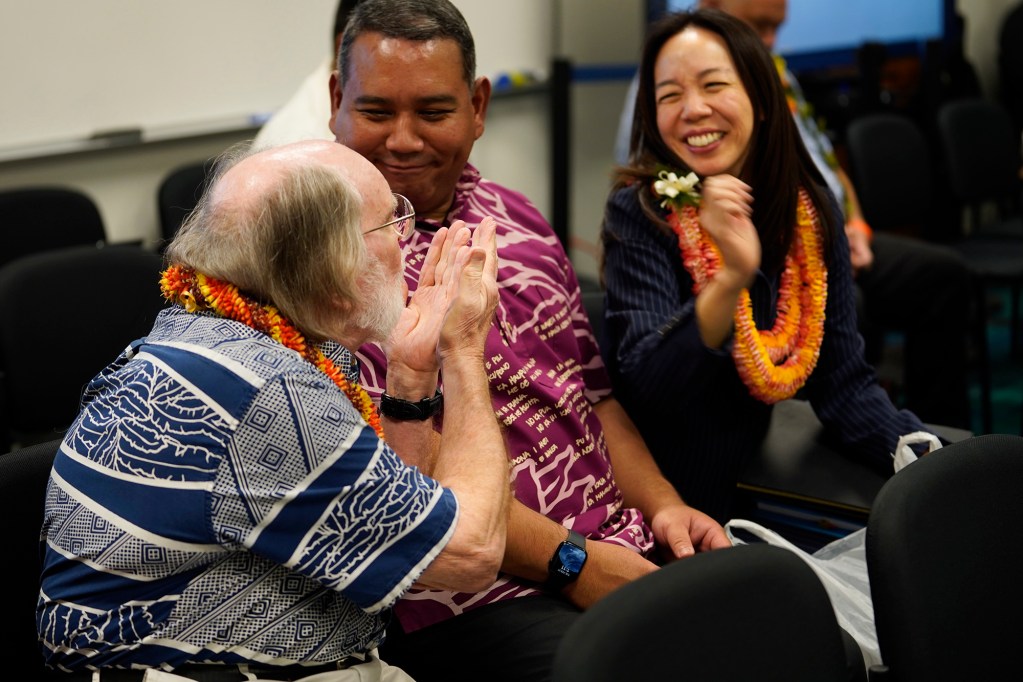
But Abercrombie, a former Hawaii governor, U.S. representative, state legislator and Honolulu city councilman who started his career at UH 65 years ago as a graduate student and lecturer, did come under fire for allegations for treating students disrespectfully.
Bronson Azama, the president-elect of the Associated Students of the University of Hawaii at Manoa, said in written testimony that Abercrombie’s conduct “has demeaned student opinion, his speeches tend to delay the Boardʻs decision-making, he publicly references proponents of government transparency via Sunshine Law as ‘idiots,’ and can further entrench the University in mistrust.”
The testimony troubled Fukunaga, who asked Abercrombie for a response. Abercrombie did not respond directly to Azama’s allegations but said that anyone who criticized him should expect his strong rebuttal.
He also explained why he voted against the UH budget, unlike Nahale-a, saying he had a “myriad of questions” about how they arrived at the numbers that were presented and what their priorities were.
Abercrombie said he wants the regents to facilitate better relations between the UH, the Legislature and the governor.
Shan Tsutsui, who served as one of Abercrombie’s lieutenant governors, said in written testimony that UH would benefit from Abercrombie’s “lifetime of excellence.”
“From issues like TMT, the university as a significant economic driver, the role of intercollegiate athletics, how to work with the legislative and executive branches, academic freedom, fair and equitable tuition for all, his relationships in Congress and around the world, and so on,” Tsutsui wrote.

