Kailua Residents Decry Sad State Of Historic City-Owned Estate
A classic kamaaina beachside home is falling into decay, and Kailua residents are organizing to try to preserve it
The city got a steal of a deal in 1978 when it acquired prime oceanfront land in Kailua that included an iconic kamaaina home known as the Boettcher Estate, paying only $150,000 for a property now worth tens of millions of dollars.
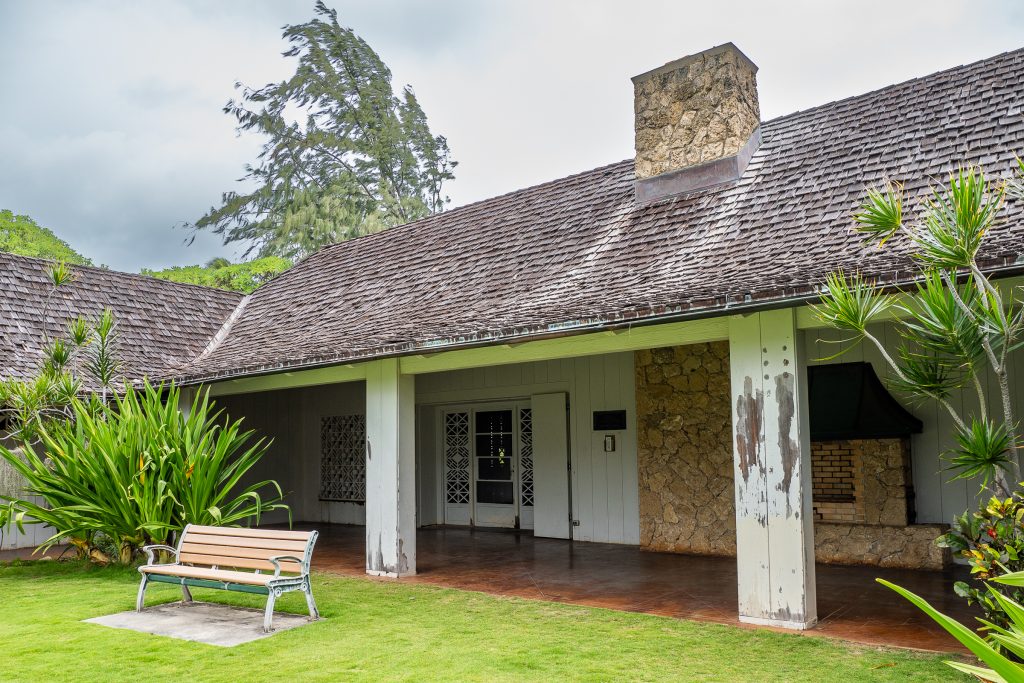
It’s located at a city-operated complex called Kalama Beach Park on North Kalaheo Avenue. But Kailua residents say the city has allowed the house, the first residential property designed by acclaimed architect Vladimir Ossipoff, to fall into disrepair and neglect.
Now a new group is forming in Kailua to protect the site and some members of the Kailua Neighborhood Board are raising tough questions about what they say is the city’s mismanagement of the house, which is a national historic landmark.
“It looks awful,” said Diane Harding, president of Outdoor Circle’s statewide organization, who lives nearby. “It’s embarrassing. It’s not being taken care of at all. There’s no maintenance. The city doesn’t have the staff or the willpower.”
That view is shared by Donna Wong, a longtime member of the Kailua Neighborhood Board and fierce critic of the city’s failure to maintain the property.
“This is a city building and the city is not known for taking care of its properties,” Wong said. “The city should have pride in a property it owns, especially if it is historic and unique.”
The house at the center of the controversy looks like a prime example of faded glory gone to ruin.
With its broad lanais, open-air configuration and purposeful integration of the interior space with its outdoor surroundings, all the hallmarks of classic Ossipoff design, the house is a surviving remnant of old Hawaii: “The house reflects the kind of casual beachside graciousness that comes only from big money well spent,” Honolulu Advertiser reporter Pierre Bowman wrote in 1980.
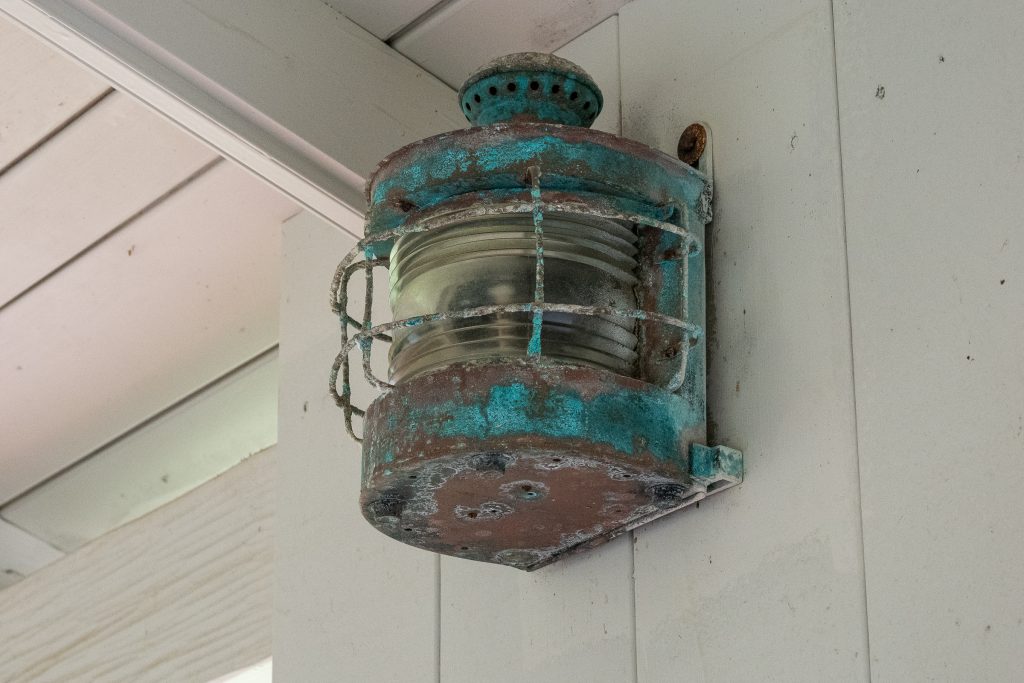
But like other surviving bits of old Hawaii that are tenuously hanging onto existence, the house is being allowed to gradually disintegrate. Part of the roof has collapsed, paint is peeling, electrical wires are hanging from the rafters, and a coral pillar that supports an outdoor arbor is leaning askew. Metal fixtures have rusted. The unique window trimmings are broken.
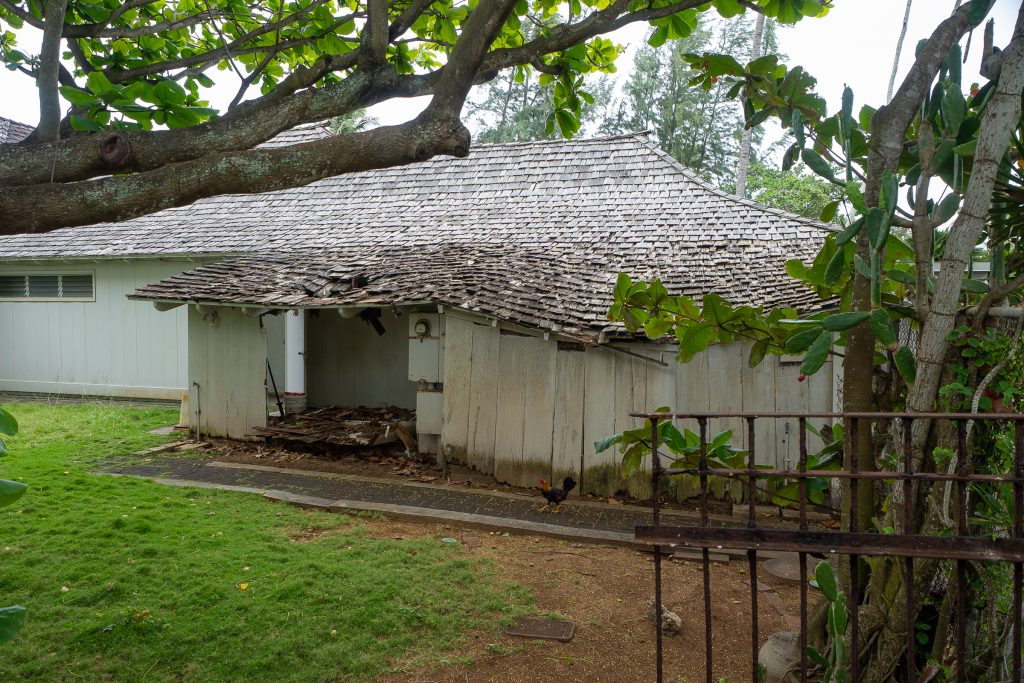
Tourists passing by this week to get to the beach, peering at it through the foliage, said they thought the house was derelict.
“It’s like an abandoned house,” said Jin Lee, who was visiting Hawaii from California.
“I thought it was so strange,” like maybe it was a dilapidated lifeguard stand, said Maggie Renner, another tourist from California.
The house is currently used by the city for government workspace, some public meetings and yoga classes.
Advocates for the house’s preservation and renovation say that Laura Thielen, the head of the Honolulu Department of Parks and Recreation, has been sympathetic but has acknowledged a shortage of city funds.
In an emailed statement, department spokesman Nathan Serota said that the city’s budget is constrained by “limited capacity and funding.”
He said that the city prioritizes projects in communities that have fewer amenities and parks and in places that have high public usage. He said that the city is required to use some of its money to meet conservation guidelines, with those properties often presenting their own costly maintenance needs.
For these reasons, he said, the city is increasingly turning to establishing partnerships with nonprofit groups to meet city needs or community desires.
That’s the role that Kailua resident Pam Ross wants to play. She has reinvigorated a dormant nonprofit board, the Friends of Boettcher Estate, to try to initiate substantial repairs at the site. She has reactivated the group’s 501(c)3 designation, obtained a license to operate from the Department of Commerce and Consumer Affairs, and assembled a four-member board, including three alternates, to initiate the work. She will serve as the board’s president.
She first saw the house in 1978, in the pristine condition in which it was delivered to the city, and has watched its decline, from administration to administration, she said.
“It’s total neglect,” she said. “It’s neglect by every steward we’ve had since 1978.”
She believes that Kailua residents with skills can volunteer to do the work, and she is hopeful that she can interest private donors, foundations or other philanthropies to provide the $10 million that preservationists say it would cost to restore and renovate the property.
“We’re hoping for a groundswell of people coming forward and saying, ‘We want to do something,’” she said.
The Kailua Neighborhood Board’s community and government engagement committee plans to hold a public meeting to discuss the house’s problems at 6 p.m. on Tuesday, March 19. It will be held at the Boettcher house itself, which will allow people to see what the property looks like today, both inside and out.
Gary Weller, the committee chair, said he put the issue on the agenda because of rising concerns about the property’s deterioration.
“The city has allowed it to get really run down,” he said. “If the city doesn’t take care of it, it will deteriorate until the city will need to tear it down. That would be a shame.”
The eight-bedroom house was once the beloved vacation home of the Boettcher family of Colorado. According to its listing in the National Register of Historic Places, it was completed in 1937, designed by Ossipoff with Hawaii-inspired design elements, including an interior high Hawaiian-style triple-pitched roof, coral stone columns supporting the lanai and outdoor flooring incised with a tapa-cloth pattern. The front of the property had a pool and looked out to the sea. The back of the property, sheltered from the winds, features wide lanais, originally furnished with comfortable and inviting outdoor furniture.
The property has a compelling back story as well. Charles Boettcher was a German immigrant who made a fortune in Colorado, first selling blasting powder to miners and then investing in sugar beets and cement manufacturing, which made his family the target of a notorious crime. In 1933 — the year after the infant son of pioneering aviator Charles Lindbergh was kidnapped and killed — Boettcher’s 31-year-old grandson, Charles Boettcher II, was seized by a pair of serial kidnappers outside his home in Denver. A massive police dragnet ensued, with some 4,000 officers and volunteers combing the foothills fruitlessly trying to find traces of the man’s whereabouts.
The frantic family placed advertisements offering to pay whatever ransom was demanded, and they engaged in brisk and controversial communications with the kidnappers, who had spirited Charles Boettcher II hundreds of miles away to a ranch in South Dakota. He was released about a month later after the Boettcher family paid the requested amount — $60,000 — to end the ordeal. The mastermind of the crime, an unlucky gambler and bootlegger named Verne Sankey, was caught by the Federal Bureau of Investigation and said he planned to plead guilty to the crime. Instead, he committed suicide in his cell, one year after the kidnapping.
The Boettcher clan was traumatized by the experience and began looking for a refuge they could consider a safe haven from the evils of the world. They decided that place was Kailua, and they bought 4 acres of land on Kailua Bay, at a site near the center of the sweeping crescent of white sand beach. At that time, many homes along North Kalaheo Avenue featured broad lawns and sand dunes stretching from the road down to the water, and their homesite became one of many similar properties there at the time, including many more modest homes.
They identified a promising young architect named Vladimir Ossipoff just starting to make his name as a builder, and they commissioned him to design what became the first residential project of his life.
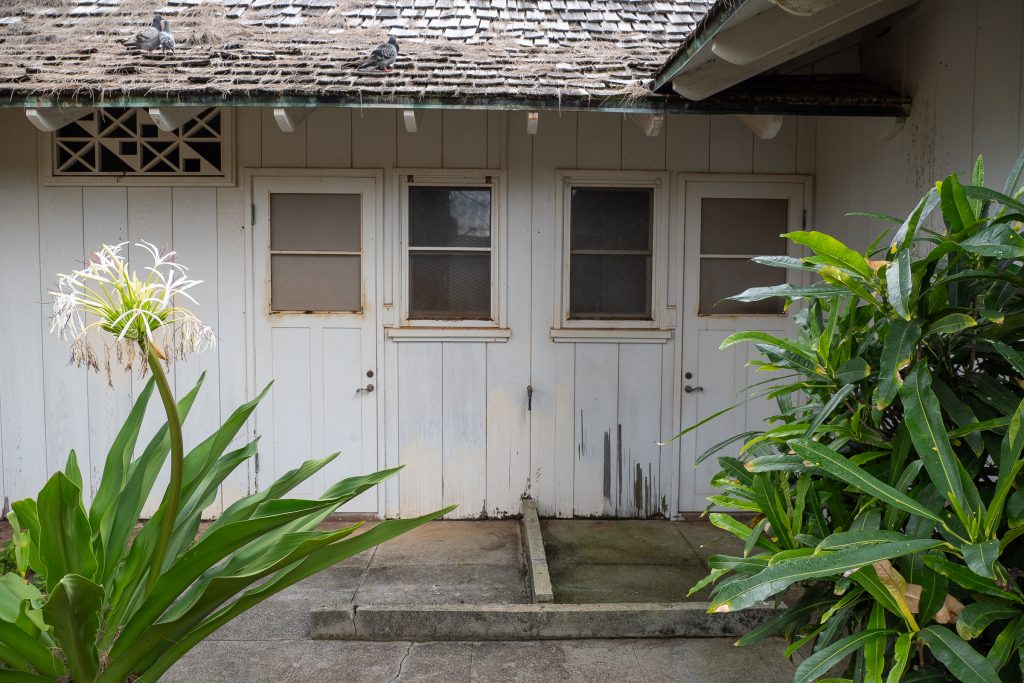
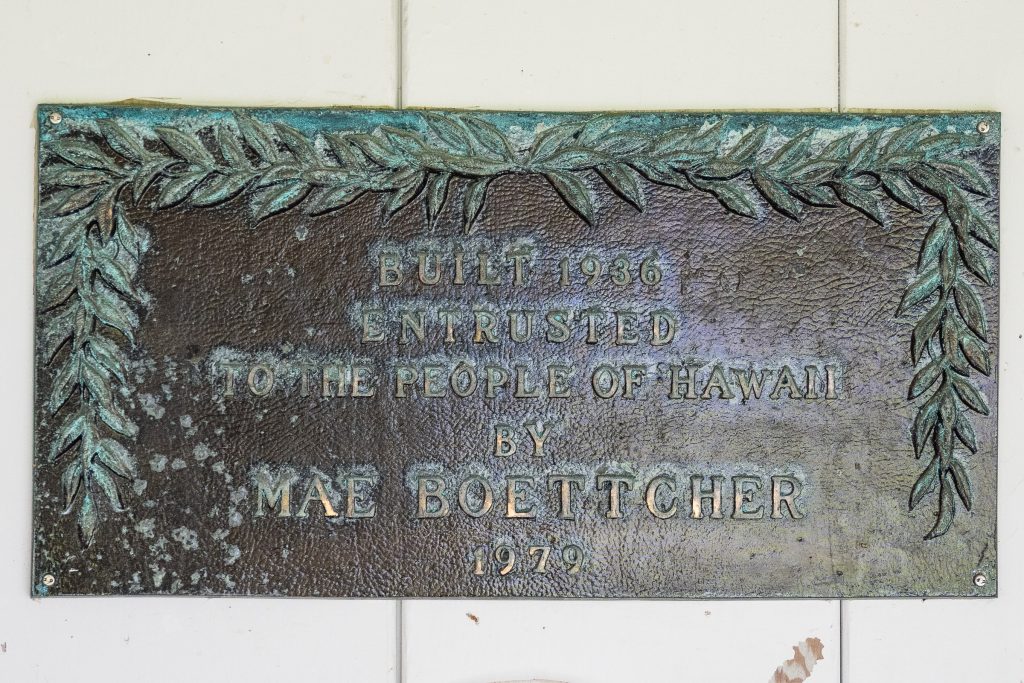
The Boettchers were prominent philanthropists in Colorado and their palatial family home eventually became the governor’s mansion in Denver. In 1978, Charles Boettcher II’s widow, Mae, wanted to make it possible for Hawaii to preserve the property intact, and although the site was then worth at least $3 million, she offered it to the city for $1.5 million. Federal funding brought the city’s share of the cost down to $150,000, according to news reports.
Wong says city officials never particularly wanted the house, but reluctantly took ownership of it to get control of the land.
“It’s a stepchild,” she said, “so it just gets neglected.”
The damage began very soon after the city acquired the property, according to Ross, Wong and others.
The furnishings, which were also described specifically in the historic landmark designation, have mostly disappeared, Ross said.
Ross wants to preserve not just the house and its ties to Hawaii’s past, but also as a celebration of Ossipoff’s legacy. She said that many other houses he built have been torn down because the wealthy people who can afford to buy them prefer to erect larger and grander homes to modern tastes. This Ossipoff is particularly special, in her opinion, and could be converted into a valuable and valued community gathering place.
“It’s the first one of its kind and unfortunately it’s probably the last one of its kind,” she said.