Pandemic Learning Loss Could Cost Hawaii Students Billions In Future Earnings
A recent study says the impact of the pandemic on the state’s future workforce could be significant, although Hawaii is expected to fare better than much of the nation.
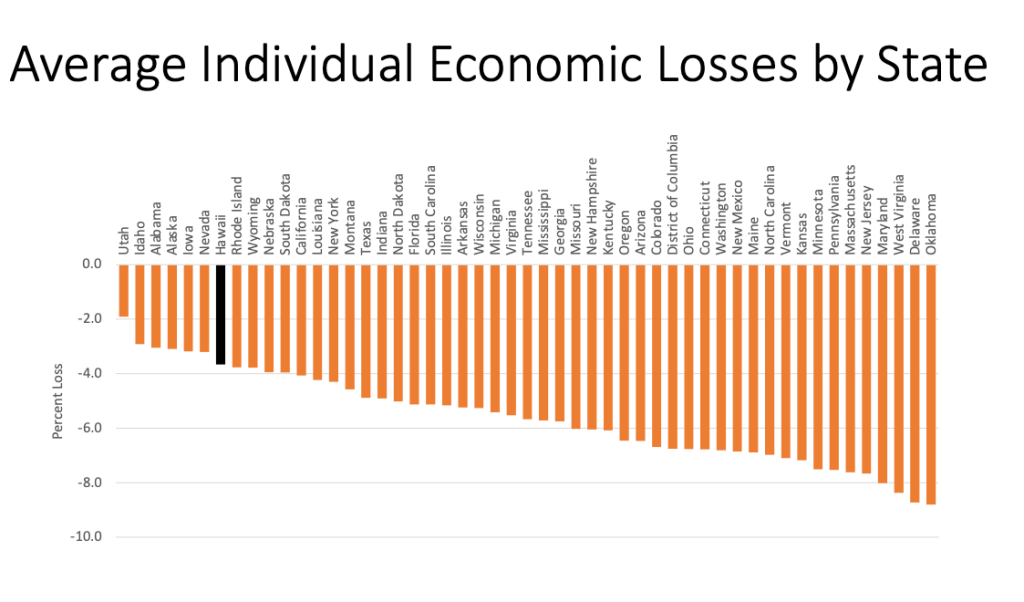
Hawaii students who attended school during the Covid-19 pandemic could see an almost 4% reduction in lifetime earnings unless schools are able to help them catch up academically, according to a Stanford University study.
Researchers estimate that Hawaii could face approximately $31 billion in economic losses during the 21st century because because of classroom setbacks over the last four years. The drops in academic achievement could add up to $31 trillion in lost earnings for the United States as a whole.
David Sun-Miyashiro, founding executive director of HawaiiKidsCAN, said students attending remote classes during the pandemic may have failed to develop fundamental skills in subjects like reading and math. In turn, he said, workers may struggle with obtaining college degrees or getting higher paying jobs.
“It’s extremely tragic,” he said.
The study’s author, Eric Hanushek, will present his findings to the Board of Education on Thursday.
Hawaii students have not yet returned to pre-pandemic levels of academic achievement, although their test scores have improved over the past three years.
In the 2022-23 school year, 52% of students were proficient in language arts, down from 54% in the 2018-19 school year. Roughly 40% of students were proficient in math last year, down from 43% of students pre-pandemic.
According to the report, Hawaii students are expected to see some of the nation’s lowest reductions in lifetime earnings because the state has seen relatively small drops in test scores. Oklahoma is projected to lead the nation in economic losses, with students expected to lose nearly 9% of their expected lifetime earnings.
But Hawaii students need higher living wages than workers in Oklahoma and other parts of the U.S., Sun-Miyashiro said. With Hawaii’s high cost of living and lack of affordable housing, Sun-Miyashiro said, students could face more severe consequences because of reduced wages than their counterparts on the mainland.
“The stakes are so incredibly high here,” he said.

Hawaii leaders were also hoping to see a quick acceleration of student achievement before the pandemic began. The Department of Education’s proposed strategic plan in February of 2020 called for 73% of students to proficient in language arts and 66% in math by the current school year.
The plan was never approved or adopted, with some BOE members calling the targets unrealistic.
Timothy Halliday, an economist with the University of Hawaii Economic Research Organization, said low-income students have been most affected by the pandemic’s learning loss and, consequently, will likely see the greatest impacts on their future employment prospects and wages.
He said that he’s unsure how much of academic losses can be reversed moving forward. The real test of the pandemic’s impact on the economy will come as more students graduate and enter the workforce, Halliday added.
“We won’t see this for another 10, 15, 20 years,” he said.
Civil Beat’s education reporting is supported by a grant from Chamberlin Family Philanthropy.
Civil Beat’s community health coverage is supported by the Swayne Family Fund of Hawaii Community Foundation, the Cooke Foundation, Atherton Family Foundation and Papa Ola Lokahi.