

The Miske Trial: How An Accused Crime Boss Fooled The State To Get A Motor Vehicle Dealer License
When he ran into hurdles because of his criminal background, court testimony shows, he simply lied or fabricated a non-existent entity.
Editor’s note: This article was first published on Ian Lind’s blog, iLind.net. It is reprinted here with the author’s permission.
By the summer of 2015, Honolulu business owner, Mike Miske, had built quite a collection of businesses, from his flagship Kamaaina Termite and Pest Control, the flashy M Nightclub, Kamaaina Plumbing, a spinoff that was into selling and installing solar energy systems and even a longline tuna fishing boat that was operating in the Pacific.
Now, he wanted to get one of his companies, Hawaii Partners LLC, licensed as a motor vehicle dealer. This required filing an application with the Motor Vehicle Industry Licensing Board, part of the state’s Department of Commerce and Consumer Affairs.
By that time, Miske had an approach to such matters. Have an employee or associate put their name on the application, concealing his direct control of the business. Then, if there were requirements that the new business couldn’t meet, they simply lied, claimed to be qualified and then made up phony but official-looking documentation in support of their claim.
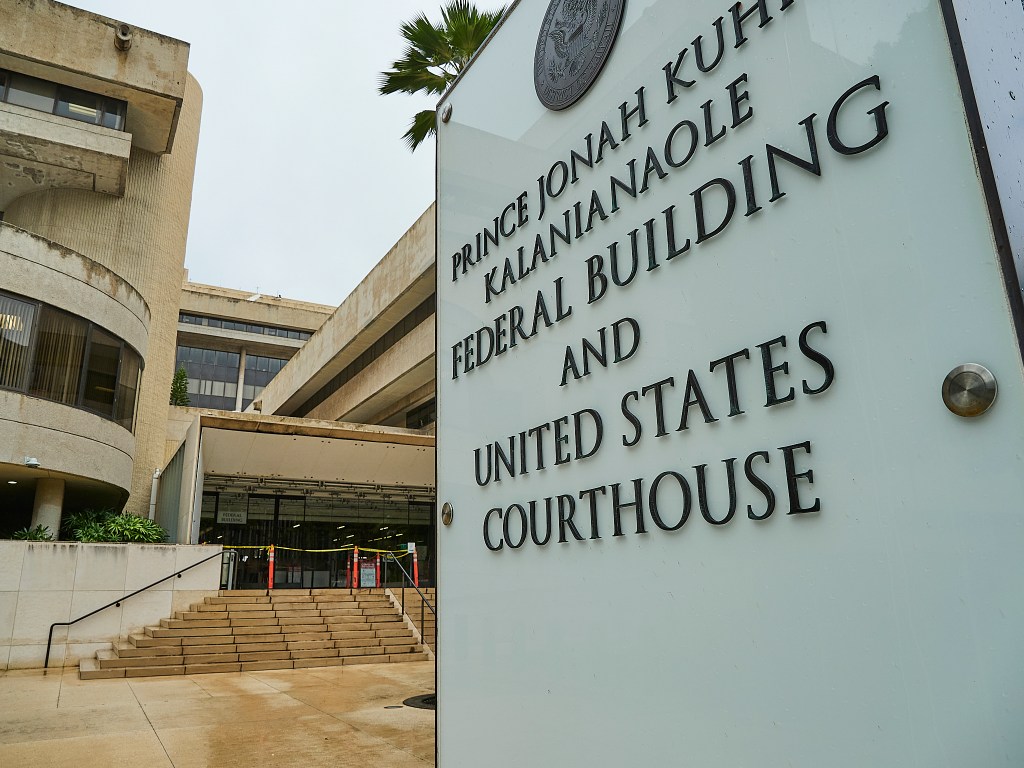
The nightclub and the termite business were both highly regulated, but Miske and his crew had routinely submitted fraudulent paperwork to regulators, where overworked public employees rarely flagged problems or referred them for action, trial testimony has shown.
A couple of parts of the application for Hawaii Partner’s used car dealer license were problematic.
No Felons Here
The first was a question on the application regarding criminal history.
“Has applicant and/or partners, and/or officers, and/or directors, and/or managers, and/or members of the entity ever been convicted of a crime in any jurisdiction that has not been annulled or expunged?” The application then had boxes to check. Yes, or no.
It wasn’t a difficult question, requiring a simple yes or no, but it did pose a problem since Miske had a criminal record that included six felonies — kidnapping, assault, fraudulent use of a credit card and three counts of felony theft.
Special Report
 Read all of Civil Beat’s coverage on the Michael Miske case. Subscribe to our free Morning Beat newsletter to never miss an update.
But they had previously maneuvered the same tricky terrain when applying for the M Nightclub’s liquor license several years before, and gotten away with it.
State law prohibits convicted felons from owning more than a 25% minority interest in a licensed business.
So the nightclub’s liquor license application was filed by Jason Yokoyama, who signed as the nightclub’s manager. He also reported owning 70% of the business. At times, Yokoyama submitted paperwork that omitted any reference to Miske, but later Miske was listed as a minority investor with 20% of the shares.
However, Yokoyama reported to the Liquor Commission that Miske’s stock consisted of “Class B” shares, and said Miske had “no decision making powers,” a rather bold falsehood given Miske’s tight personal control of the business.
Taking that same approach, Yokoyama was again selected to submit the application for a motor vehicle dealer license, this time as president of Hawaii Partners.
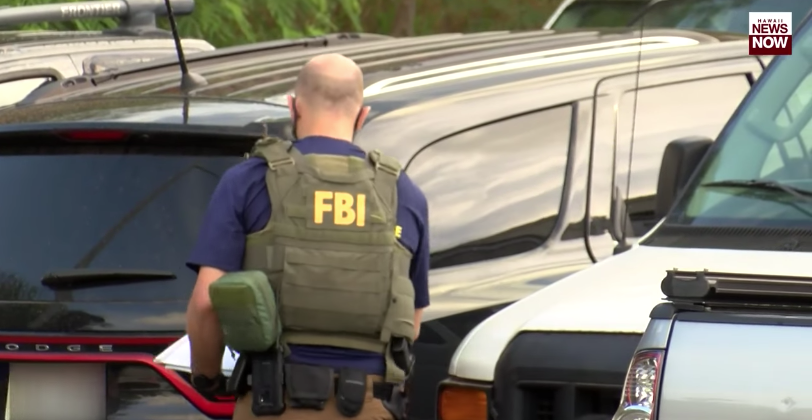
Miske’s name did not appear anywhere on the application, which falsely listed Yokoyama as the sole officer, director or limited liability company member. And when Yokoyama got to the criminal history question, he simply checked the box falsely certifying that none of those involved in the company had a felony record.
The application form includes a warning: “I/We understand that any misrepresentation is grounds for refusal or subsequent revocation or license and is a misdemeanor (Section 710-1017, Sections 4368-19 and 437-28, Hawaii Revised Statutes).”
The warning appears just above Yokoyama’s signature on behalf of Hawaii Partners.
A Nonexistent Landlord
The second problematic part of the licensing application concerned the place where Hawaii Partners would operate its used car dealership.
Hector West, executive officer of the Motor Vehicle Industry Licensing Board, testified that staff review the location where the company will do business to ensure that the zoning allows vehicle sales, that it has at least three dedicated parking stalls available and that if the company is subleasing space, the property owner approves the sublease.
To meet that third requirement, the motor vehicle dealer application was supported by a rental agreement typed on a standard form used by the Hawaii Association of Realtors.
According to the rental agreement, Hawaii Partners was renting 2,000 square feet of office space at 940-B Queen Street, the location of Miske’s flagship company, Kamaaina Termite and Pest Control, and several smaller companies. The rental agreement was dated April 1, 2015, and would expire on March 31, 2020.
The landlord was identified as Kamaaina Rentals LLC, at the same Queen Street address. Kamaaina Rentals was also listed as “Principal Broker/Broker in Charge” of completing and reviewing the Association of Realtors form.
Yokoyama signed the rental agreement for the tenant, Hawaii Partners. Signing for the landlord, Kamaaina Rentals, was Andi Kaneakua.
The problem is that Kamaaina Rentals didn’t exist, and had never existed. Nadine Ando, director of the Department of Commerce and Consumer Affairs, certified that “the Business Registration Division’s records indicate no registration as a corporation, partnership, limited liability company, limited liability partnership or trade name for Kamaaina Rentals LLC,” according to a document admitted into evidence in the Miske trial last week.
Kaneakua, who signed off on the rental agreement for the fictional company, was a longtime employee and office manager of Kamaaina Termite, and had been in a personal relationship with Miske for at least a decade. Another recent witness testified that two years later, in early 2017, Kaneakua was living with Miske in a condominium apartment on Keakoa Place in Hawaii Kai, the same building where Johnathan Fraser had been living when he suddenly disappeared on July 30, 2016. Miske stands accused of ordering his murder.
In other words, Kamaaina Rentals and its purported rental agreement were simply fictions created in an attempt to fulfill a licensing requirement.
West, the executive officer for the motor vehicle licensing board, said DCCA would not have routinely checked whether the reported landlord actually exists.
And what would the board have done if they knew the landlord had just been “made up,” West was asked.
“That would be a RICO matter,” West replied. In other words, it would have been referred to the Regulated Industries Complaints Office, an enforcement agency within DCCA that investigates complaints.
Hawaii Partner’s dealer’s license was approved effective in July 2015, and Miske obtained his own car salesman’s license the following month.

Also applying for and receiving vehicle salesman’s licenses at the same time were Jason Yokoyama, who at the time was manager of Miske’s M Nightclub, and signed off on the Hawaii Partners application as its president; Kaulana Freitas, whose mother is Miske’s cousin; and Preston Kimoto, a manager for Miske’s Kamaaina Termite and Pest Control.
Yokoyama, Freitas, and Kimoto were indicted along with Miske in the federal racketeering case. They have all pleaded guilty and are awaiting sentencing.
Miske used his used car salesman’s license, associated with the Hawaii Partners dealership, to access a dealers-only wholesale auction where he purchased hundreds of used cars. Prior trial testimony has described several vicious assaults of other dealers who had bid against him, and suggested some of the cars were used by Miske’s criminal associates in the commission of other crimes. Some cars were illegally sold as personal vehicles by other Miske associates, according to trial testimony.

