

Home-Buying Subsidy At New Kapiolani High Rise Targets Doctors, Teachers And Police Officers
The program is aimed at middle-income buyers often overlooked by affordable housing policies.
Taxpayers are subsidizing the purchase of condominiums in a controversial, mixed-use development through a newly implemented housing program aimed at addressing what lawmakers call a critical labor shortage in certain occupations.
The Hawaii Housing Finance and Development Corp. is offering low-interest loans of $103,300 each for up to 23 people looking to buy homes in Kuilei Place, a 43-story, 1,005-unit luxury complex planned for a stretch of Kapiolani Boulevard now occupied by low-rise walk up apartments. It’s a total of almost $2.4 million for Kuilei Place out of $10 million allocated for the pilot loan program.
The loans, bearing 1% interest, will be available to individuals earning up to $136,500 annually, or four-person households with income up to $194,250. So far two people have gotten loans under the program, which Gov. Josh Green signed into law in 2023 as part of a sweeping package of bills to address the state’s housing shortage.
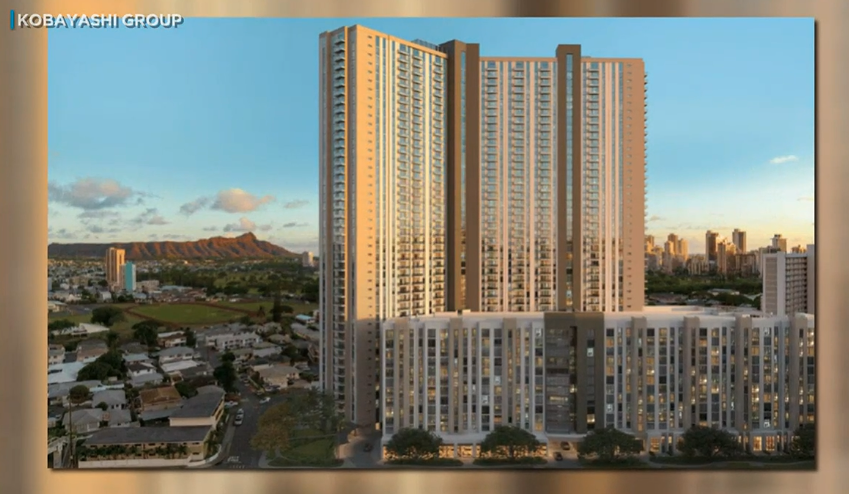
The Dwelling Unit Revolving Fund Equity Pilot Program is designed to target certain job fields where lawmakers have identified a shortage of workers. They include education, health care, law enforcement and agriculture.
“A lot of folks in Hawaii are challenged with affording a home, and many of them are in these critical professions,” said Dean Minakami, executive director of HHFDC. “We are looking at means to help people stay in Hawaii.”
The program addresses what he said is a growing segment of Hawaii’s population — those who earn too much to qualify for subsidized housing but not enough to purchase a market-rate home on their own. This demographic of middle-income families has often been overlooked by the state’s housing subsidy policies.
“We were incredibly impressed by the innovation of the Legislature and HHFDC looking to directly support our community members, especially in these segments of our workforce that are seeing incredible shortages,” said Alana Kobayashi Pakkala, executive vice president of the Kobayashi Group, the project’s developer.
About 75% of all condos at Kuilei Place have been sold, said Christina Davis, a salesperson for the project. She didn’t know how many of those were market rate versus affordable.
Loans are only available for two-bedroom condos, with a parking space, because the single and triple-bedroom units are already sold, Pakkala said.
Buyers Have Been Hard To Find
Despite the attractive loan program, Pakkala said not many buyers have been approved. She said the complex application process is part of the problem.
“It does take a lot of effort because the applicants need to first apply and qualify for the overall HHFDC program,” she said.
High asking prices at Kuilei Place also may be deterring applicants. Just over 600 units are designated as affordable, for people earning no more than 140% of Honolulu’s median income.
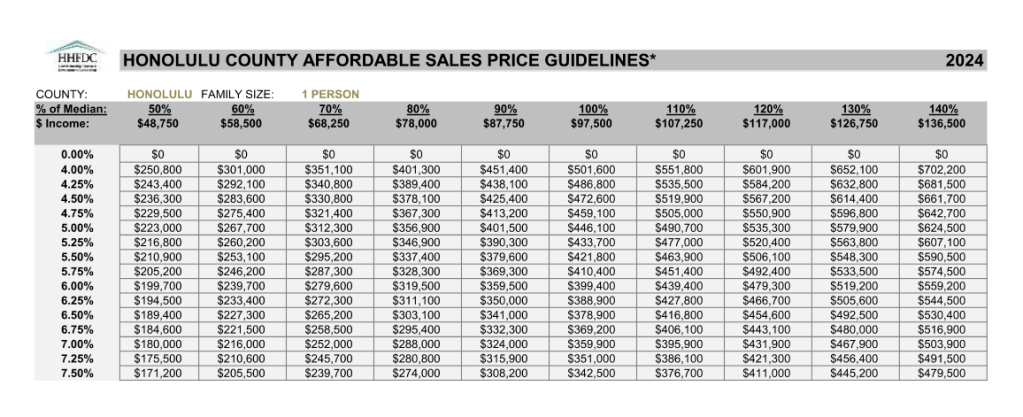
According to HUD affordable sales price guidelines for Honolulu, an affordable home at today’s interest rates of about 7% should cost $503,900 for an individual, or $717,100 for a family of four.
By contrast, single-bedroom condos at Kuilei Place start at $531,000 and three-bedroom condos cost up to $811,900.
Also putting home ownership out of reach for many are interest rates, hovering around 7%, which puts a squeeze even on those at the upper end of HUD’s income scale.
“Interest rates have had some impact on the home market,” said HHFDC’s Housing Information Officer Gordon Pang. “All I can say is this program is designed to help.”

Questions about affordability have long surrounded the project, in part because many lower income families live in the truly affordable apartments that Kuilei Place will replace. In a letter to the Honolulu City Council last year, McCully-Moiliili Neighborhood Board Chairman Tim Streitz said the affordable options at Kuilei Place would be too expensive for low-income families.
“The ‘affordable’ units are not adequately serving lower income residents,” he wrote.
Developments like Kuilei Place are built to create housing product for working professionals, said Sterling Higa, executive director of Housing Hawaii’s Future, a nonprofit that educates local leaders about ways to address the housing crisis.
“Even though the term affordable is used, it’s not a low-income housing project,” he said.
Davis said the development offers an array of luxury amenities: indoor fitness centers, a swimming pool, sauna and charging stations for electric vehicles in the 13-story parking garage.
“You can charge your Tesla,” she said.
Next Outreach Workshop Will Target Teachers And Professors
Kuilei Place has approved two buyers for the loan program, which launched two months ago. But Pakkala said nine other applications are in the works, adding that critical workers have been tough to reach.
“It’s taken some time to go through the education process of reaching out to community members,” she said.
The sales team has held outreach events at local schools as well as called police stations and hospitals to spread the word.
So far, nine physicians, six teachers and three police officers have applied for the program, Pakkala said.
“We haven’t had an agricultural worker application, but we are doing our best to get the word out to that community as well,” she said.
Manager of sales at Kuilei Place, Melvin Leon Guerrero, said his team has thrown several so-called industry nights to invite and inform critical workers about the program.
“We really want more people to take advantage of the program,” he said.
The next outreach event is Thursday and is specifically for educators, including current schoolteachers and university professors.
“Those industry nights have been really helpful,” Pakkala said. “Some of our actual applicants for DEP have invited their friends, which has been a great way to get the word out about the program.”
Applications Require Confirming Of Occupation
Interested buyers must submit an application to HHFDC and include such documents as pay stubs and proof of employment, along with an affidavit confirming their profession as a teacher, doctor, nurse, police officer, corrections officer or agricultural worker, Minakami said.
Once approved, buyers receive the $103,300 loan with a 1% interest rate. Minakami said HHFDC maintains a small equity stake in exchange of the loan and receives a share of appreciation if the mortgage holder sells the condo.
The Legislature secured $10 million for the pilot program when it launched last year, and any remaining funds will expire in 2028.
Minakami hopes Kuilei Place will set a precedent.
“We’ll need to show that there is high demand for this program so that we’ll be able to secure additional funding for the future,” he said.

