

Waiawa Correctional Facility Supports ‘Invisibly Incarcerated’ With New Family Center
The project, which is intended to help foster relationships between inmates and their families, is the first of its kind at a correctional facility in the state.
Twenty-seven years ago, Malia Peters found herself in a difficult situation. Her then-husband had been sentenced to 20 years in prison, abruptly leaving her to care for their 3-year-old son, work multiple jobs and adjust to an entirely new life without her partner.
“I had to figure everything out myself,” she said. “There’s no manual on what’s going to happen next.”
Peters is not the only one to have faced this struggle. Almost half of all Americans have had an immediate family member in jail or prison, according to the American Sociological Association.
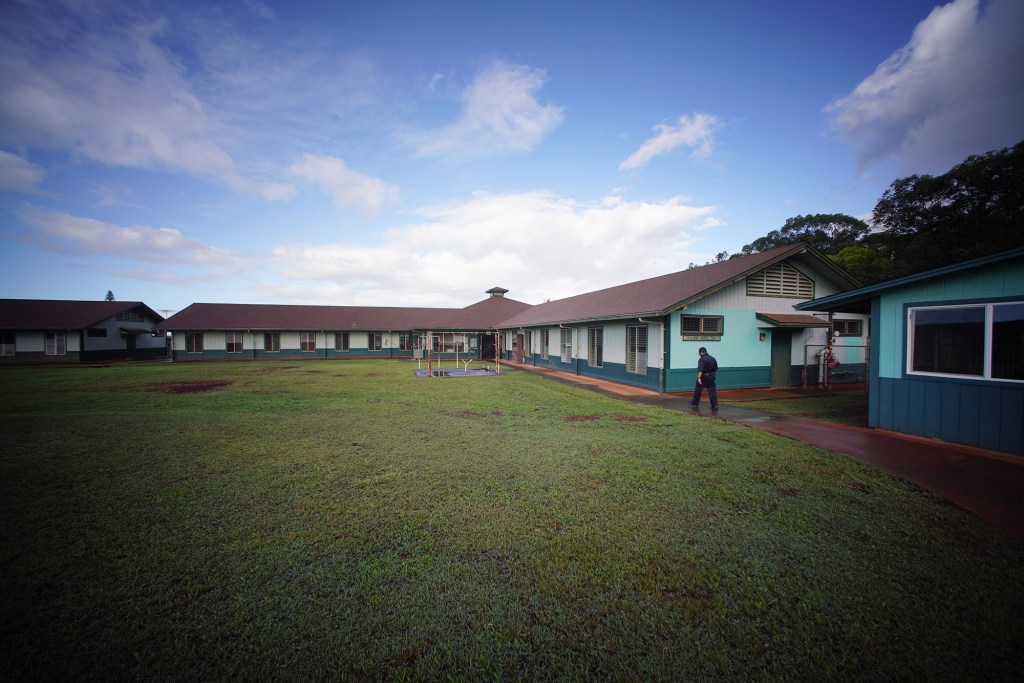
While the number of families impacted by incarceration is rising, a new initiative at the Waiawa Correctional Facility could change things for people like Peters.
As of this month, incarcerated fathers at WCF can connect with their children and obtain family-focused support at the facility’s new Child Visiting and Family Resource Center. Resources will also be offered to inmates’ families.
The initiative, led by the Department of Corrections and Rehabilitation and the Department of Human Services, calls attention to recent efforts by the state to better support incarcerated individuals.
Kat Brady, coordinator of the Community Alliance on Prisons, says the families of incarcerated individuals are often overlooked despite the challenges that they face as their loved ones enter the prison system. She described them as the “invisibly incarcerated.”
“They’re not behind bars, but believe me, they’re incarcerated,” she said.
Bringing Families Together
Birthdays, soccer games, holidays. Incarcerated parents miss out on much of their children’s lives, Brady says. Even talking on the phone can be difficult when calls are charged and limited to 15 minutes each.
“Some of the families had phone bills that were thousands of dollars, especially if they had little kids, because the kids wanted to say goodnight to daddy or mommy,” Brady said.
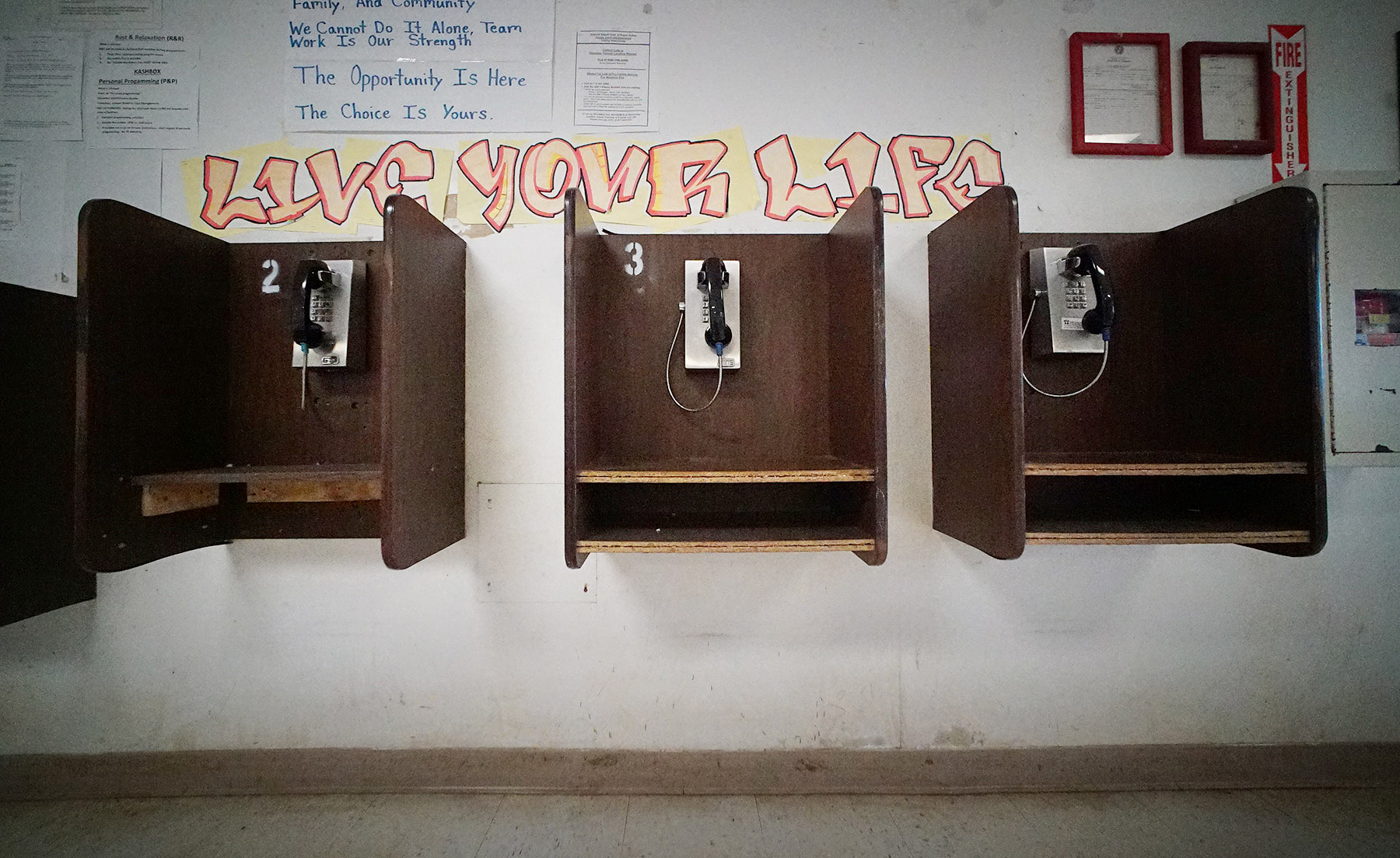
For Peters, in-person visits were not much better, with many appointments being dominated by business matters and volatile conversations that were cut off when time was up. Some visitors at Hawaii’s correctional facilities were also treated like inmates, with prison staff shaking them down and searching for contraband items in diapers, according to Brady.
Shayne Kukunaokala Yoshimoto, executive director at Blueprint For Change, says that the new visiting center — complete with toys, books and couches — is aimed at establishing a more comfortable environment that helps foster healthy relationships between inmates and their children.
“It’s a lot about supporting the keiki as well and making them feel supported and loved,” he said.
Having a strong social support system has been proven to combat some of the psychological and behavioral problems that children of incarcerated parents often experience, according to the National Institute of Justice. It can also reduce recidivism among inmates, NIJ says.
“Research does show that maintaining familial connections helps both the person that’s incarcerated as well as the families outside,” Yoshimoto said. “With the caveat, of course, that sometimes it’s not possible, sometimes relationships are not repairable.”
Years In The Making
WCF’s new center has been in the works for almost a decade. Blueprint For Change began pushing for its establishment after noticing an uptick in services for families impacted by incarceration statewide.
When House Bill 1741 was passed in 2022, plans for the center were officially set into motion.
Yoshimoto says that the center was established at WCF because of the facility’s minimum-security status and its emphasis on inmates’ transition back into society. Inmates are typically transferred to the all-male, 334-bed facility when they are at the end of their sentences.
The facility’s size and ability to provide programming seven days a week was also a factor, according to the Department of Corrections and Rehabilitation.
Momi Akana, CEO of the project’s contractor, Keiki O Ka ‘Aina, hopes that the center will be replicated at other correctional facilities across the state. While the center is part of a network, most of them are based at community spaces or local schools.
“This one is the only one out of a correctional center, hopefully not the last,” she said.
Inside, inmates and their families will be able to receive a wide range of services, including case management, parenting courses, financial information and self-esteem support. Inmates will also be able to engage with their children at the adjacent playground, which is in the process of being built.
Akana describes the center as “just getting off the ground.” Still, even as staff are unloading furniture, she says that people are filing in.
“If we’re going to be looked at as what (resource centers) could be, then we better do the best job that we possibly can, because I think it’s a great resource to have at every one of the facilities,” she said.
A Sign Of Change
For Peters, the new resource center at the Waiawa Correctional Facility signifies an important change in jails and prisons across Hawaii.
“They’re trying to make a more empathetic and compassionate environment,” she said. “Kind of cheering the inmates on.”
Brady is similarly hopeful about the center’s potential to support inmates and their loved ones. Still, while she says that the center could help change things for families, she also says that people will need to end their prejudice against incarcerated individuals first.
“The system seems to label people, classify them, and then sort of disregard them and their families,” she said. “I just think many people are labeled by what they have done rather than by who they are.”
Supporting family relationships, she says, is a good place to start.
“If we start focusing on families and family unity and help people who are actually parents but don’t know how to do it, I think we could make a tremendous difference in the world,” she said. “You just start one person at a time.”

