

Beth Fukumoto: These Third-Party Candidates Are Undeterred By The Uphill Battle They Face
Candidates seeking office without the backing of the Democratic and Republican parties have adopted unique campaign strategies as they seek to change the status quo.
In Hawaii, like much of the United States, politics is usually a two-horse race between Democrats and Republicans. But every election cycle, a few third-party and nonpartisan candidates jump into the fray, determined to give voters a different choice.
These candidates are often seen as long shots or even spoilers in close races. So why do they run? What makes it so challenging for them to succeed? And what can we do to give them a better shot?

Third-party candidates are often in it for the cause. They believe in something strongly and don’t see the major parties addressing their concerns. Take Aaron Toman, for example. He’s running as a Libertarian for Hawaii’s Congressional District 2 because he feels the Libertarian Party best represents his values.
“After each election, I was confused as to why the good candidates didn’t win. But in 2020, I realized the problem was with people like me who expected someone to run for office and someone to campaign for them; it wasn’t ‘someone’, it was me,” Toman said by email. He hopes voters in Hawaii, frustrated with the status quo, will see the need for a drastic change and consider a third-party option.
Emma Jane Avila Pohlman, a Green Party candidate for the U.S. Senate, is all about environmentalism and world peace.
“I love the Green Party because we are the party of Earth and World Peace. We are also an international party and have branches all around the world. The Green Party is an awesome platform for real environmental change,” Pohlman said in an email. For her, it’s not just about winning but pushing an agenda she believes in.
The path for third-party candidates is steep. They struggle with funding, media coverage and the perception that voting for them is a waste. Hawaii’s rules for forming a political party don’t make it any easier. To qualify, a new party needs 862 signatures from registered voters and has to follow strict organizational requirements. Staying qualified is just as hard, with parties needing to run candidates and meet minimum vote percentages each election.
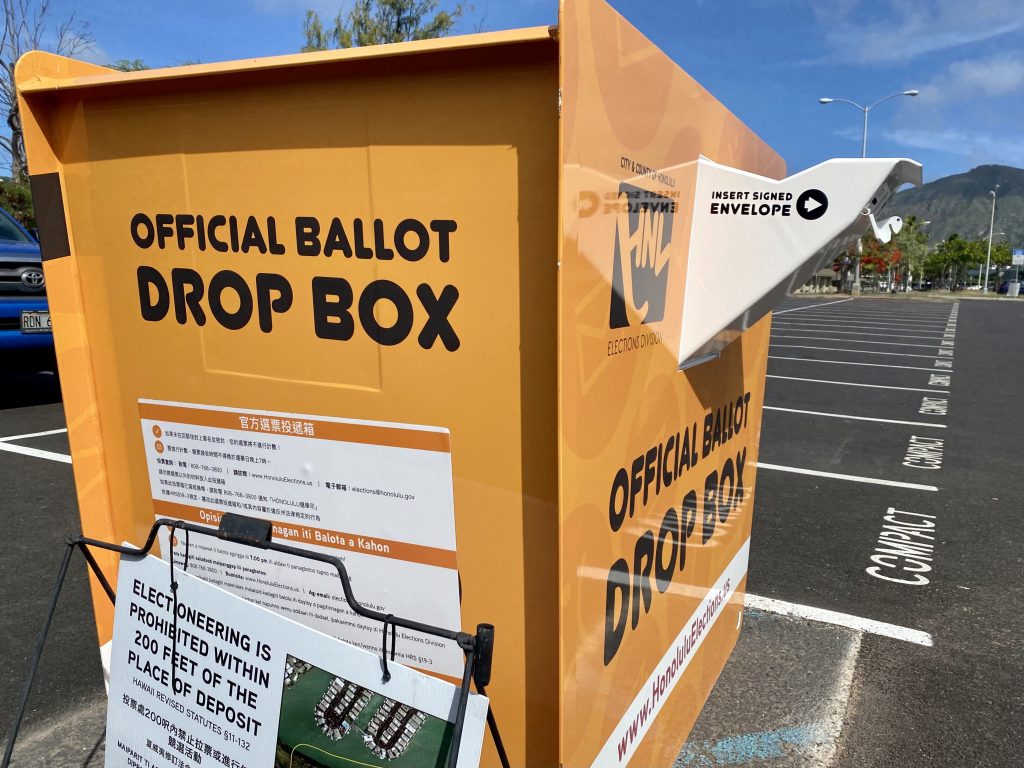
Nonpartisan candidates have their own hurdles. To get on the general election ballot, they must either get a significant percentage of votes cast or match up with the lowest vote received by a nominated partisan candidate. These barriers often discourage potential candidates and limit voter choice.
Despite these challenges, many third-party candidates run because they feel a sense of duty and have adopted unusual campaigning approaches.
Shelby Pikachu Billionaire (yes, that’s his ballot name) is a We The People candidate for the U.S. Senate. He hopes to capture the imagination of younger voters who feel disconnected from the traditional political system. When asked what he thinks it will take to win, Billionaire responded by email, saying, “If everyone who loves Pokémon or is a Pokémon fan hears about a Hawaiian U.S. Senator on the ballot named Pikachu, who do you think they will vote for?”
Raghu Giuffre, a U.S. Senate candidate, is running as a nonpartisan candidate but affiliates with the American Shopping Party. Although his party didn’t make the ballot this year, he’s still pushing his ideas, aiming to unify residents around local economic interests. “The conspiracy behind the American Shopping Party is to sneak-in this little safe haven from the blood sport that is American politics,” Giuffre explained in an email. “We will but for a single day, be as one people, to celebrate in common cause of our very best.”
Giuffre, who has run unsuccessfully in 2012, 2016 and 2020, doesn’t think winning is the point. Instead, he explained, “This Senate run is something of a glorified book tour to create public demand for this brand of public policy and political discourse.”
Still, competition leads to better democracy, so what can we do to make these parties more competitive? Our own history could provide some lessons for today.
Giuffre and Pohlman are two of the four third-party or nonpartisan candidates on this year’s ballot who have run in the past. They have yet to come close to winning. That could explain why 12 of the 23 third-party or nonpartisan candidates who drew papers to run didn’t follow through with the process.
Still, competition leads to better democracy, so what can we do to make these parties more competitive? Our own history could provide some lessons for today.
From 1964 to 1982, Hawaii used multi-member districts for its state legislature. In these districts, voters could cast multiple votes for multiple representatives. This system was intended to ensure fair representation but was criticized for confusing voters and potentially diluting minority representation.
The shift away from multi-member districts to single-member districts happened nationwide, driven by a desire for clarity and accountability. However, the concept is gaining renewed interest as part of broader electoral reforms like ranked-choice voting.
With multi-member districts, every district’s top three vote winners would be elected. And, with ranked-choice voting, voters would be able to rank their candidates by preference, ensuring that if a voter’s top choices don’t win, their vote will count for their next choice. Together, these two reforms could boost opportunities for different parties and nonpartisan candidates.
Ultimately, though, the success of third-party candidates depends on voter engagement. As Toman pointed out, “Voter participation is what it will take to win. While 2024 has had a record-low number of candidates, it also feels like a record-low number of voters is around the corner. Voters are tired of the two-party system and have given up on politics completely instead of giving third parties a chance. We as candidates need to provide a message of hope to bring these voters back.”

