

Hawaii Governor Says Media Operations Should Be Protected During Emergencies
The governor is also axing $500 million from the state budget to balance the books and fund priorities like housing.
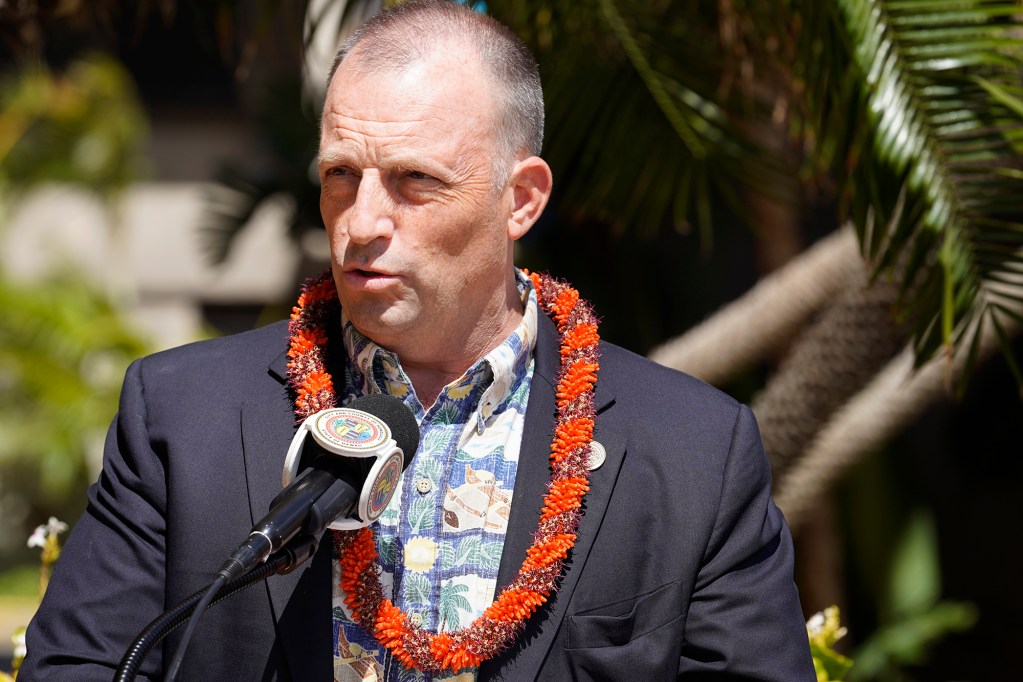
Gov. Josh Green on Tuesday said he would sign a bill intended to protect First Amendment rights of freedom of speech and the press during times of crisis.
House Bill 2581, which would have removed the authority of the governor or a mayor to suspend electronic media transmission during a state of emergency, landed on Green’s intent-to-veto list just last month. The governor said then he thought the governor or mayor should have that power.
But then he changed his mind.
“I felt that people who care about transparency were right,” the governor said following a bill-signing ceremony at the State Capitol. “And we heard from a lot of different parts of our media community. They were unanimous in their position that this should be law, so I thought it was the right call.”
Advocates of HB 2581 who had lobbied for the bill’s passage two years in a row welcomed Green’s reconsideration.
“Ultimately this bill passed the Legislature unanimously and there was no opposition testimony,” said Chris Leonard, president of the Hawaii Association of Broadcasters.
Leonard said it was clear that the existing law could potentially put the public at risk by limiting the media’s ability to communicate with the public during natural disasters like wildfires, tsunamis and hurricanes. In a state of emergency the public needs more information, not less, he added.
First Amendment attorneys and media watchdogs also argued that the law in question was unconstitutional. They pointed out that the law’s language allowing the media suspension “to the extent permitted by or under federal law” was flawed, as federal law allows for no such provision.
Of the 17 bills Green said he might veto, only seven ended up getting axed. They include another emergency powers bill, Senate Bill 2512, which called for the governor to follow notice and reporting requirements when spending public resources.
Legislators said the bill would “ensure the transparency” of a government’s actions when disasters are declared. But Green said a governor needs “flexibility and support” in times of emergency, or else response times could be delayed.
Also vetoed was Senate Bill 572, which would have allowed the state Department of Agriculture to declare a biosecurity emergency to combat invasive pests. Green argued that the bill would unnecessarily slow the flow of goods into state harbors.
And another vetoed measure, Senate Bill 3068, would have allocated about $460 million for Maui wildfire recovery efforts. But the governor said House Bill 1800, the state budget bill, has “sufficient appropriations” to support all wildfire recovery efforts. The money in SB 3068 will instead be directed to restoration of state affordable housing funds.
Planning For Rainy Days
Tuesday’s actions on the part of the governor came one day before his deadline to sign bills, veto them or let the legislation become law without his signature.
The most important bill, HB 1800 — the state budget — is now law. But Green did use his line-item veto power to trim the $19 billion budget by more than $500 million.
The main reason, he said in a press release, was to balance the state’s longterm financial plan “and ensure a strong carryover balance while maintaining a $1.5 billion rainy day fund.”
Green in part cited as rationale the May Council on Revenues forecast that predicted the state’s general fund receipts would drop from 4% to 3.3%, which works out to over $430 million less over the next six years.
The budget reductions, 19 in total, include:
- $56 million from the $255 million slated the Hawaii Housing Finance and Development Corp.;
- $30 million from $58 million in general fund appropriations for school-based budgeting;
- $19 million from $293 million for general obligation bonds for more school-based budgeting;
- $25 million from the $50 million in general funds for University of Hawaii Community Colleges; and
- $14 million from the $30 million in general funds to support UH campuses systemwide.
But the budget still spends hundreds of millions on a range of programs, especially for housing and homelessness, health care, environmental protections and schools. Expenditures include:
- $230 million in general obligation bonds for the HHFDC to finance more affordable housing;
- $33 million for kauhale (tiny houses) projects for the Office on Homelessness and Housing Solutions;
- $25 million for natural area reserves and watershed management;
- $20 million in state park special funds for administration and operations;
- $18 million for contracts for the Child and Adolescent Mental Health Division; and
- $21 million for summer learning hubs to ensure summer programming for kids.
House and Senate leaders have already said they will not reconvene in special session to override the governor’s vetoes.
Instead, they said any differences between the executive and legislative branches could be addressed in the next session that begins in January, after the 2024 elections.
Green planned to hold another press briefing on Wednesday to go over budget specifics and other issues.

