

In A Hilo Rematch, Senate Candidates Differ On The Economy And Tourism
Incumbent Lorraine Inouye and former legislator Laura Acasio are back on the ballot in the Democratic primary.
Laura Acasio is trying to win back a Hilo Senate seat she held for half a term before being ousted by Sen. Lorraine Inouye, who has represented the district in various public offices for nearly 40 years.
Both support comprehensive public financing of elections and other government reform measures. They differ in their approaches to economic revitalization and tourism in the area.
Acasio wants to see a bigger focus on agriculture and food sustainability while Inouye has been working to preserve businesses in Hilo that now make up the backbone of the district’s economy.
Acasio was appointed to a Hilo Senate seat in 2020 to fill the rest of Kai Kahele’s term when he ran for Congress. She lost to Inouye after district lines were redrawn in 2022, getting 3,924 votes to Inouye’s 7,214.

Pushing For Change
When Acasio arrived in the world of politics, she didn’t always like what she saw.
“What I experienced in the Senate is this notion, and it’s a norm in politics, of just go-along-to-get-along and you’ll have an easy election,” Acasio said.
She wants to see the Legislature change its rules to increase transparency.
That would include requiring all votes and discussion on changes to bills to happen in public, doing away with voting “with reservations” during floor votes, removing the power of committee chairs to unilaterally kill bills and making the distribution of capital improvement funds more equitable across the islands.
She also supports additional disclosure requirements for lawakers, including a requirement that lawmakers publicly disclose the identities of their private business clients, if they have any.
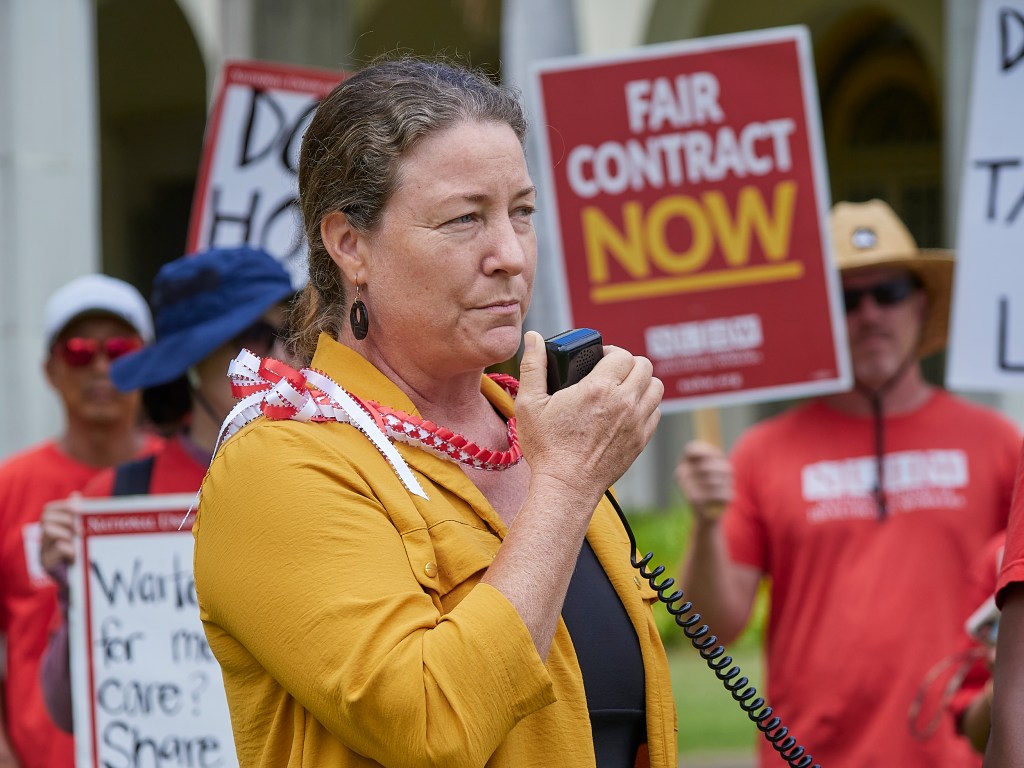
Acasio said she doesn’t fully support term limits. She would rather see limits placed on how much candidates’ campaigns are allowed to spend in each election cycle, as well as on how much money the campaigns are allowed to carry over to the next election.
Pairing those measures with the passage of comprehensive public funding for elections would level the playing field, she said.
A Note On Political Participation
Acasio said those transparency issues and solutions for ending Hawaii’s pay-to-play culture resonate most with younger residents in her district. But the majority of voters in Hilo are over the age of 65 and seem more concerned with the cost of living, housing and homelessness, Acasio said.
Hilo needs help on all those fronts.
Acasio has heard from business and residents alike that homelessness continues to be an issue in this urban district of the Big Island. She said the state should support a broad spectrum of programs: temporary shelters, tiny kauhale-style homes like those championed by Gov. Josh Green on Oahu and transitional housing.
As a senator, she identified vacant buildings like the defunct Hilo Hotel on Kinoole Street that could be converted into housing units for homeless people. But Acasio said she could never get capital improvement funds into the state budget to purchase the building.
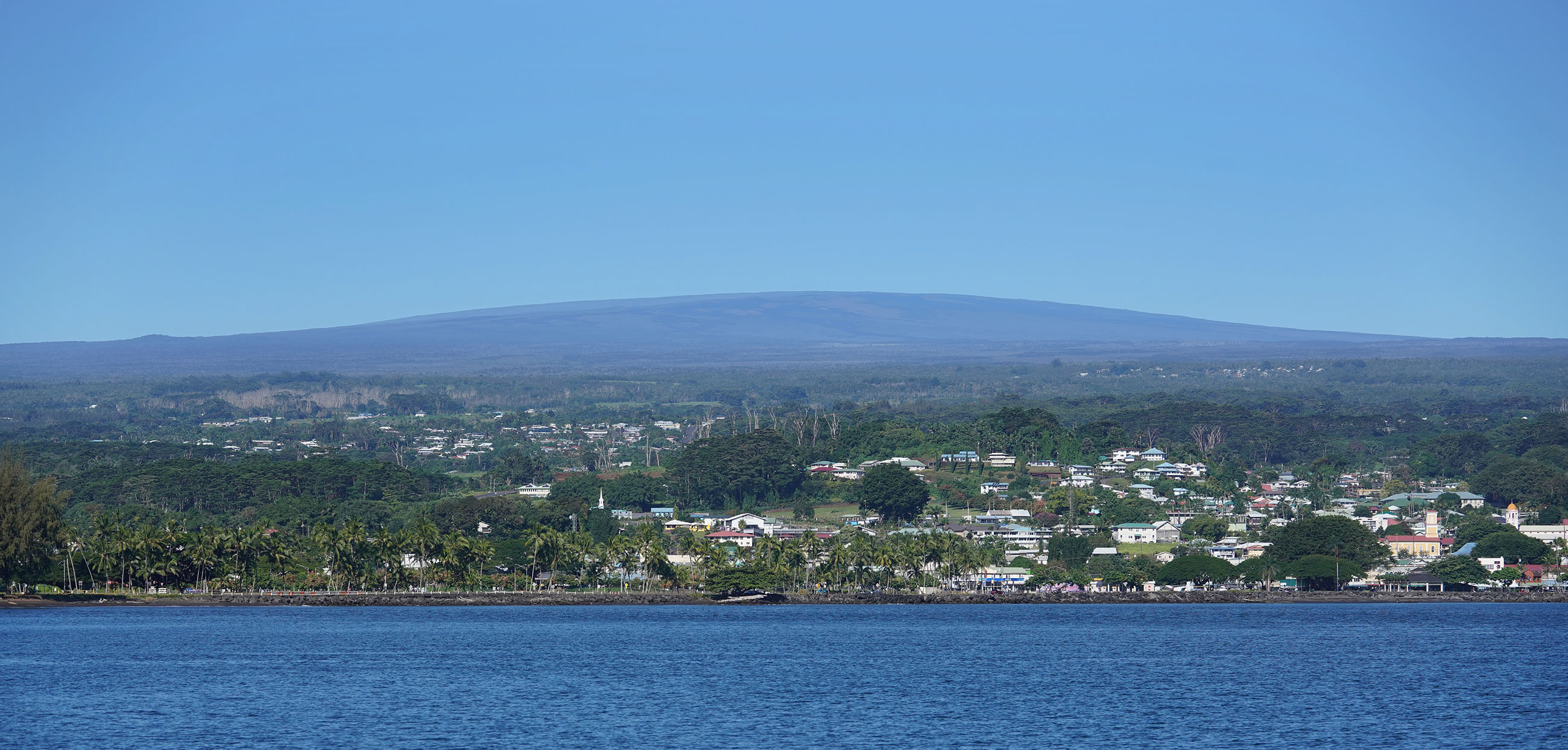
The district doesn’t just include urban Hilo. It extends North to Pepeekeo, with many acres of agricultural lots, and up the slopes of Mauna Kea. Acasio said the state could support younger farmers by providing them with land and resources to grow crops.
Acasio said developing the district’s ag sector could open up opportunities for tourists who want to give back to the community through volunteerism. The Hawaii Tourism Authority’s destination management plan for the Big Island calls for better management of the island’s natural resources and an increased focus on cultural education for visitors.
“We need to look at the visitor experience as something that’s different than getting a mai tai at the beach,” Acasio said. “We don’t really have beaches, but we do have opportunities to work with farms and in the loi.”
Read Laura Acasio’s Civil Beat Candidate Q&A survey here.
Helping Out Businesses
Tourism is on Inouye’s mind, too.
She wants to see more development on the inland portions of the Banyan Drive peninsula, the only resort area in East Hawaii island. The state is condemning the site of the former Uncle Billy’s Hilo hotel, but due to rising sea levels, Inouye doesn’t believe it makes sense to build another hotel in the exact same spot close to the water.
She has a history on Banyan Drive, where she worked as a hotel manager. Given the recent tax cuts the Legislature passed that would eventually reduce collections by $1.4 billion, Inouye said that lawmakers should place more of the burden of financing state functions on the tourism accommodations tax. Revenues from the TAT are expected to be $748 million compared to the individual income tax, which is set to generate $3 billion.
Inouye’s campaign website and materials are devoid of campaign promises. She said she would rather let her actions in office speak for her than make promises that may not pan out.

Inouye wants to continue advocating for lease extensions for businesses in the Kanoelehua Industrial Area, where many businesses were relocated after the 1960 tsunami that struck Hilo. Inouye was behind a controversial law in 2021 granting up to 40-year lease extensions on state lands.
“In East Hawaii, to survive, we depend on small businesses,” Inouye said.
She also wants to see continued state funding for improvement projects in her district. In 2023, Inouye secured more than $130 million in projects, second only to Senate President Ron Kouchi.
Inouye points to a pier expansion project for Hilo Harbor and modernization projects at the Hilo airport. Improvement projects can be a tool for candidates, giving them something physical to show voters rather than needing to explain the ins and outs of public policy.
Inouye supports term limits for lawmakers. She said leaving office to work in different capacities in the community gave her perspective that she wouldn’t have if she stayed in office continuously for the last 30 years. She suggested 10 consecutive years as the limit.
She also supports extending the legislative session, especially if term limits are enacted, to give lawmakers more time each year to work.
In the current time limits of the Legislature, “It’s impossible to hear all the bills we have.” Inouye said.
Inouye said she and other committee chairs have had to limit the amount of time given to public testimony as well as the number of bills they hear each day because of hard stop times enacted after the Legislature moved to a hybrid format allowing for remote testimony.
Extending the session beyond the 60-day limit could give lawmakers time to consider more proposals, Inouye said.
Read Lorraine Inouye’s Civil Beat Candidate Q&A survey here.

Big Financial Edge For The Incumbent
Inouye’s campaign reported having $79,000 on hand compared to Acasio’s $12,600 as of June 30.
Inouye’s campaign raised more than $100,000 in the first six months of the year. Park Hotels and Resorts, which owns the Hilton Hawaiian Village on Oahu; Frederick Nitta, a doctor in Hilo; The Patsy T. Mink PAC, Operating Engineers Local 3 and the Hawaii Realtors PAC all donated the maximum $4,000 to Inouye’s campaign.
She also received $1,000 each from shipping company Matson, Big Island Motors and the Hawaii Association of Public Accountants.
Inouye’s campaign spent more than $40,000 since Jan. 1. That includes $5,000 on food for a fundraiser at The Edge restaurant in Honolulu. The campaign also paid a $258 bar tab for a June 20 fundraiser. It has also paid to run radio ads.
Acasio started the year with $19,000, most of it leftovers from her 2022 campaign. Her campaign raised $5,831 in the first six months of the year. Her top donor during that time period was retiree Christine Kapololu, who gave $1,000 to the campaign.
Acasio’s campaign spent about $12,000 since Jan. 1, mostly on signage, flyers and mailers.
Both candidates will attend a Civil Beat forum Tuesday evening, from 5 p.m. to 7 p.m. at Hilo High School.

