During the annual Tour de Trash, members of the public got an inside look at where Oahu’s garbage ends up. Civil Beat tagged along.
‘It Smells Like Earth’: Honolulu Shows Off Its Alternatives To Landfills

During the annual Tour de Trash, members of the public got an inside look at where Oahu’s garbage ends up. Civil Beat tagged along.

(Kevin Fujii/Civil Beat/2024)

An end-of-year deadline looms for Honolulu officials to name a location for a new municipal landfill. Meanwhile, the city is working to divert waste from needing to go to the disposal site in the first place.

Those efforts were on display during the recent Tour de Trash for members of the public who want to see where their trash ends up.

Most trash on Oahu is sent to the city’s waste-to-energy facility, H-Power, which incinerates it and uses the steam to power a generator that supplies up to 10% of the island’s electricity.

But workers touted initiatives like a new project for handling food waste, which is expected to slash the amount of waste going to H-Power, and the recycling of ash that H-Power generates.
Tour de Trash participants watch green waste being processed into compost at Hawaiian Earth Wednesday, Aug. 28, 2024, in Wahiawa. The City and County of Honolulu’s Refuse Division hosts the tour which follows the journey of Oahu residents and visitors’ rubbish, recyclable items and compostable/green waste take through the collection and disposal process. (Kevin Fujii/Civil Beat/2024)
Tour de Trash participants watch green waste being processed into compost at Hawaiian Earth in Wahiawa. (Kevin Fujii/Civil Beat/2024)
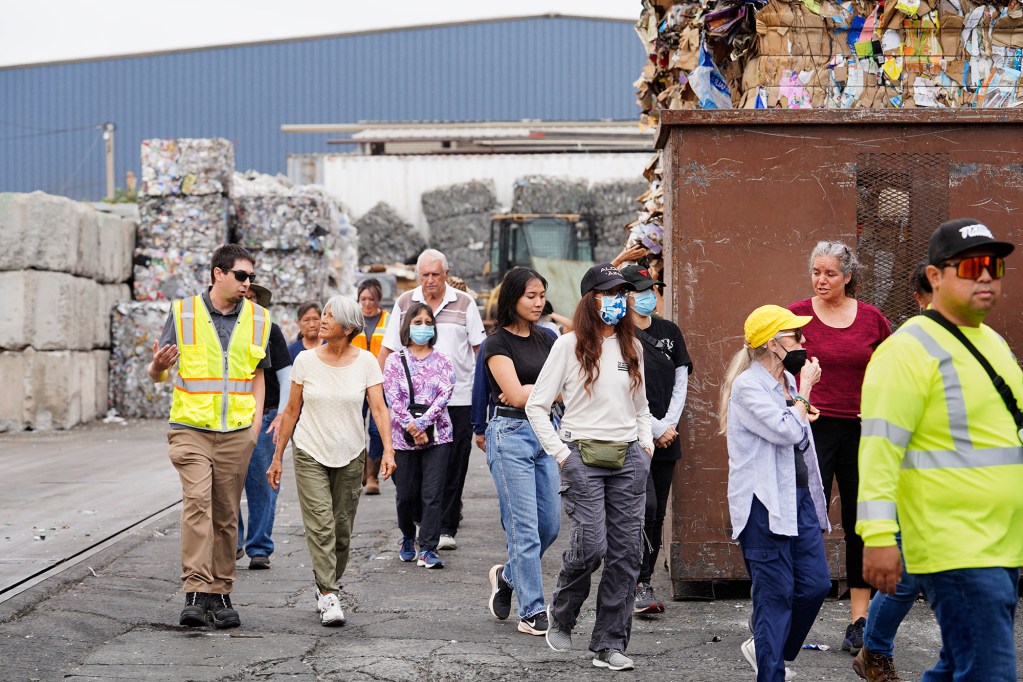
Tour de Trash participants walk among the bailed corrugated cardboard and aluminum cans Wednesday, Aug. 28, 2024, in Kapoeli. The City and County of Honolulu sponsors the tour to follow the journey of Oahu residents and visitors’ rubbish, recyclable items and compostable/green waste take through the collection and disposal process. (Kevin Fujii/Civil Beat/2024)
Participants walk amid bailed corrugated cardboard and aluminum cans at RRR Recycling Services in Kapolei, the second stop of the tour. (Kevin Fujii/Civil Beat/2024)

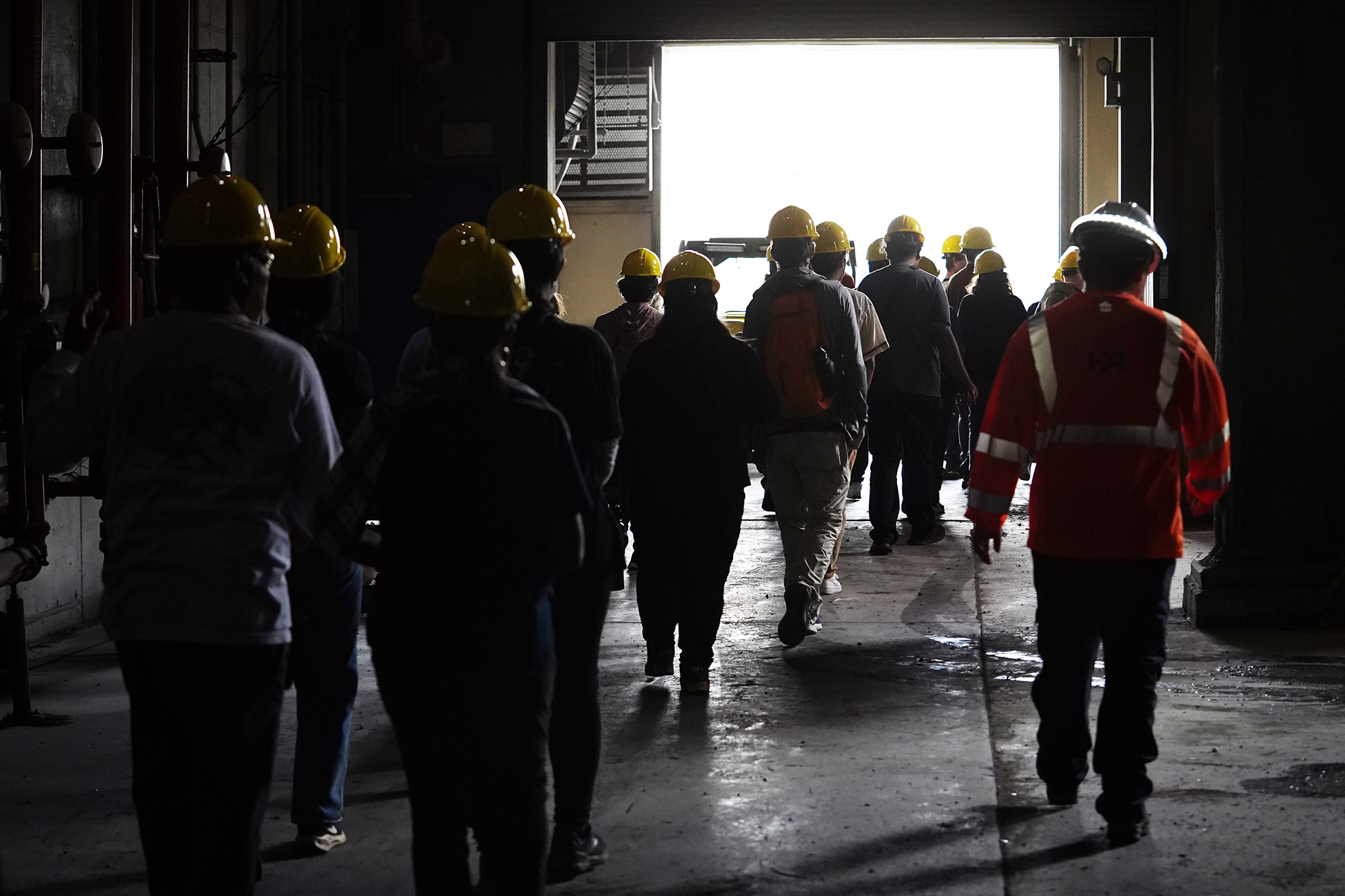
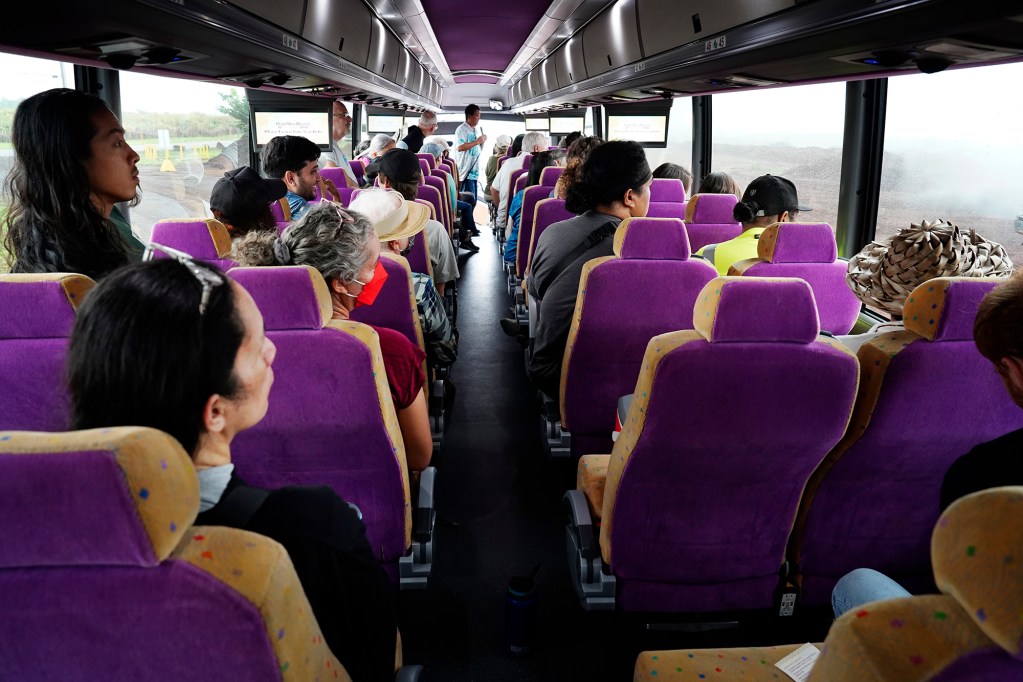
More than 30 people who had signed up for the tour late last month were shuttled by bus for about six hours between the city’s green waste site, its recycling site, its waste-to-energy site and its landfill. 

“Our primary function is to get stuff out of the landfill,” said Pieter Mathews, a consultant for H-Power.

The tour’s first stop was Hawaiian Earth Recycling in Wahiawa. From the front of the bus, senior vice president Marvin Min explained how green waste like grass trimmings, leaves and branches is broken down by his team and an array of big machines.

They sort out plastic and metal from the green waste, grind it into mulch, stack it in piles the shape of triangular prisms called windrows, overturn the windrows so that airflow fuels decomposition and months later grind the windrows into new piles of dark and damp dirt.

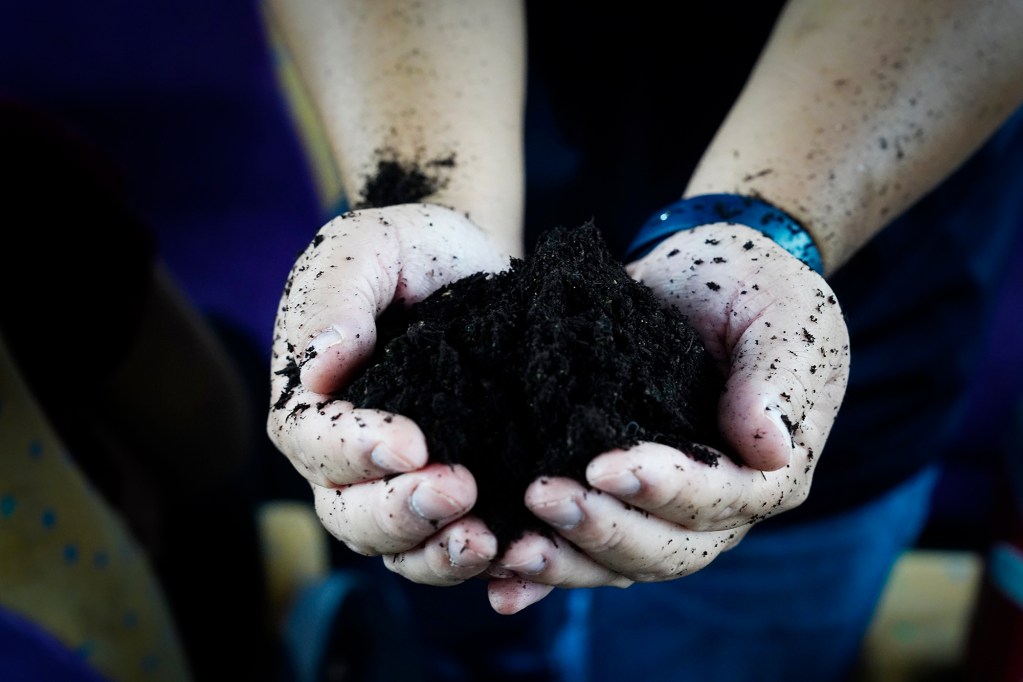
“I’m not going to say it smells delicious, but it smells like earth,” Min said. Another employee returned with a sample for attendees to scent.
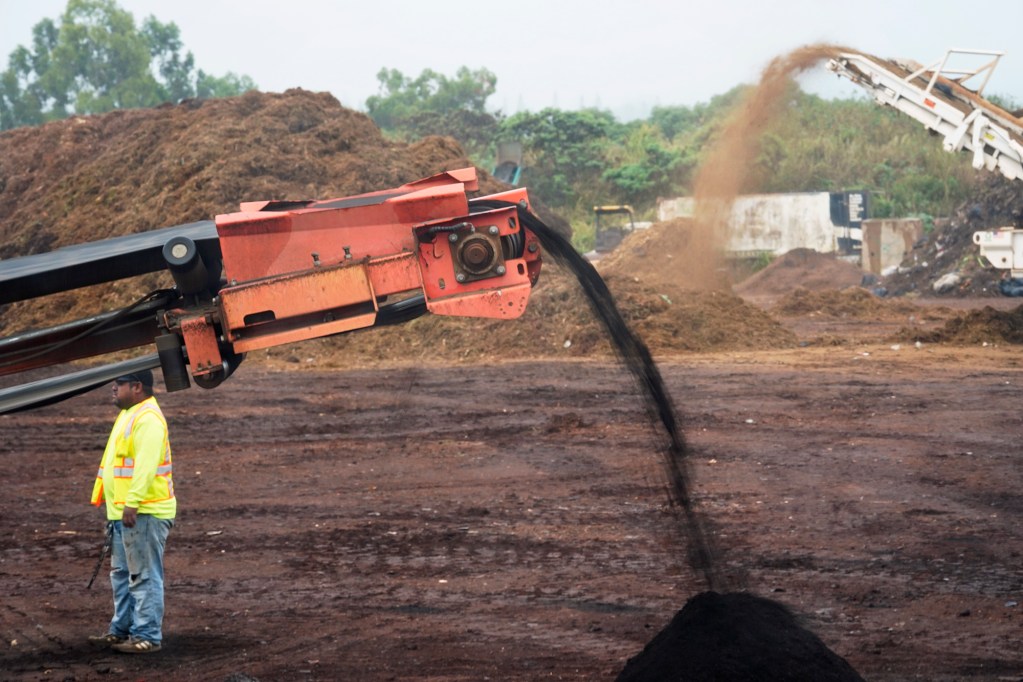
Almost-ready compost for consumers is piled in front of fresh, green waste after going through a chipper at Hawaiian Earth Wednesday, Aug. 28, 2024, in Wahiawa. The Tour de Trash follows the journey of Oahu residents and visitors’ rubbish, recyclable items and compostable/green waste take through the collection and disposal process. This compost is bagged and sold as Menehune Magic. (Kevin Fujii/Civil Beat/2024)
Almost-ready compost for consumers is piled in front of fresh, green waste after going through a chipper at Hawaiian Earth in Wahiawa. This compost is bagged and sold as Menehune Magic. (Kevin Fujii/Civil Beat/2024)
Compost from green waste is brought on board the Tour de Trash bus Wednesday, Aug. 28, 2024, in Wahiawa. Proper items in green bins eventually becomes compost Hawaiian Earth bags and sells as Menehune Magic. (Kevin Fujii/Civil Beat/2024)
Moist-smelling compost from green waste is brought on board the Tour de Trash bus. (Kevin Fujii/Civil Beat/2024)

The plan is to add food waste to the mix, making the final product better for farming and reducing the amount of food waste that goes to H-Power.

Min’s company will build a large facility that will bring the process indoors, per standards from the state Department of Health, he said. In April, the city awarded Hawaiian Earth a contract to process green waste and food waste that lasts until 2045.

For now, food waste encapsulates about 20% of the city’s overall waste production, city recycling program chief Henry Gabriel said. That all goes to H-Power – along with almost everything else that can’t be recycled or composted, like plastic bags, mattresses and furniture. About 90% of trash that would otherwise go to the landfill goes to H-Power instead.
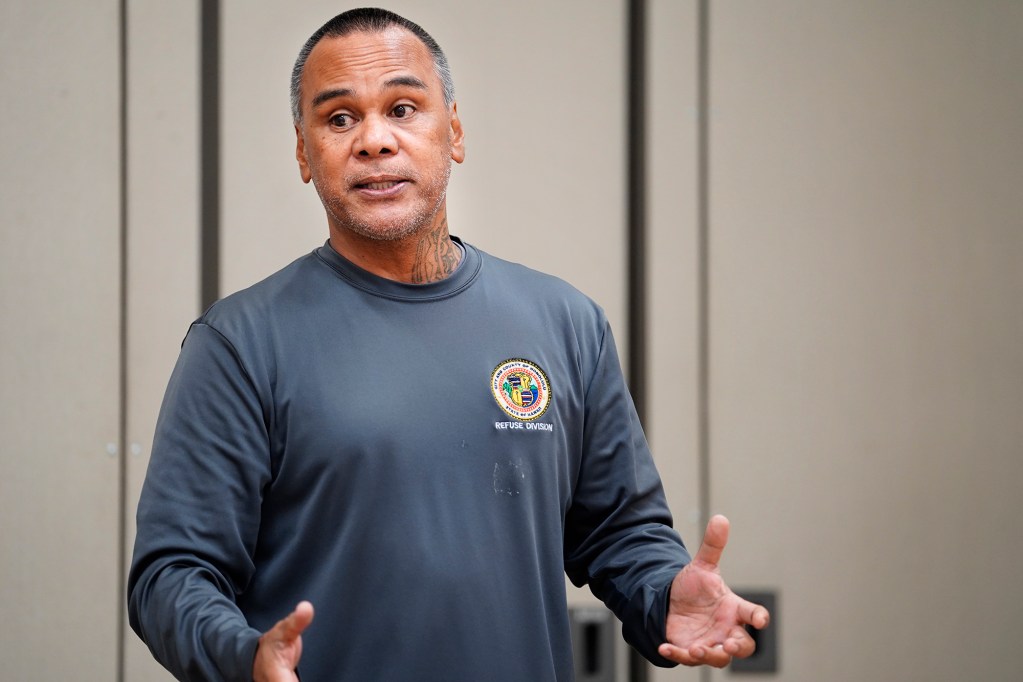
City and County of Honolulu Refuse Division Recycling Program Branch Chief Henry Gabriel, Jr., talks with Tour de Trash participants Wednesday, Aug. 28, 2024, in Kapolei. The tour follows the journey of Oahu residents and visitors’ rubbish, recyclable items and compostable/green waste take through the collection and disposal process. (Kevin Fujii/Civil Beat/2024)
City and County of Honolulu Recycling Program Branch Chief Henry Gabriel talks with Tour de Trash participants at Kapolei Hale. (Kevin Fujii/Civil Beat/2024)

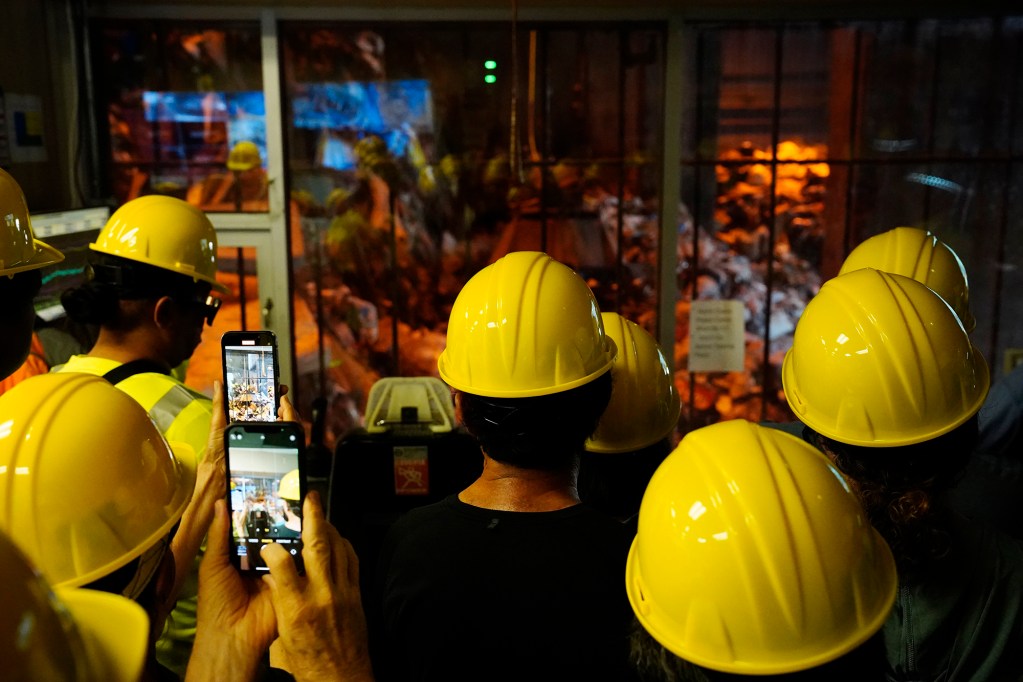
H-Power, the tour’s third stop after watching workers at city contractor RRR Recycling sort recyclable cardboard, plastic, glass and paper for sale to off-island processors, supplies about 10% of the island’s electricity. It generates this electricity by burning trash, and the goal is to make the trash burn evenly.

Monitors in the plant display how even these burns are, and a worker operating a gigantic crane moves the trash where it needs to go. On a drizzly day, less energy can be extracted than normal from the damp trash.

One recent challenge is that fires start about twice per day from stray lithium ion batteries, which are supposed to go to city convenience centers or transfer stations rather than into the normal waste stream. H-Power has fire hoses and extinguishers all around because of the danger these fires could cause.

“You’re in a building technically full of fuel,” Mathews said.
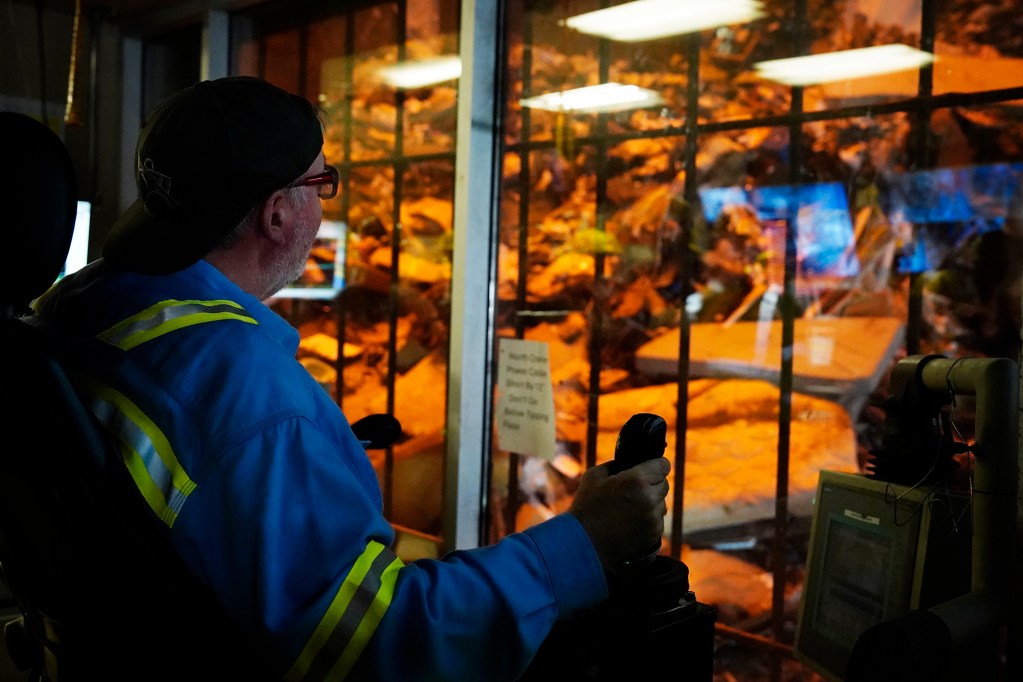
H-Power Supervisor Carl Krause operates the crane to move rubbish during a Tour de Trash visit Wednesday, Aug. 28, 2024, in Kapolei. The City and County of Honolulu’s Refuse Division hosts the tour which follows the journey of Oahu residents and visitors’ rubbish, recyclable items and compostable/green waste take through the collection and disposal process. (Kevin Fujii/Civil Beat/2024)
H-Power Supervisor Carl Krause operates the crane to move rubbish. (Kevin Fujii/Civil Beat/2024)
Tour de Trash participants watch rubbish being moved at H-Power Wednesday, Aug. 28, 2024, in Kapolei. The trash will be burned to create energy. The City and County of Honolulu’s Refuse Division hosts the tour which follows the journey of Oahu residents and visitors’ rubbish, recyclable items and compostable/green waste take through the collection and disposal process. (Kevin Fujii/Civil Beat/2024)
Participants watch rubbish being moved at H-Power, where it will be burned to create energy. Much of the facility’s infrastructure is dedicated to cleaning its own air emissions. (Kevin Fujii/Civil Beat/2024)

Attendees on the tour – which involved checking in at Kapolei Hale by 7:30 a.m. to bus between different garbage sites for hours – said that they signed up out of a desire to understand the city’s waste processing system. 

Dana Miller, who works in advocacy at Patagonia Honolulu, said she and her three employees joined so they could better understand where their store’s waste goes. 

Carlos Navarro, who was interested to learn how much of H-Power’s infrastructure is dedicated to cleaning its own air emissions, said that he heard about the tour while attending FestPAC a couple months ago.

Raymond Trinh, who teaches agriculture at Pearl City High School and is the sustainability coordinator at Waimea Valley, Hiʻipaka LLC, said that his boss at Waimea Valley told him about the tour.

Trinh got into composting by trying to sell worm bins to gardeners. Worms multiply quickly, he said, which he thought would be good business. But he decided to keep the worms for his own garden space, which got him interested in sustainable food systems. 

He worries about how easy it is to throw away waste without caring where it goes. 

“We just don’t manage our own things anymore, you know? We just give them to other people and lack awareness of what happens to it,” he said.
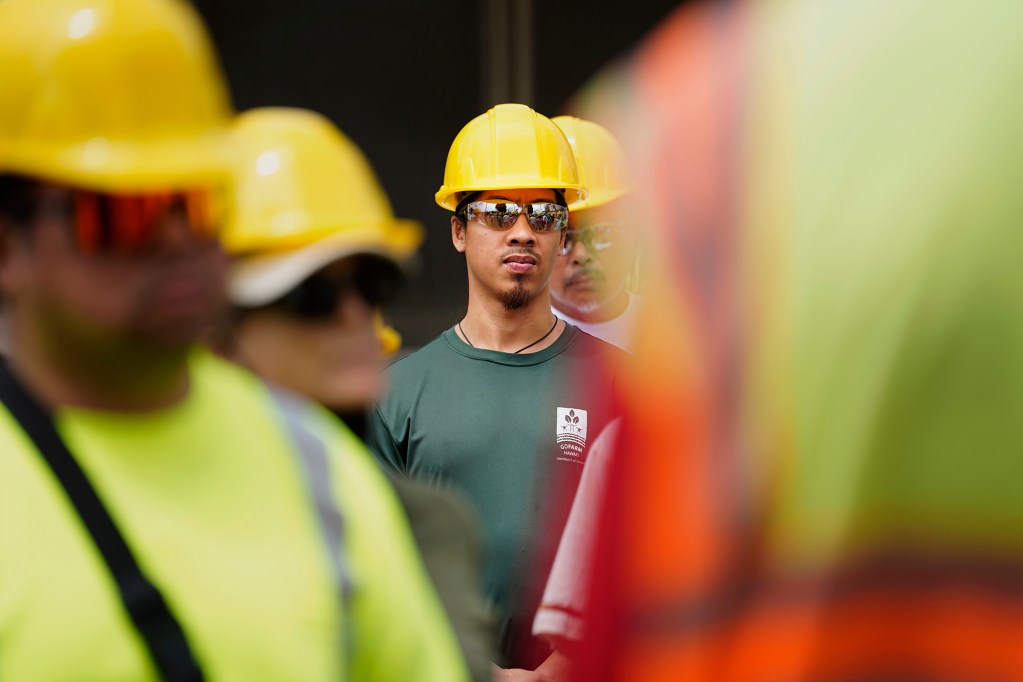
Tour de Trash participant Raymond Trinh listens to a briefing before entering H-Power’s facility Wednesday, Aug. 28, 2024, in Kapolei. H-Power incinerates rubbish to create energy. The City and County of Honolulu’s annual tour follows the journey of Oahu residents and visitors’ rubbish, recyclable items and compostable/green waste take through the collection and disposal process. (Kevin Fujii/Civil Beat/2024)
Tour de Trash participant Raymond Trinh listens to a briefing before entering H-Power’s facility in Kapolei. (Kevin Fujii/Civil Beat/2024)
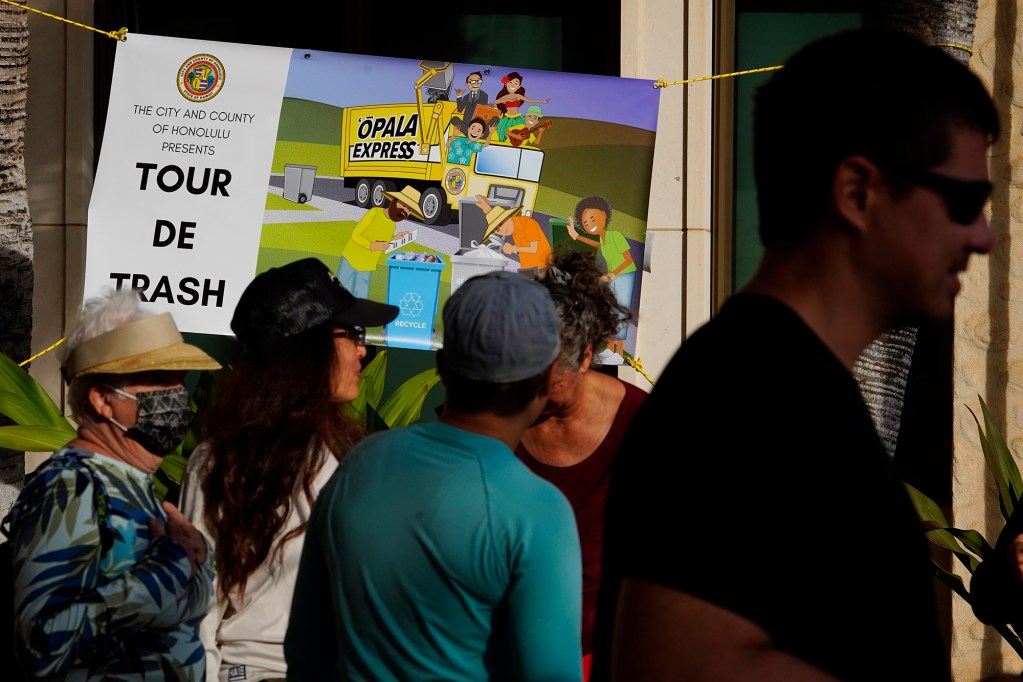
Participants wait for the City and County of Honolulu Refuse Division’s Tour de Trash to begin Wednesday, Aug. 28, 2024, in Kapolei. The tour follows the journey of Oahu residents and visitors’ rubbish, recyclable items and compostable/green waste take through the collection and disposal process. (Kevin Fujii/Civil Beat/2024)
Participants wait at Kapolei Hale for the Tour de Trash to begin. (Kevin Fujii/Civil Beat/2024)

Waimanalo Gulch Sanitary Landfill, the last stop for much of Oahu’s trash, was also the last leg of the tour. It takes everything else that isn’t recycled, composted or burned, as well as ash from H-Power. About 80% of its intake is ash, Gabriel said. 

The landfill’s waste is buried under the surface of a mountainside that climbs high above Ko Olina and Nanakuli. Landfill manager Tina Alder said that the waste at the bottom, now covered by two protective layers and dry grass, is from the early 1990s when the landfill opened. The waste at the top, near the back of the property, arrived more recently. 

Soon, the city will need a new landfill, and time is running out to pick a location. It has been almost two years since the mayor requested a two-year extension for naming the city’s new landfill location, which was scheduled to be announced by the end of December 2022.
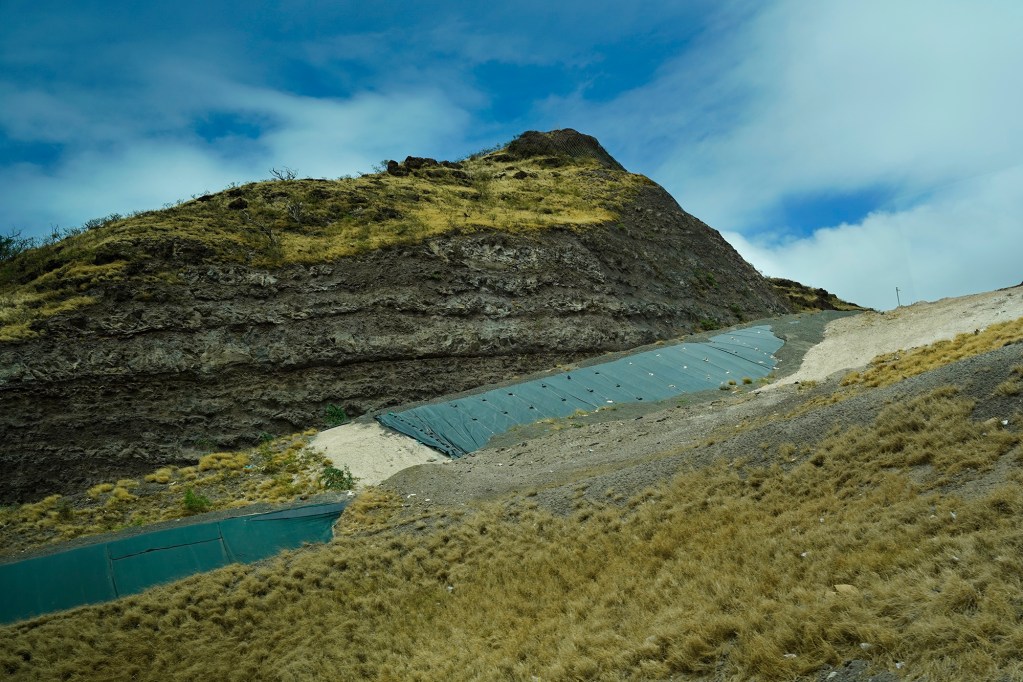
Covered rubbish and ash waiting to be buried at Waste Management’s Waimanalo Gulch Sanitary Landfill as seen on the City and County of Honolulu Refuse Division’s Tour de Trash Wednesday, Aug. 28, 2024, in Kapolei. The tour follows the journey of Oahu residents and visitors’ rubbish, recyclable items and compostable/green waste take through the collection and disposal process. (Kevin Fujii/Civil Beat/2024)
Covered rubbish and ash wait to be buried at Waste Management’s Waimanalo Gulch Sanitary Landfill. Landfill manager Tina Alder refers to it as a place of ash and trash. (Kevin Fujii/Civil Beat/2024)
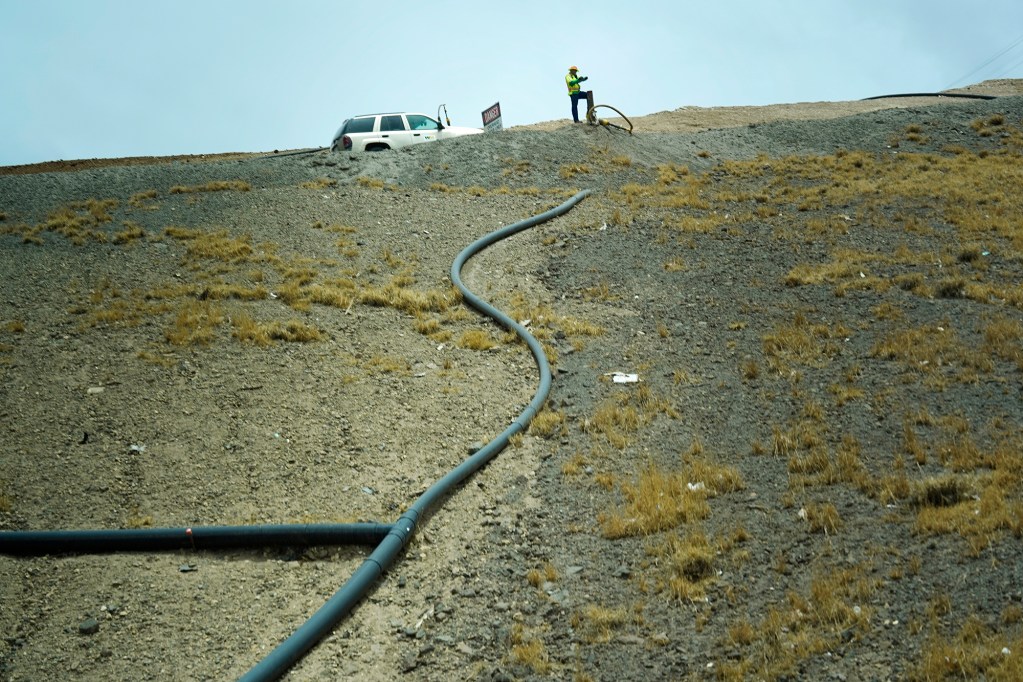
A Waste Management employee checks on gas valves at the Waimanalo Gulch Sanitary Landfill during a City and County of Honolulu Refuse Division’s Tour de Trash Wednesday, Aug. 28, 2024, in Kapolei. The tour follows the journey of Oahu residents and visitors’ rubbish, recyclable items and compostable/green waste take through the collection and disposal process. (Kevin Fujii/Civil Beat/2024)
A Waste Management employee checks on gas valves at the landfill during the Tour de Trash. (Kevin Fujii/Civil Beat/2024)

Finding a new location has been hard. Discussions are ongoing, and Gabriel said his team has an idea of where to put the new landfill but declined to elaborate.

City deputy communications director Ian Scheuring said there were no updates.

The city’s permit for the current site expires in 2028, and though capacity is projected to remain until the mid-2030s, the impending closure of a nearby private landfill for industrial waste means that timeline will shrink as Waimanalo Gulch is saddled with more trash. 

One long-term solution is to stop waste from entering the landfill in the first place. 

A dedicated stream for food waste, expanding recycling eligibility and promoting deconstruction rather than demolition are some of the ways that the city is thinking about accomplishing this. 

But these steps will take years to implement and in the meantime, city energy recovery administrator Ahmad Sadri said, the waste keeps rolling in.

“Trash never sleeps,” he said.
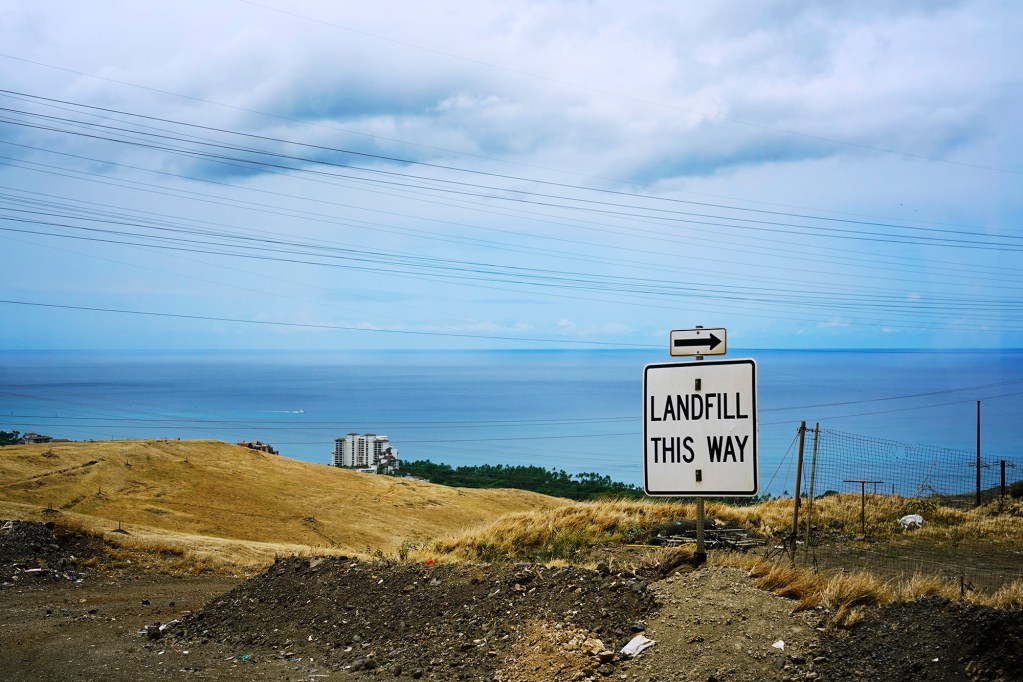
With an amazing view, Waste Management’s Waimanalo Gulch Sanitary Landfill is the last stop on the City and County of Honolulu Refuse Division’s Tour de Trash Wednesday, Aug. 28, 2024, in Kapolei. The tour follows the journey of Oahu residents and visitors’ rubbish, recyclable items and compostable/green waste take through the collection and disposal process. (Kevin Fujii/Civil Beat/2024)
Just about four months remain for the city to announce a new landfill location. (Kevin Fujii/Civil Beat/2024)

About the Authors

It's our job to make sense of it all.

The decisions shaping Hawaiʻi are happening right now, which is why it’s so important that everyone has access to the facts behind them.

By giving to our spring campaign TODAY, your gift will help support our vital work, including today’s legislative reporting and upcoming elections coverage.