

Waianae Care Providers Want More Funding For Mental Health Programs
The toll of violent crimes in the area has stressed a health care system that’s already stretched thin.
Health care providers in Waianae are calling for more resources to expand their services for a community shaken by high rates of gun violence in the last several years.
Government support and funding has remained stagnant for at least a decade while funding for other programs gutted during the 2008 recession have yet to be fully restored, providers said. Meanwhile, community organizations such as local churches have been doing what they can to fill in the gaps.
There have been at least nine murders and manslaughters on the Waianae Coast this year, according to Honolulu Police Department crime data. In the most recent incident over the Labor Day weekend, a man shot five people and killed three before he was shot and killed by a relative of the victims.
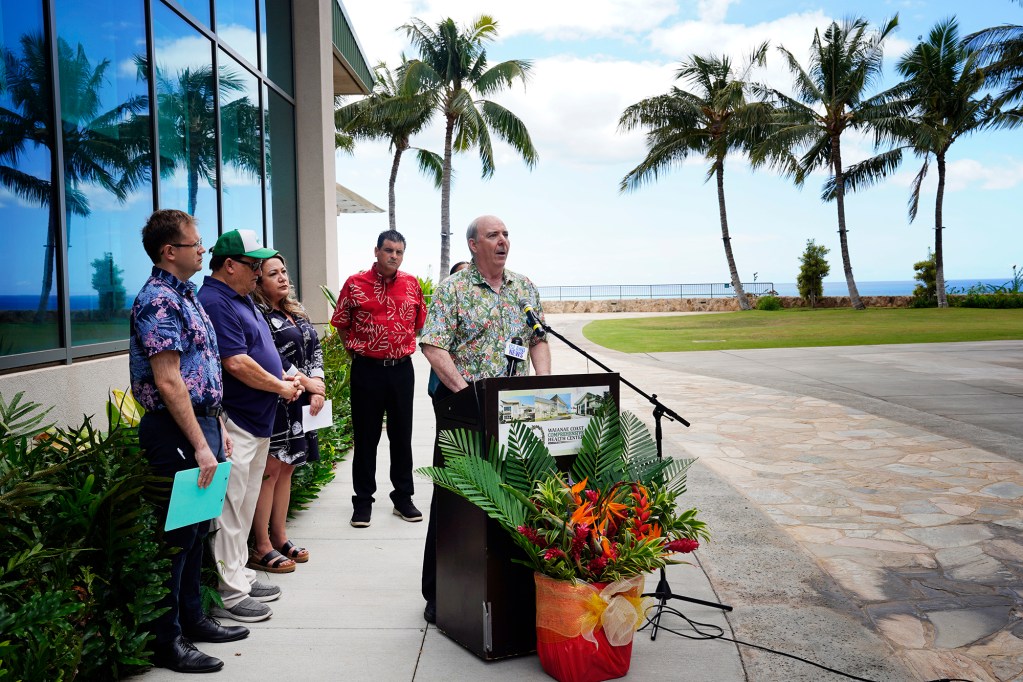
Those recent cases have prompted officials at the Waianae Coast Comprehensive Health Center to ask the state and city for more financial support to expand access to behavioral health services and counseling.
“Resilience without proper support eventually becomes unsustainable,” Alicia Higa, the center’s chief health equity officer, said at a press conference Wednesday. “Communities reach a point where recovery is extremely difficult.”
The center recently launched a trauma and resilience program to help residents dealing with the mental toll of violence, which includes workshops, individual counseling and group support sessions.
The center is seeking $500,000 from the state and city to help support the program, but will continue those services even if the funding doesn’t come through, Executive Vice President Nicholas Hughey said.
The center also needs additional financial assistance for its emergency room.
Hughey said the state has provided the health center with a $1.4 million subsidy to operate the center’s emergency room between midnight and 8 a.m. That subsidy hasn’t increased in the last 15 years even as the cost of operating the emergency room has risen, Hughey said.
More than half of the health center’s patients are Native Hawaiian, and its emergency room is the only one servicing the Westside.
“To have a facility that vital not receive an increase in their subsidy for 15 years truly speaks to systemic inequalities,” Hughey said.
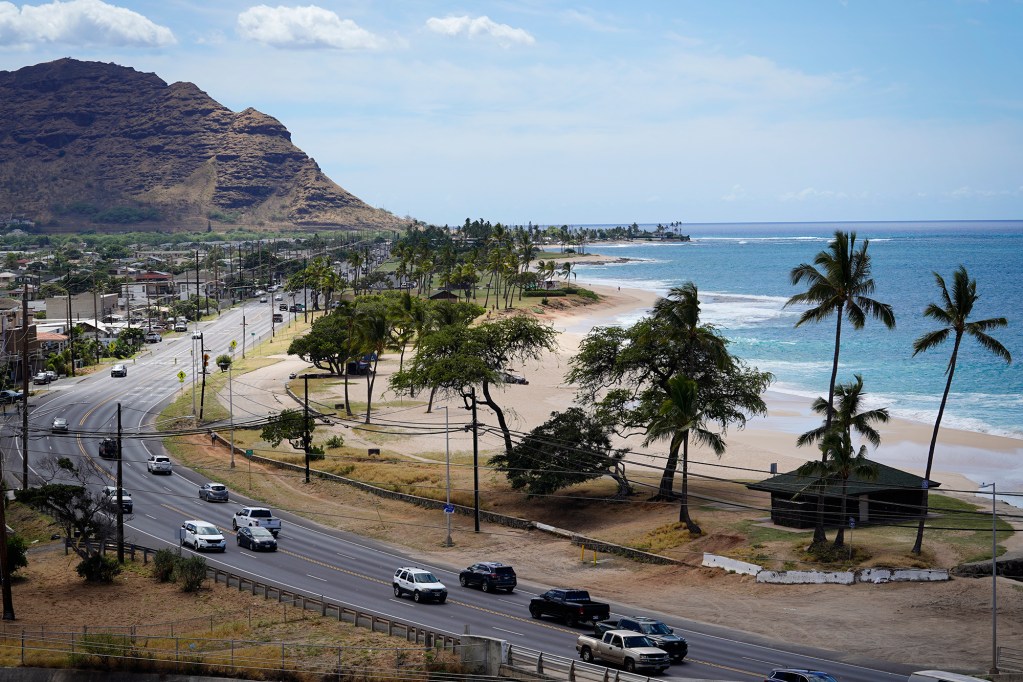
Hale Naau Pono, a community mental health center right down the hill from the comprehensive health center has also struggled financially. It once provided a broad range of services under the state’s Assertive Community Treatment program, targeted at individuals dealing with acute mental health conditions.
Those services were moved to different programs under former Gov. Linda Lingle’s administration. Major cuts to treatment programs followed as the state dealt with the financial fallout from the Great Recession.
“We lost a lot of momentum because we lost a lot of funding,” executive director Poha Sonoda-Burgess said.
Hale Naau Pono has been doing what it can with limited resources. It operates group homes that provide mental health services and assists adolescents in the state’s child welfare system, providing in-home therapy programs and working with children in foster care.
Another program is aimed at families at risk of ending up in the child welfare system. Those offices double as a community center for events. Residents often say that there’s not enough conference or gathering space in Waianae.
“We try to be like that hotel conference room, but affordable for the community,” Sonoda-Burgess said.
Officials at the comprehensive health center also want to target youth in schools. The center staffs school psychologists at Waianae and Nanakuli high and middle schools, according to Stephen Bradley, the center’s chief medical officer, and hopes to expand that program to include behavioral specialists.
Richard Bertini, the comprehensive health center’s CEO, told Civil Beat that mental health issues need to be addressed earlier in life.

“We’re not addressing some of the behavioral issues that happen early in life that traumatize,” Bertini said. “And if you don’t resolve them through professional help, they’re going to materialize later in life, and that’s going to create problems.”
The center is trying to provide culturally based programs through its new Elepaio Social Services branch, including hosting land and ocean activities during a two-day event this weekend called “Mauka to Makai” at Kaala Farms in Waianae Valley and at Pokai Bay.
“Its purpose is to connect us back to our land, back to our people,” Higa, the program’s director, said. “A lot of our community members have lost hope. We thought there was a silver lining coming out of the pandemic but things have gotten worse.”
Faith leaders are also trying to provide outlets for people to process their emotions.
The Ark of Safety Christian Fellowship has held vigils for victims of gun violence and hosted prayer nights for the community. Church leader Jay Amina said his congregation has been worried about the rising cases of violence and gangs in the area.
The church offers counseling services, but Amina said he understands people may not always feel comfortable walking into a traditional church setting. That’s why he has employees and other church leaders meet with people needing help at their homes or in the park.
The church is planning a large community gathering in October, similar to its Easter parties, with food, entertainment and games for children. Those events have often cost more than $80,000, paid for entirely by the church’s members, Amina said.
He hopes that events like that can provide a safe environment for families, if only for one night. They’ve been popular in the past, with people lining up hours ahead of time.
“When you see those smiles on their faces – for me, that’s my reward,” Amina said.
Civil Beat’s community health coverage is supported by the Atherton Family Foundation, Swayne Family Fund of Hawaii Community Foundation, the Cooke Foundation and Papa Ola Lokahi.

