

Data Dive: Fireworks Injuries, Deaths Reached 14-Year High On New Year’s
The Salt Lake explosion was only part of a significant increase in fireworks-related injuries across the state, emergency room records show.
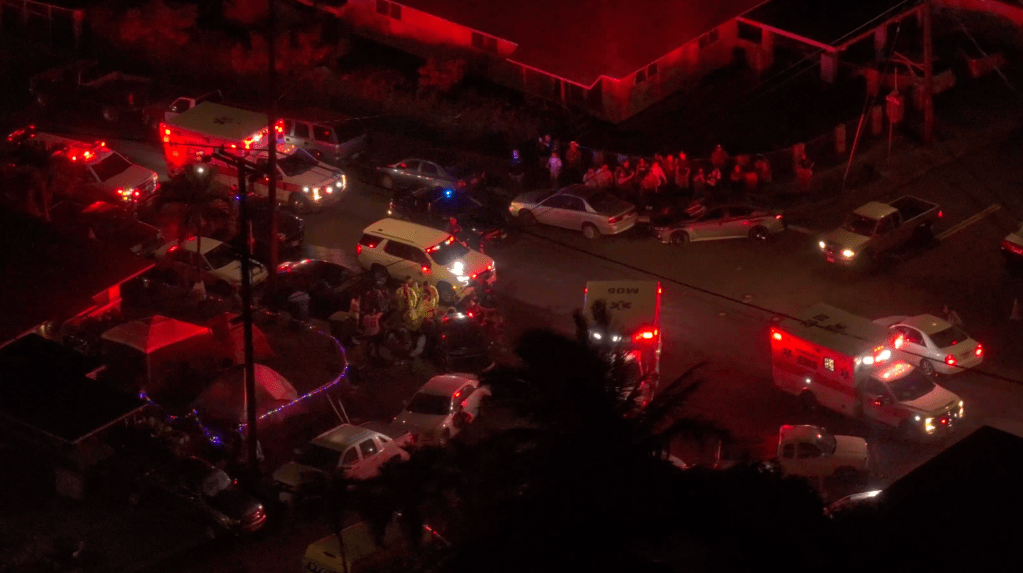
Injuries and deaths due to fireworks over the New Year’s holiday in Hawaiʻi surged to a 14-year high — and that’s before adding in the catastrophic explosion in Honolulu’s Salt Lake neighborhood.
Emergency rooms and hospitals in Hawaiʻi treated 110 individuals between Dec. 31, 2024, and Jan. 1, 2025, including five fatalities, the highest since 2010, when there were 112 injuries.
The state Department of Health collects reports from Hawaiʻi hospitals of fireworks injuries over the New Year period; it supplied the data to Civil Beat upon request. Deaths are included in the injury tallies.
The 18 years of data show that injuries plunged immediately after a statewide ban on aerial fireworks was expanded on Oʻahu in 2011 to include virtually all consumer fireworks.
But injuries have steadily crept up since then, and Oʻahu accounted for 84% of the injuries — 91 people — on New Year’s Eve and New Year's Day this year. Injuries on neighbor islands were also higher than last year.
The explosion of illegal fireworks on Keaka Drive that killed four people and injured over 20 accounted for more than half of the increase from the 2023-24 New Year’s holiday — an increase of 50 injuries or deaths. Even without that tragedy, the toll from this year would be the highest since 2010-11.
Hawaiʻi Injuries Exceed The National Per Capita
Hawaiʻi’s per-capita rate of injuries treated in emergency rooms over the New Year's holiday — 4.1 per 100,000 residents — far exceeds the national average of 2.9 per 100,000, according to data collected by the U.S. Consumer Product Safety Commission for 2023-24, the most recent year for which national comparisons were available.
The fireworks restrictions imposed in Oʻahu in 2011 helped reduce emergency room visits — up until two weeks ago.
A study of the effectiveness of that county ordinance found "a significant association between stricter firework legislation and a decrease in firework-related injuries over a multiyear period."
Immediately after the ban, injuries in Oʻahu fell from 79 over New Year's Eve and Day in 2010-2011 to 14 in 2011-2012.
But the firework injury incident rate in Hawaiʻi more than doubled between 2011-2012 and 2021-2022 — and continued climbing. It far outstripped a 17% increase nationwide over the same period, according to the Consumer Product Safety Commission data.
What We Know About The Injuries
Nationwide, men are more than twice as likely to be injured by fireworks than women, according to the product safety commission reports, and that percentage is slightly higher in Hawaiʻi. Injuries are most common among adolescents and young adults and are more likely to involve aerial and illegal firework use.
The New Year’s Eve explosion in Honolulu was unusual in that three of the four fatalities were older women. The fifth fatality was a 20-year-old man.
According to the state data, the most common types of injuries suffered this New Year's Eve and Day were burns, and about a quarter of the patients had a combination of both burn and blast injuries.
Update: The state Department of Health also collects fireworks injury data over the July 4 holiday period. The average number of injuries per year for that holiday is seven.

Civil Beat’s community health coverage is supported by the Cooke Foundation, Atherton Family Foundation and Papa Ola Lokahi.

