

Kamalani Academy Was Struggling Long Before State Opted To Shut It Down
Hawai‘i’s latest charter school closure highlights longstanding challenges in state oversight.
Missing financial statements, undeposited checks, school funds spent on first-class plane tickets for trips with no clear educational benefit and dwindling enrollment contributed to the state’s decision to close Kamalani Academy last week.
But the Wahiawā public charter school may have been doomed by school officials’ inability to answer a basic question from the state: Why was the school spending more than half its state funding on rent?
The school had missed multiple rent payments and was locked in an argument with the nonprofit foundation that held its lease over what exactly it was paying for.
“Pay your rent, that’s all they tell us,” Kamalani Academy staff member Annie Tangonan said of the Kamalani Academy Foundation, whose sole stated mission is to support the school.
The school’s impending closure highlights longstanding challenges in how the state oversees charter school finances and major gaps in facility support that leave many charters struggling.
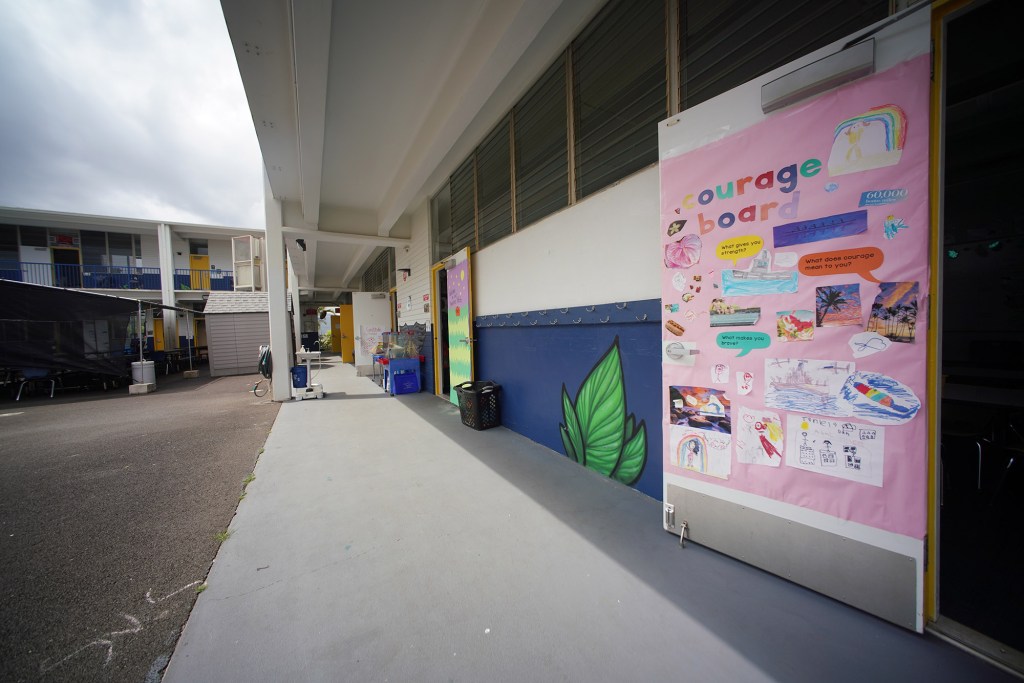
The situation became so dysfunctional that the chair of the school’s own governing board voted in favor of closing the school earlier this year because she was so concerned about its finances and continued ability to pay rent and teachers.
Yet despite the ongoing concerns of the Central Oʻahu school’s governing board and reports of stolen funds and undeposited checks dating back to 2023, the charter commission didn’t rate Kamalani as having a high financial risk until last week.
Kamalani’s governing board and foundation both declined requests for interviews.
Charter schools are supposed to receive more flexibility in their curriculum and finances than traditional public schools, with the idea that they can better adapt to students’ learning needs and passions. The commission faces the longtime challenge of ensuring that charters use state funds responsibly without micromanaging school leaders or burdening them with too many administrative duties, said Catherine Payne, who served on the state charter commission until 2018.
“The default was to allow them as much freedom as possible,” Payne said.
Oversight Or Overreach?
Kamalani Academy is set to become the third charter school shut down by the state since the launch of Hawai‘i’s charter school movement in 1994. The commission ordered the closure of Hālau Lōkahi, a K-12 school in Kalihi, in 2015 and Ka’u Learning Academy on the Big Island in 2018.
Kamalani has been subject to increased financial oversight from the state since 2023 when the charter commission voted to close the school for running an unauthorized online learning program and keeping poor student records. The school won a two-year reprieve after appealing to the BOE and agreeing to have its governing board replaced by the commission.
A 2023 audit of the charter, completed shortly before its board was reconstituted, emphasized the need for more financial oversight, citing unjustified purchases using school credit cards and the overpayment of one staff member. A year later, a second audit raised the same concerns, emphasizing that Kamalani needed more processes in place to ensure that all expenses and financial statements received the approval of school leaders.
The need for more oversight was also underscored in a summer 2023 board meeting, where members said Kamalani administrators failed to deposit over $15,000 in checks and cash into its bank accounts, and $8,000 was stolen from the school. Honolulu Police Department spokesperson Michelle Yu said a second-degree theft case was reported at the time, but no arrests were made.
The board tried to resolve the issue by changing its financial management company, which doesn’t allow the school to input its own transactions or view its books. But changing vendors has been slow going, especially with the recent turnover of the school principal, said Kamalani governing board chair Aumoana Kanakaole in last week’s charter commission meeting.
Charter schools have long been required to provide quarterly financial reports and submit to annual audits, but after the closure of Hālau Lōkahi — a school that also had issues of financial mismanagement — the commission moved to put more safeguards in place to monitor schools’ finances.
State law now mandates that a charter must shut down once it is unable to make payroll. Since 2018, the charter commission has also run its own annual assessment of schools’ financial risk to better monitor charters and identify their strengths and weaknesses.
Charter schools receive more frequent audits than traditional public schools under the state education department, said Payne, who previously served on the charter commission as well as the Board of Education. But, she said, DOE has more stringent reporting requirements to make sure schools are accounting for every dollar they spend.
For example, she said, every purchase a school makes needs to be accompanied by a purchase order that receives the principal’s approval. The purchase orders are then compiled in a monthly report that’s reviewed by district and state leadership, said Payne, who is also a former principal at Farrington High School.
“It’s just really important when you’re using other people’s money, state taxpayers’ money, that you’re doing the right thing,” Payne said.
But, Payne added, it’s hard to impose the same reporting requirements on charter school leaders. The commission tries to give principals as much freedom as possible to run their schools, she added, and charter leaders strongly opposed the state’s efforts to monitor their finances more closely in the early years of the commission.
For the most part, the commission trusts charters to develop and manage their budgets, and schools act responsibly, said charter commission director Ed Noh. With the exception of Kamalani, he said, all other charter schools received a low to acceptable score on their financial risk assessment last year.
Commission staff visits schools to meet with directors and discuss their budgets and has required schools, including Kamalani Academy, to submit monthly financial reports if they need more monitoring.
Even when reports identify problems with a school’s finances, however, change isn’t guaranteed.
What Went Wrong?
The relationship between Kalamani and its associated nonprofit organization, the Kamalani Foundation, was the subject of both confusion and concern at the commission meeting last week.
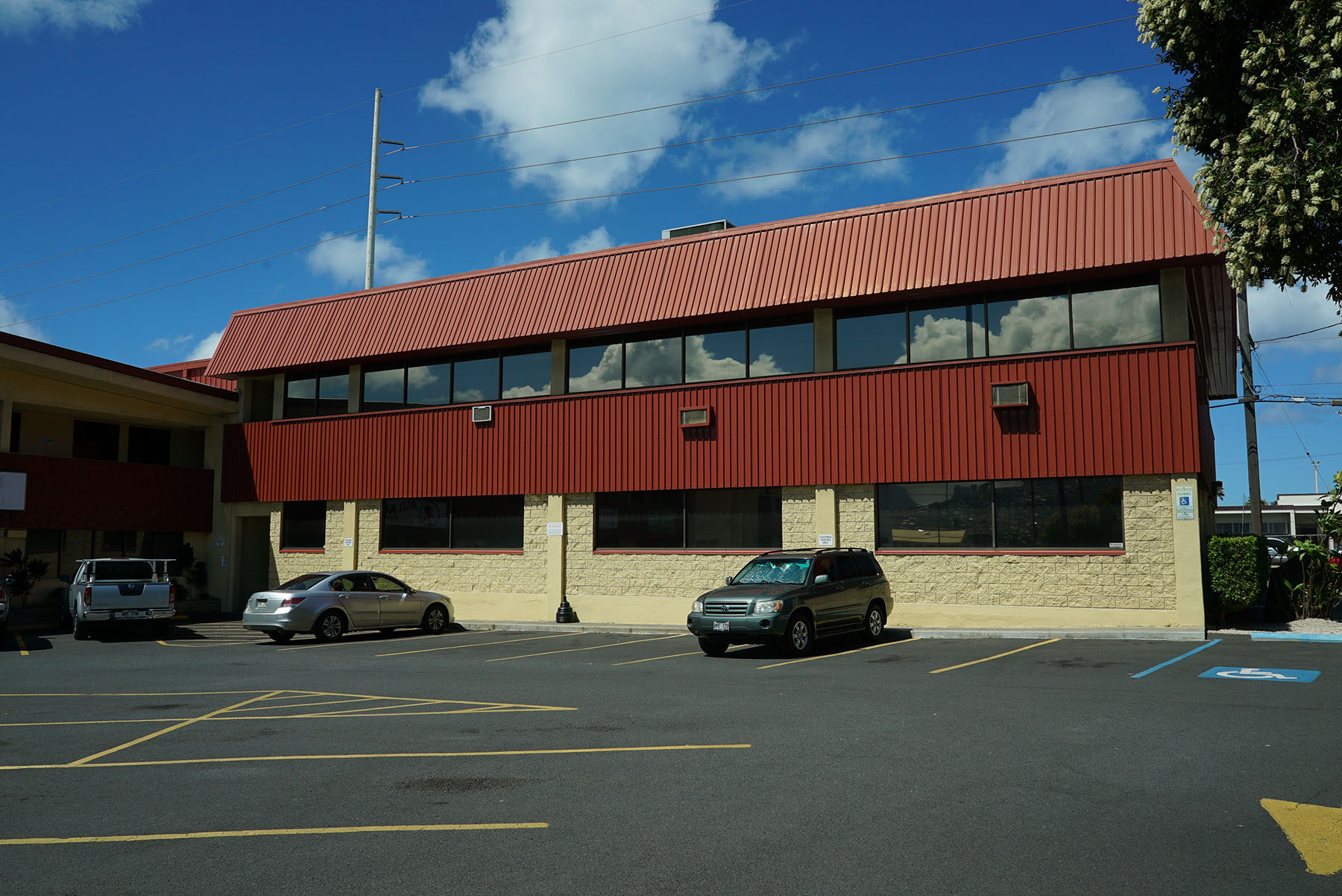
Kamalani Academy is housed in an old Catholic school building in Wahiawā that is rented from the Diocese of Honolulu by the foundation for $13,000 a month, according to governing board meeting minutes.
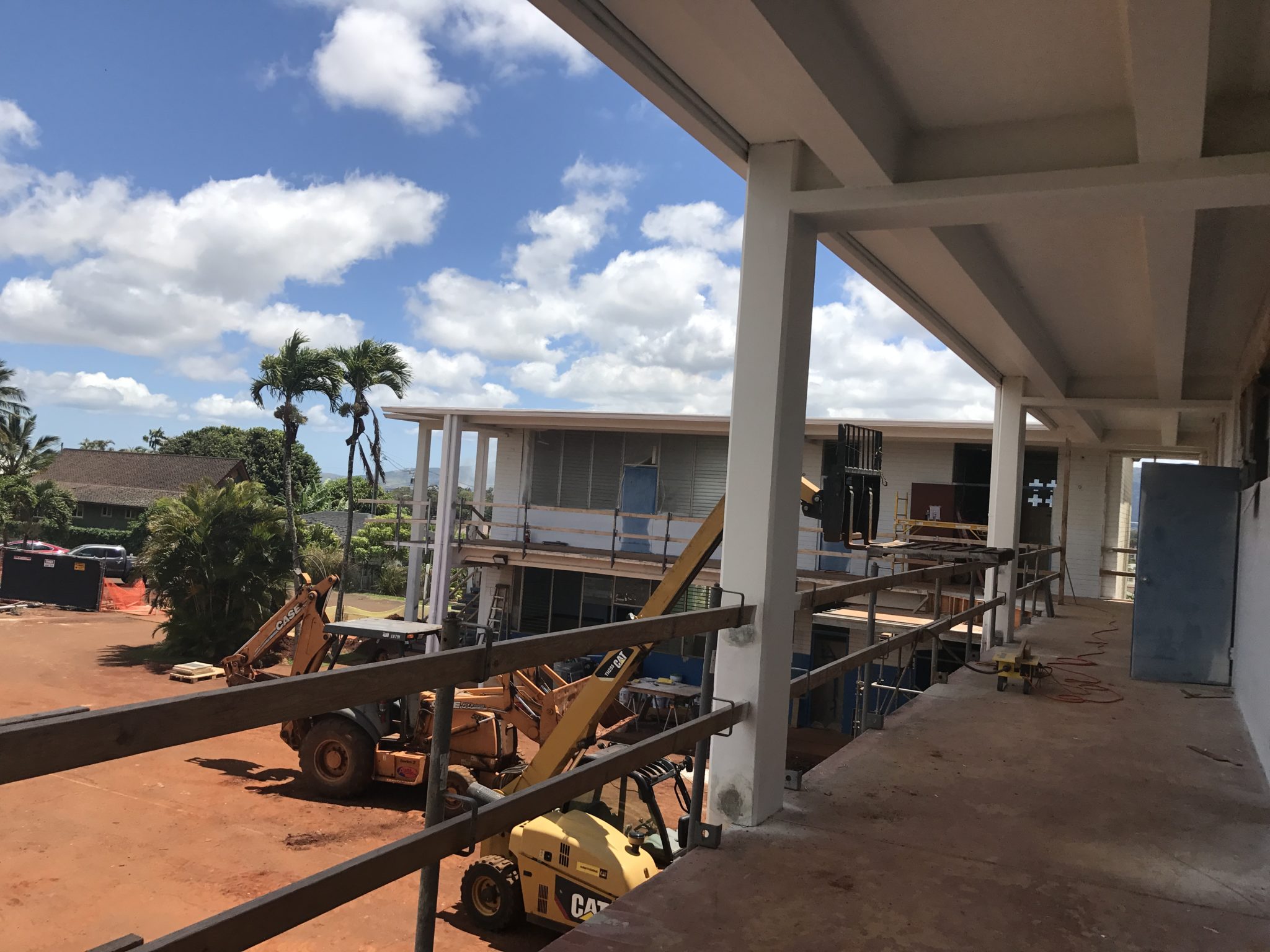
The facility required more than $2 million in repairs before the charter school could take occupancy of the space in 2017. Because charter schools cannot take on debt, the foundation took out an 18-year loan with Building Hope, a mainland nonprofit that helps finance charter schools’ expansion or development of facilities.
To pay off the loan, which runs until 2036, the foundation requires just over $16,100 a month in payments from Kamalani Academy, in addition to $13,000 a month owed to the diocese. The school also has to pay the foundation $1,000 in unspecified administration fees, according to monthly meeting minutes from Kamalani Academy’s governing board.
School leaders said they have repeatedly asked questions but received no answers about why their rent is so high, something the foundation said in an email was untrue, declining to elaborate.
“We value transparency in financial matters,” foundation chair Angela Gabriel wrote in a letter to Kamalani’s governing board last summer. “It’s essential to note that Kamalani Academy’s monthly lease payment covers various operational expenses, including lease agreements, facility renovations, and other essential costs.”
The foundation would be open to possibly renegotiating the rent agreement, Gabriel said in the letter, but first wanted to see a comprehensive financial risk assessment from the school. Kanakaole, the governing board chair, said last week the school was never able to enter renegotiations.
The Diocese has threatened to evict the school for being four months behind on rent, Kanakaole added, but she’s not sure what that timeline could look like.
Financial transparency is key for charter schools, especially since they’re receiving state dollars for education, said Tom Hutton, who served as executive director of the charter commission from 2013 to 2016. But, he added, it’s not always possible for the commission to keep tabs on all the financial agreements charters and their partner organizations are entering.
“It’s very hard for the public oversight to be complete,” Hutton said.
Continued Turnover And Change
When Kamalani received approval to continue operating in 2023, the commission tried to ensure the school’s success. Commissioners handpicked new members to serve on Kamalani’s governing board and began requiring more frequent reports from the school, including monthly financial reports and a comprehensive review of the school director.
But continued turnover among board members and school leaders created more instability and uncertainty around Kamalani’s governance and finances. The school has gone through four principals in less than two years, and all but one member of the governing board has also left since their appointments in summer 2023.
Constant changes in Kamalani’s leadership made it difficult for the school to implement changes, including switching to a financial management system that would allow the principal and board more oversight of the school’s expenses, Kanakaole said.
At the same time, some families’ trust in the school seemed to waver, with the school enrolling fewer students than expected over the past two years. Because the state determines school funding based on student enrollment, smaller classes also meant that Kamalani received less money than expected in recent years.
Even with these challenges, Noh said, it was a difficult decision to shut down Kamalani. The school can appeal the commission’s decision to the Board of Education.
Kanakaole said in an emailed statement the governing board was disappointed with the commission’s decision and is consulting with Kamalani’s lawyers to determine the school’s next steps.
It’s unclear if Kamalani leaders will file an appeal.
Civil Beat’s education reporting is supported by a grant from Chamberlin Family Philanthropy.

