A 15-Year Extension Of Honolulu Rail Tax Advances In The Senate
Extending the excise surcharge to 2045 could raise another $5 billion or more for the Skyline project, taking it to Ala Moana. Only two people showed up to testify.
A Senate committee gave preliminary approval Tuesday to a bill to extend the half-percent excise tax surcharge for rail for another 15 years, a politically volatile move that could lead to billions of dollars in additional funding for the city’s Skyline project.
The law that authorized Honolulu and the neighbor island counties to impose the excise surcharge calls for the extra tax to expire at the end of 2030, but Senate Bill 492 would allow them to leave it in place until the end of 2045.
The Senate Energy and Intergovernmental Affairs Committee, chaired by Sen. Glenn Wakai, voted 4-0 to approve the bill late Tuesday afternoon after about 2 minutes of testimony.
Only two people were in the hearing room to testify on the measure, and only a handful submitted written comments. There was no discussion of the bill before the vote.
Tom Yamachika, president of the Tax Foundation of Hawaiʻi, said after the hearing that “it’s early in the process, so I think people may realize later that this has legs, and they’ve got to do something about it if they want to stop it.”
Instead of a sales tax, Hawaiʻi’s 4.5% general excise tax is assessed on all business activities.
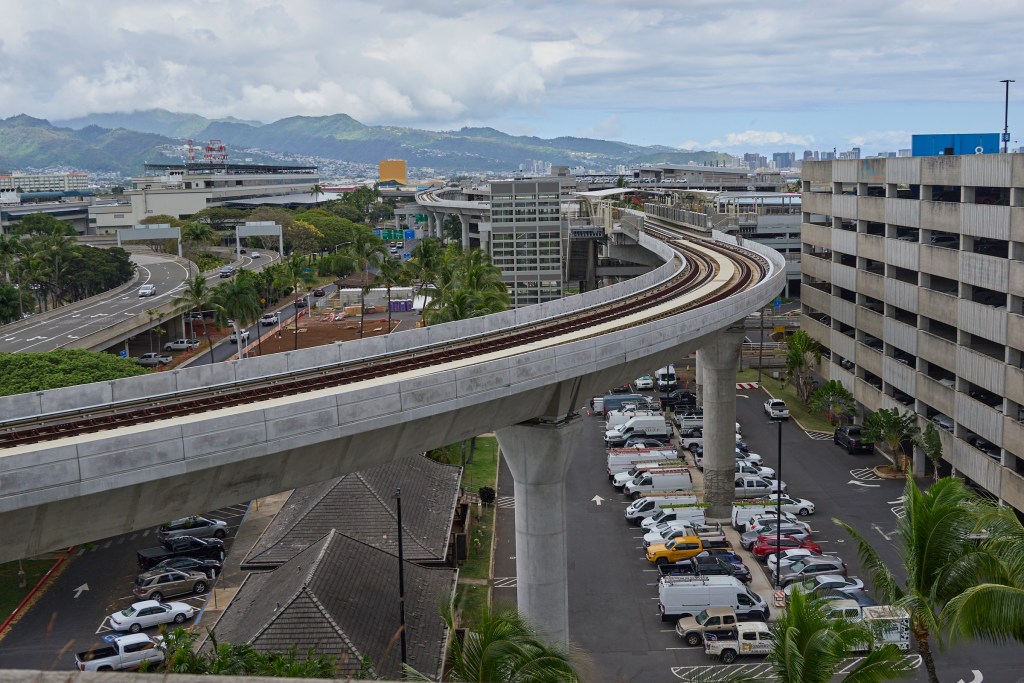
The excise surcharge on Oʻahu for rail has been providing most of the funding for the $10 billion Honolulu Skyline project, but it was never supposed to be permanent.
The Honolulu surcharge was originally approved by the Legislature in 2005 and was supposed to expire at the end of 2022, but lawmakers extended it in 2015 and then again in 2017 to raise more money as costs escalated for the still-unfinished rail project.
The surcharge is expected to raise about $325 million this fiscal year, which suggests it would raise about $5 billion in additional funding for rail if it is actually extended for another 15 years.
In addition to the Oʻahu surcharge levy for rail, the neighbor island counties also collect tens of millions of dollars each year from their residents and visitors in surcharge revenues that are used for housing and transportation projects.
The bill would authorize the neighbor island counties to also extend their surcharges for another 15 years.
Ted Kefalas, director of strategic campaigns for the Grassroot Institute of Hawaiʻi, said in written testimony that extending the surcharge would be “stoking the well-known cynical view that there is no such thing as a temporary tax.”

The excise tax is regressive and weighs most heavily on poorer residents, he said in written comments, contending an extension would amount to a tax hike. Extending the surcharge “would disproportionately affect Hawaii’s most economically disadvantaged residents,” he wrote.
The Honolulu Authority for Rapid Transportation has created a subcommittee to plan extensions of the rail line to Ala Moana and beyond, which would require more money for construction, but no one from the authority publicly testified on the bill.
HART board member Anthony Aalto, who is leading the effort to extend the rail line, said the elevated guideway from Kapolei to Ala Moana will be the backbone of the rail network, “but the more extensions that you add, the more efficient it becomes, the more it achieves its objective, which is to get people out of cars.”
Aalto estimated extending the Skyline to Ala Moana would help 40,000 to 50,000 households get rid of one of their cars, saving those families some $500 million. “The farther you build out your extensions, the more people are able to use the system, the more people are going to be able to realize those cost savings,” he said.
SB 492 now advances to the Senate Ways and Means Committee.